

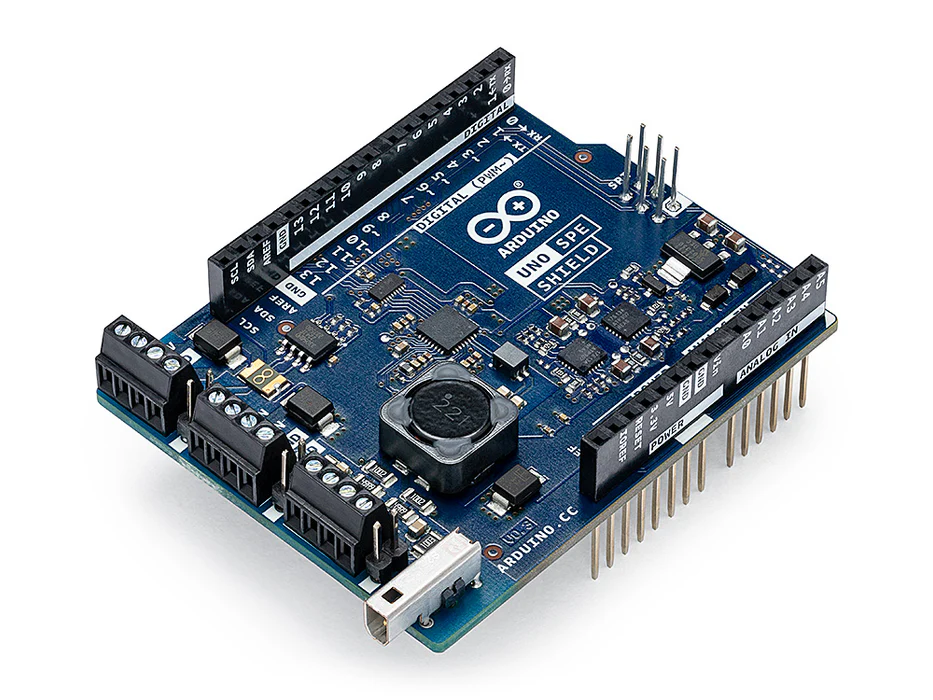
Mastering Power Shields Design with Arduino and EasyEDA
Arduino platforms excel at prototyping interactive electronics, but powering projects reliably presents challenges beyond simple USB connections. Power shields provide regulated, stable power delivery while adding functionality like battery management, multiple voltage rails, and protection circuitry. Mastering Power Shields Design with Arduino EasyEDA teaches creating custom power solutions tailored to specific project requirements.
Understanding Power Requirements
Arduino boards typically operate at 5V or 3.3V, but projects often require multiple voltage levels simultaneously—12V for motors, 5V for logic, 3.3V for sensors. Understanding current requirements prevents underpowered designs causing brownouts, resets, or component damage.
Calculating total current draw involves summing all component requirements plus safety margins. Motors draw significantly more current than sensors, while peak current during startup can exceed steady-state operation. Power budgets ensure supplies handle maximum loads without failure.
Battery-powered projects add complexity—capacity requirements, discharge characteristics, charging circuits, and power conservation strategies extend operational time. Understanding battery chemistry (lithium-ion, NiMH, alkaline) informs appropriate charging and protection circuits.
Power Shield Fundamentals
Power shields provide regulated power conversion, distributing electricity to Arduino boards and connected components. Linear regulators offer simple voltage reduction but waste energy as heat, suitable for low-current applications. Switching regulators provide efficient conversion, essential for battery operation or high-current loads.
Protection circuitry prevents damage from reverse polarity, overcurrent, overvoltage, or thermal conditions. Fuses, diodes, and protection ICs safeguard expensive components and prevent fire hazards in power supply failures.
Decoupling capacitors filter power supply noise, stabilizing voltage for sensitive digital and analog circuits. Understanding capacitor placement and values prevents mysterious circuit malfunctions caused by power supply instability.
Introduction to EasyEDA
EasyEDA provides free, web-based electronics design tools for schematic capture, PCB layout, and circuit simulation. Unlike desktop software requiring installation and licensing, EasyEDA runs in browsers with extensive component libraries and integrated PCB manufacturing services.
The schematic editor enables creating circuit diagrams using standard symbols connected by wires. Understanding schematic conventions—power symbols, ground connections, reference designators—creates readable documentation communicating design intent.
Component libraries include thousands of parts with specifications, footprints, and 3D models. Custom components can be created when specific parts aren’t available, requiring understanding of electrical characteristics and physical dimensions.
Schematic Design Process
Designing power shields begins with block diagrams showing power flow—input sources, regulation stages, output rails, and protection elements. This high-level view guides detailed schematic creation.
Input sections accept power from batteries, wall adapters, or USB connections. Selection switches or automatic switching circuits choose between multiple sources. Protection components prevent damage from incorrect connections.
Regulation sections convert input voltage to required output levels. Selecting appropriate regulators involves considering input/output voltage ranges, current capacity, efficiency, and thermal characteristics. Datasheets provide specifications and reference designs accelerating development.
Distribution sections route regulated power to Arduino headers and external connectors. Understanding current paths and wire resistance prevents voltage drops degrading performance.
PCB Layout and Design Techniques
Translating schematics into physical PCB layouts requires understanding manufacturing constraints and signal integrity. ESP bootcamp a step by step practical approach covers similar hardware design principles.
Component placement affects performance. High-current traces should be wide and short. Heat-generating components require spacing for cooling. Two-layer boards suit most shields, while complex designs may require four layers with dedicated power planes.
Buck converters step down voltage efficiently for battery applications. Understanding inductor selection and switching frequency ensures stable regulation. Boost converters step up voltage for driving LEDs or 12V components. Linear regulators provide simplicity when efficiency isn’t critical.
Battery Management and Testing
Lithium battery charging requires specialized ICs monitoring voltage, current, and temperature preventing dangerous conditions. Protection circuits prevent damage from short circuits or deep discharge. Fuel gauge ICs estimate remaining capacity enabling low-battery warnings.
Breadboard prototyping validates concepts before PCB fabrication. Multimeter measurements verify voltage levels and current consumption. Oscilloscopes reveal switching waveforms and ripple voltage. Load testing ensures supplies handle maximum current without collapse or overheating.
EasyEDA integrates with JLCPCB manufacturing services for streamlined PCB ordering. Gerber files communicate designs to manufacturers automatically. Assembly options include hand soldering for prototypes or professional assembly for production.
Safety and Practical Applications
Power supply designs must prioritize safety. Proper fuse selection protects against short circuits, thermal management prevents overheating, and insulation distances prevent shock hazards. Understanding safety principles prevents accidents even in hobbyist projects.
Custom power shields enable ambitious Arduino projects—robotics requiring motor drivers with high current capacity, environmental monitoring with battery operation and solar charging, or home automation needing reliable always-on power delivery. Tailoring voltage levels, current capacities, and features to specific needs maximizes effectiveness.
The Design Journey
Power shield design combines electronics theory, practical engineering, and iterative refinement. Starting with simple linear regulator shields builds foundational knowledge before tackling complex switching regulators or battery management.
Each design iteration teaches lessons about component selection, layout techniques, and testing procedures. Documentation of designs, decisions, and results creates valuable reference for future projects while demonstrating professional engineering practices supporting career development in electronics design and embedded systems engineering.