

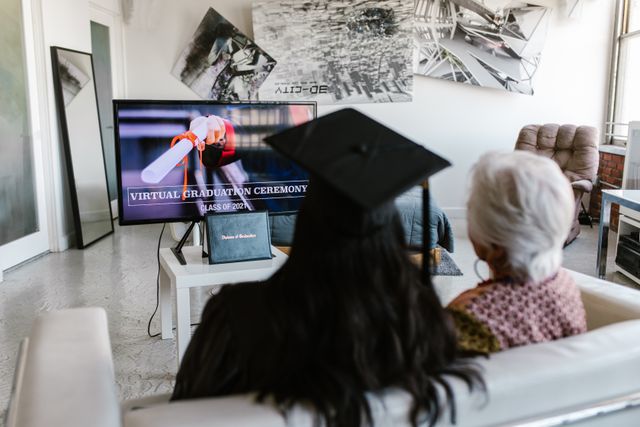
For generations, graduation has represented one of the clearest milestones in a student’s life. A student enters school, progresses through different academic stages, enters college, completes a degree and eventually graduates. The graduation ceremony becomes a symbolic moment because it appears to mark the completion of formal education and the beginning of professional life.
But the meaning of this milestone is beginning to change.
The growth of online courses, digital certificates, professional learning platforms, online degrees, internships, quizzes, project-based learning and career development tools has created an environment in which education no longer has to stop when a degree is completed. Students can continue learning before graduation, during graduation and after graduation. Working professionals can return to education whenever they need new skills. A graduate can learn a new technology months after receiving a degree, complete a professional course years later or change career direction through continuous digital learning.
This raises an important question: what will “graduation” mean in a world where learning never really stops?
The answer may not be that graduation becomes irrelevant. Instead, its role may evolve. Graduation can remain an important academic milestone while becoming only one stage in a much longer learning journey.
Platforms such as EasyShiksha reflect this changing educational environment by bringing together online courses, online degrees, quizzes, internships, certificates, career counselling, education discovery and other learning opportunities. Such an ecosystem reflects a broader idea: students may no longer need to think of education as something that ends with a degree. They can begin building skills, gaining practical experience and exploring careers long before graduation and continue developing them long afterward.
The Traditional Meaning of Graduation
To understand how graduation may change, it is useful to first understand what it has traditionally represented.
Graduation generally marks the completion of a formal academic programme. A student who completes the required coursework, examinations and other academic requirements receives a degree or qualification. The milestone carries academic, social and professional significance.
For students, graduation can represent years of effort. It may be associated with the transition from college life to employment, higher education or other professional opportunities. Families often see it as the completion of an important stage of education, while employers may use degrees as one of the qualifications considered during recruitment.
This model creates a relatively simple timeline. Education comes before employment, and graduation appears near the boundary between the two.
However, digital learning has made this boundary increasingly flexible.
Students can now acquire skills while studying for a degree. They can complete internships during semesters, take online courses alongside college, participate in quizzes, build projects and explore career options before their final year. After graduation, they can continue learning without necessarily returning to a traditional classroom.
The result is a shift from a linear education model toward a continuous learning model.
Education Is Becoming a Continuous Journey
Continuous learning does not mean that formal education disappears. Instead, it means that learning becomes distributed across different stages of life.
A student may complete a degree in computer science and later study artificial intelligence through an online course. A commerce graduate may develop digital marketing skills after discovering an interest in online business. A professional may return to education to learn data analytics several years after graduation. Someone preparing for competitive examinations may use quizzes and online resources repeatedly throughout the preparation process.
In each case, graduation is still meaningful, but it is no longer the final learning event.
This distinction is important because the modern workplace changes quickly. Technologies evolve, industries introduce new tools and job responsibilities change over time. A degree provides an academic foundation, but continuous learning can help people adapt to changing requirements.
The future of education may therefore be less about completing learning and more about developing the ability to keep learning.
The Degree May Become a Foundation Rather Than a Finish Line
One possible way to understand the future of graduation is to view the degree as a foundation.
A degree can provide structured academic knowledge, exposure to a discipline and a recognised qualification. It can help students develop foundational understanding and prepare for further professional development.
But students increasingly have opportunities to supplement that foundation.
Online courses can provide specialised knowledge. Quizzes can support regular assessment. Projects can create evidence of practical application. Internships can provide workplace exposure. Certificates can document additional learning. Career counselling can help students understand possible pathways.
This creates a layered education model.
The degree provides one layer, while continuous digital learning adds other layers over time. Instead of competing with formal education, online learning can complement it.
EasyShiksha’s broader ecosystem fits into this model by allowing students to explore different forms of learning rather than limiting their development to a single academic programme.
What Happens Before Graduation May Matter More
If graduation is no longer the end of learning, what happens before graduation becomes increasingly important.
Students may begin exploring career possibilities during school or early college. They may take introductory quizzes, discover unfamiliar subjects and enrol in short online courses. As they progress, they can develop practical skills through projects and internships.
This changes the role of college years.
Instead of spending several years primarily collecting academic credits and waiting until final year to think about careers, students can gradually build a combination of academic knowledge and practical experience.
For example, a student studying business may explore digital marketing during the first year, complete a related online course in the second year, work on a marketing project in the third year and participate in an internship before graduation. By the time the student graduates, the degree is only one part of the overall profile.
This does not reduce the value of graduation. It changes what graduation represents.
The graduate may enter the professional world with a broader learning history rather than beginning career development only after receiving the degree.
The Rise of the Digital Learning Profile
Traditional academic records usually capture formal achievements such as grades, credits, degrees and certificates. A digital learning profile can potentially represent a much broader learning journey.
Imagine a student’s educational profile containing information about subjects explored, courses completed, quizzes attempted, projects developed, internships experienced and skills practised. Such a profile could show progression rather than only final outcomes.
This idea becomes particularly relevant in a world where students learn from multiple sources.
A student might complete a university degree while also taking online courses from different platforms, participating in internships and developing independent projects. Without a connected profile, these achievements may appear as separate items.
A digital learning identity can help students understand how these experiences fit together.
EasyShiksha’s combination of online courses, quizzes, certificates, internships, degrees and career-oriented learning aligns with this broader concept of connected learning. The student is not represented only by a final certificate but by a journey of development.
From Marks to Skills and Evidence
Graduation has traditionally been closely associated with academic performance. Marks and grades remain important because they demonstrate performance within formal education.
However, employers and professional environments may also need evidence of practical capability.
A student who has studied programming may need to demonstrate the ability to build something. A marketing student may need to show an understanding of campaigns, communication and digital platforms. A finance learner may need to demonstrate analytical skills. A design student may need a portfolio.
This does not mean marks become irrelevant. Instead, the student’s profile may increasingly contain multiple forms of evidence.
Graduation can therefore become the point where academic learning is combined with evidence gathered throughout the student’s educational journey.
A certificate can show course completion. A project can show application. An internship can show exposure to professional work. A quiz can demonstrate knowledge at a particular stage. A degree can demonstrate formal academic completion.
Together, these elements can create a richer representation of preparation.
The Importance of Internships Before Graduation
Internships are another factor changing the meaning of graduation.
In a traditional model, students may graduate and then begin searching for practical experience. Today, internships can occur while students are still studying.
This creates opportunities for students to understand workplace expectations before completing their degrees. They can learn how teams operate, how assignments are managed and how theoretical knowledge is applied.
Internships can also influence academic and career decisions.
A student may discover that a particular industry is more interesting than expected. Another may realise that additional skills are required. Someone else may discover that they prefer a different type of work.
These experiences make graduation more informed because students reach the milestone with a better understanding of the relationship between education and professional life.
EasyShiksha’s internship opportunities can form part of this transition by connecting learning with practical exposure. The broader concept is simple: students should not necessarily wait until graduation to begin experiencing the world of work.
Quizzes May Become Learning Milestones
Quizzes may seem small compared with degrees, but in continuous learning they can become useful milestones.
A quiz can help students assess what they know before beginning a course. It can also test understanding after learning and provide a reason to revisit difficult concepts.
Over time, repeated assessments can create a learning pattern.
Instead of viewing assessment only as a final examination at the end of a semester, students can encounter smaller assessment moments throughout their education.
This supports a continuous learning model because progress can be checked regularly rather than only at major academic milestones.
EasyShiksha’s use of quizzes alongside courses and other educational experiences reflects how digital learning can make assessment part of everyday learning.
Online Degrees and the Changing Meaning of Formal Education
Online degrees also contribute to the evolving definition of graduation.
The availability of online degree programmes means that formal higher education itself can take different forms. Students and working professionals can pursue degrees through digital environments while managing other responsibilities.
This can make the relationship between formal and informal learning more flexible.
A student may pursue an online degree while completing additional professional courses. A working professional may study for a degree while continuing employment. Another learner may combine a degree with internships, projects and specialised certifications.
The result is a more interconnected educational landscape.
Graduation from an online degree can still represent formal academic completion, but the student’s overall education may extend far beyond the degree programme.
Career Counselling Before and After Graduation
Career counselling also becomes more important in a continuous learning environment.
Students often assume career guidance is something they need only when choosing a college or looking for a job. In reality, career questions can arise repeatedly.
A student may wonder which skills to develop during college. Another may be uncertain about internship opportunities. A graduate may want to move into a different industry. A working professional may need to decide whether additional education is worthwhile.
Continuous career guidance can help learners interpret these changing situations.
EasyShiksha’s focus on career counselling can be viewed within this larger ecosystem. Career development is not necessarily a single decision made at the end of college. It can be an ongoing process connected to learning and professional development.
What Could Graduation Look Like in the Future?
Graduation ceremonies are unlikely to disappear simply because online learning is growing. The emotional and cultural significance of completing a degree remains important.
What may change is what the ceremony represents.
Instead of being viewed as the moment when education ends, graduation could increasingly represent the completion of one formal chapter and the beginning of another phase of continuous development.
A graduate may leave college with a degree, several projects, internship experience, additional courses and a digital learning profile. The next stage might involve employment, further education or professional specialisation.
The graduate is therefore not moving from “education” into “no more education.” The person is moving from one form of learning into another.
This distinction may become central to how future generations understand graduation.
The First Job May No Longer Be the Immediate Next Step
The traditional sequence often places the first job immediately after graduation. Continuous online learning creates more possible transitions.
A student may graduate and pursue a specialised online course before applying for jobs. Another may start an internship that develops into a professional opportunity. Someone else may begin a postgraduate degree. A graduate may also decide to explore a completely different field.
The important point is that graduation does not need to determine what happens next.
Digital learning makes it easier to continue exploring and developing skills between formal academic stages.
This flexibility can be especially valuable in industries where job roles change quickly or where new fields emerge faster than traditional academic programmes can adapt.
Education Discovery Will Become Part of the Journey
Continuous learning also changes how students discover educational opportunities.
Instead of searching for education only when choosing a college, students may repeatedly search for courses, degrees, internships, certifications and skills throughout their careers.
Education discovery can therefore become an ongoing activity.
A student interested in artificial intelligence may first discover an introductory course, then explore a degree programme, later seek an internship and eventually take an advanced course. The same learner may return months later to explore another specialisation.
Platforms that bring different educational choices together can make this process easier to navigate.
EasyShiksha’s combination of courses, degrees, internships, quizzes, career counselling and educational discovery represents this broader shift from one-time education selection to continuous learning discovery.
The Role of Games in Continuous Learning
Games can also contribute to the changing meaning of education.
Traditional education often separates learning from entertainment. Digital environments can combine interaction and learning in ways that encourage students to remain engaged.
Educational games can provide challenges, repetition and immediate interaction. When connected to broader learning goals, they can encourage students to practise concepts and explore subjects without always feeling like they are completing a conventional academic assignment.
For younger learners especially, this can make education more approachable. For older students, gamified experiences can add variety to revision and skill development.
EasyShiksha’s inclusion of games within its broader ecosystem reflects the idea that learning can take different forms throughout a student’s journey.
Graduation as a Milestone in a Larger Digital Timeline
The future of education may increasingly be understood through timelines rather than isolated milestones.
A student might begin with a quiz, discover an interest, take a course, complete another assessment, build a project, participate in an internship, receive certificates, explore universities, complete a degree and enter employment.
Graduation would remain visible on this timeline, but it would no longer be the only major achievement.
This way of thinking can also help students recognise progress that traditional education sometimes overlooks.
A student who develops a valuable skill through an online course has made progress. A student who completes a first project has made progress. A student who gains confidence through an internship has made progress. A student who discovers that a particular career does not suit their interests has also gained useful knowledge.
The learning timeline captures these developments.
Will Degrees Become Less Important?
The growth of online learning does not necessarily mean degrees will become unimportant.
Degrees continue to provide formal academic qualifications and may remain important for many professions, postgraduate pathways and employment requirements. Their significance depends on the field, institution, employer and career pathway.
What is changing is the idea that a degree should represent the entirety of a student’s education.
A degree can remain an important foundation while being supplemented by continuous skill development.
The future may therefore be less about degrees versus online learning and more about how formal education and continuous learning work together.
This distinction is particularly important for students deciding how to use their time during college. Online courses and internships do not have to replace academic learning. They can complement it.
From Graduate to Lifelong Learner
Perhaps the biggest change is linguistic as much as educational.
The word “graduate” often implies that someone has completed an educational stage. The phrase “lifelong learner” suggests that completion does not mean stopping.
A future graduate may see the degree as proof of what they have accomplished while also understanding that new learning will continue.
This mindset can influence how people approach careers. Instead of asking whether education is finished, they may ask what they need to learn next.
Technology can support this process by making learning resources more accessible, flexible and varied.
EasyShiksha can become part of this lifelong learning approach by providing students and professionals with opportunities to return to learning whenever their goals change.
EasyShiksha and the Future of Graduation
The changing meaning of graduation fits naturally into the broader vision of EasyShiksha as a digital education ecosystem.
Students today may need multiple forms of support across different stages of their journey. They may need to discover courses, test their knowledge through quizzes, pursue online degrees, develop skills through structured learning, gain experience through internships, receive certificates, explore institutions and seek career counselling.
Bringing these experiences into a connected environment helps students see education as a journey rather than a collection of unrelated activities.
For a school student, EasyShiksha can be a place to begin exploration. For a college student, it can provide additional learning and internship opportunities. For a graduate, it can support skill development and career preparation. For a professional, it can become a source of continuous learning.
This means the relationship with an education platform does not necessarily have to end when a degree is completed.
The Future Student May Graduate More Than Once
One interesting possibility is that the future student may experience many forms of graduation.
A person may graduate from school, then from a university degree, then complete a professional certification, finish an advanced online course and later earn another degree or qualification.
Each achievement can represent the completion of one learning stage without suggesting that learning itself has ended.
In this sense, graduation may become plural rather than singular.
Students may celebrate different milestones throughout their educational and professional lives. Each one can represent progress toward a new stage.
This idea fits naturally with continuous learning because it recognises both completion and continuation.
Conclusion: Graduation Will Mark a Chapter, Not the End
The meaning of graduation is likely to evolve as education becomes more digital, flexible and continuous.
A degree will continue to represent an important academic achievement. Graduation will remain a meaningful milestone for students, families and institutions. But the idea that graduation marks the end of learning may gradually become less relevant.
Students can now begin exploring careers long before graduation. They can take online courses, practise through quizzes, build projects, earn certificates, complete internships, explore universities and seek career counselling while still studying. After graduation, they can continue developing skills through online education, professional programmes and new learning experiences.
The future graduate may therefore be someone who has completed a formal academic chapter while remaining connected to a much larger learning journey.
EasyShiksha represents this changing educational environment by connecting online courses, online degrees, quizzes, certificates, internships, career counselling, educational discovery and games within a broader digital ecosystem. Its relevance lies in the idea that students do not have to choose between formal education and continuous learning. Both can become parts of the same journey.