

For decades, education has largely been organised around a simple progression. Students study concepts, complete examinations, earn qualifications and eventually enter the workplace. The assumption behind this model is that once a learner has accumulated sufficient academic knowledge, professional performance will naturally follow. Yet the transition from classroom learning to workplace responsibility often reveals a significant gap. A student may understand a concept but struggle to apply it to an unfamiliar problem. A graduate may hold a degree and several certificates but feel uncertain when asked to complete a professional task independently. A learner may know the theory of digital marketing but hesitate when asked to analyse a campaign, interpret performance data and recommend a strategy to a real client.
This gap is not necessarily a failure of academic education. It is a consequence of the difference between knowing and performing. Academic learning primarily develops knowledge, conceptual understanding and analytical ability, while professional environments require individuals to apply those capabilities within constraints involving deadlines, communication, collaboration, ambiguity, tools, clients, managers and measurable outcomes. Between these two worlds exists an increasingly important educational layer: career practice.
The career practice layer represents the space where students can rehearse professional activities before they are expected to perform them in actual employment. It can include projects, simulations, virtual work experiences, practical assignments, workplace scenarios, collaborative challenges, internships, quizzes and guided career exercises. Rather than treating work experience as something that begins only after education ends, this model introduces elements of professional practice into the learning journey itself.
For a platform such as EasyShiksha, this idea creates an opportunity to connect online courses, quizzes, projects, internships, certificates, university programs, career guidance and job preparation into a more continuous pathway. A student does not simply finish a course and then search for an opportunity to apply it. Instead, learning can gradually move toward practice, evidence, professional exposure and career exploration.
From Learning About Work to Practising Work
Traditional education often teaches students about professions before giving them opportunities to experience how those professions actually operate. A computer science student can learn programming concepts for several semesters without necessarily experiencing the workflow of receiving a requirement, interpreting it, planning a solution, writing code, testing the result, documenting the work and responding to feedback. A marketing student may study consumer behaviour and marketing strategy without experiencing the process of analysing a campaign brief and turning research into a practical recommendation.
The distinction becomes clearer when education is viewed through the difference between information and performance. Information can be remembered, explained and tested. Performance must be demonstrated through action. Professional work is rarely a collection of isolated questions with predetermined answers. It is usually a sequence of decisions made within a particular context.
Career practice introduces an intermediate environment in which students can begin experiencing that sequence. Instead of merely asking a learner what digital marketing means, an activity could provide a hypothetical business problem and ask the student to identify its target audience, select appropriate channels, interpret campaign information and prepare a recommendation. Instead of only teaching programming syntax, a learning experience could ask the student to build a small application, identify an error, test the solution and explain the final implementation.
The objective is not to reproduce an entire workplace inside an educational platform. It is to create enough realistic practice that students become familiar with the structure of professional tasks before encountering them in a high-stakes environment.
Why Rehearsal Matters Before Professional Performance
Professional environments often involve consequences that make experimentation more difficult. A workplace assignment may have a deadline. A client presentation may influence a business decision. A software error may affect a product. A poorly prepared report may create additional work for a team. A new employee therefore cannot always approach every task as an unrestricted experiment.
Education can provide a safer environment for that experimentation.
Career rehearsal allows students to make mistakes while the primary consequence is learning rather than professional failure. A learner can submit an incomplete project, receive feedback, identify a weakness and attempt the task again. A student can practise presenting an idea, discover that the explanation is unclear and improve it before encountering a similar situation during an internship or interview.
This makes practice valuable not because it eliminates mistakes but because it changes when mistakes occur. Instead of discovering every weakness for the first time inside a professional environment, students can encounter some of those challenges during structured learning.
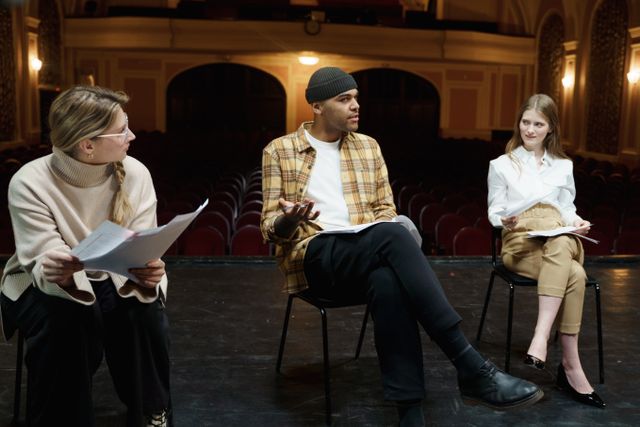
The concept resembles rehearsal in other forms of performance. Musicians practise before concerts, athletes train before competitions and speakers rehearse before major presentations. Professional careers also involve performance, yet educational systems have historically devoted more attention to learning the underlying knowledge than rehearsing the actual behaviours required to use that knowledge.
The career practice layer attempts to close that gap.
The Journey From Course Completion to Capability
Online education has made access to learning significantly more flexible. Students can study programming, artificial intelligence, finance, digital marketing, cybersecurity, communication, design and countless other subjects from almost anywhere. However, access to content does not automatically create professional capability.
A course can explain what a skill is. A quiz can test whether the student understands it. A project can demonstrate whether the student can apply it. An internship can expose the learner to a professional context. A certificate can document participation or completion. Career guidance can help the student understand where those capabilities may fit within a broader career pathway.
These elements become more powerful when they are connected.
A student learning data analysis, for example, might begin with an online course that establishes foundational concepts. Quizzes can identify whether the student understands statistics, spreadsheets or data interpretation. A practical project can then require the learner to analyse a dataset and communicate findings. A virtual work experience can introduce a simulated business scenario in which those findings need to inform a decision. An internship can subsequently provide exposure to a real organisational environment. The student’s certificate and project evidence can then contribute to a broader career profile.
This creates a progression from learning to rehearsal to application.
EasyShiksha can be understood within this broader model of connected learning. Its combination of courses, quizzes, internships, certificates, career guidance and other learning experiences creates the possibility of moving beyond isolated educational activities toward a continuous student journey.
The Career Practice Layer as a Digital Learning Environment
The development of digital education makes career rehearsal more scalable than it was in traditional educational environments. A physical classroom cannot always provide every student with an individual professional scenario. Digital platforms, however, can potentially generate different cases, assignments and simulations according to a learner’s interests and progress.
A student interested in finance might encounter a budgeting scenario. A learner exploring digital marketing might work through a campaign planning exercise. A computer science student might receive a debugging challenge. A learner interested in human resources might practise analysing a recruitment scenario. A student exploring entrepreneurship might evaluate a hypothetical business model.
The important element is context. A career practice environment should not simply transform every lesson into a multiple-choice test. It should introduce situations in which students have to interpret information, make decisions, create something, explain their reasoning or respond to changing circumstances.
This is where quizzes can also evolve beyond conventional assessment. Instead of only asking students to remember definitions, scenario-based quizzes can introduce workplace situations and test decision-making. A student could be asked to determine how to respond to a customer complaint, select an appropriate data visualisation, identify a cybersecurity risk or prioritise tasks under a deadline.
Such experiences can make assessment part of rehearsal rather than merely a measurement at the end of learning.
From Simulated Tasks to Virtual Work Experience
Career practice can naturally develop into virtual work experience. A simulation might begin with an individual task, but a more advanced experience can reproduce several stages of a professional assignment.
Consider a student interested in content marketing. The learner could receive a fictional company brief, identify its intended audience, conduct basic research, develop a content strategy, prepare sample content and interpret hypothetical performance results. Each stage creates a different opportunity to apply knowledge. The student is not simply watching how a marketer works. The student is attempting to perform the work.
This distinction matters because passive exposure and active practice create different learning experiences. Reading about project management does not necessarily develop project-management behaviour. Watching a tutorial about presentation skills does not automatically produce confident professional communication. A simulated environment can ask learners to make decisions and experience the consequences of those decisions.
Virtual work experience can therefore become an important bridge between academic learning and internships. It provides students with an opportunity to familiarise themselves with professional task structures before entering a workplace.
The Role of Projects in Career Rehearsal
Projects are one of the most practical forms of career practice because they transform abstract knowledge into visible evidence. A conventional course might conclude with an examination. A practice-oriented course can conclude with an artefact, analysis, presentation, application, campaign, report or other demonstrable output. The nature of the project depends on the discipline, but the principle remains similar: the student has to create something rather than merely recall information.
Projects also introduce complexity. A learner may discover that knowing individual concepts does not automatically make it easy to combine them. A project might require research, planning, technical execution, revision and communication. These are precisely the kinds of activities that frequently appear in professional environments.
For students, projects can therefore become early rehearsals for workplace responsibility. They can also provide material for portfolios and discussions during interviews. This changes the relationship between certificates and capability. A certificate can show that a learner completed an educational experience. A project can provide additional evidence of what the learner attempted to build, analyse or solve. The two do not have to compete. They can work together.
Quizzes as Micro-Rehearsals for Professional Thinking
Quizzes are often associated with basic knowledge testing, but their potential can extend considerably further. A well-designed quiz can function as a short rehearsal for professional decision-making.
Imagine a cybersecurity learner presented with a fictional security incident. Rather than simply identifying the definition of phishing, the student could analyse a scenario and determine which warning signs require attention. A finance learner could interpret a simplified financial statement. A marketing student could evaluate campaign performance. A project-management learner could determine which task should receive attention when several deadlines overlap. These activities create small moments of professional reasoning.
EasyShiksha’s quiz ecosystem can fit naturally into this model because frequent assessment can become part of an ongoing learning loop. Courses can establish knowledge, quizzes can diagnose understanding, projects can test application and internships can introduce workplace exposure. In a more advanced learning architecture, performance across these experiences could help identify where a student needs additional practice. The result is a transition from assessment as an endpoint to assessment as navigation.
AI and the Personalisation of Career Practice
Artificial intelligence could make career practice more adaptive. Students do not enter professional environments with identical levels of preparation. One learner may have strong technical knowledge but weak communication skills. Another may understand concepts well but struggle to apply them independently. A third may need more exposure to workplace decision-making.
An AI-enabled learning system could potentially analyse patterns across courses, quizzes and practical activities to recommend what a student should practise next. Instead of assigning identical exercises to everyone, the platform could adapt the difficulty, context or type of challenge.
This is where an AI Learning Architect could become relevant within an ecosystem such as EasyShiksha. The system could help connect learning objectives with practice activities, identify gaps and recommend a progression from foundational knowledge toward more complex professional tasks.
The purpose would not be to replace teachers, mentors or workplace supervisors. Rather, AI could provide additional personalisation and scale. It could help students encounter more relevant practice opportunities while allowing human educators and mentors to focus on guidance, feedback and deeper development.
Career Practice and Online Degrees
The need for career practice is particularly relevant to online higher education. Online degrees can provide flexibility for students who cannot attend conventional campuses, but flexibility should not mean that practical preparation disappears from the educational experience. An online degree can become more career-oriented when students have opportunities to connect academic subjects with projects, simulations, internships and professional scenarios.
For example, a student pursuing an online business degree could encounter case-based decision-making alongside theoretical subjects. A technology student could integrate practical projects with academic coursework. A communications student could practise professional presentations and content development. A management student could simulate team coordination, planning and decision-making.
This creates a more connected relationship between academic credentials and professional capability. The degree remains an important educational qualification, while the practice layer provides additional opportunities to demonstrate how knowledge can be used.
The Role of Games and Simulations in Career Learning
Games can also contribute to the career practice layer when they are designed around meaningful decisions rather than entertainment alone. Simulations can place students inside simplified professional environments where they must respond to changing conditions.
A business simulation might allow a learner to manage resources. A career game might ask students to choose between competing professional priorities. A technology simulation might present troubleshooting scenarios. A communication game could require learners to select appropriate responses in workplace situations. The advantage of simulation is that it can create controlled complexity. Students can experiment with decisions and observe consequences without facing the full risks of real-world employment.
For EasyShiksha, the combination of games, quizzes, courses and internships creates an opportunity to think about learning as an experience rather than a collection of content pages. Career exploration can become something students actively experience rather than something they postpone until graduation.
From Practice to Internship Readiness
Career practice does not eliminate the need for internships. Instead, it can help make internships more meaningful. Students entering their first internship often face an unfamiliar environment. They may not know how to interpret a task, communicate progress, ask questions or respond to feedback. A practice layer can introduce some of these behaviours before the internship begins.
This does not mean that simulated experience should be treated as equivalent to real employment. A digital scenario cannot reproduce every organisational culture, interpersonal dynamic or business constraint. Its value lies in preparation.
A student who has already practised project submission, professional communication, deadlines, presentations and problem-solving may enter an internship with a different level of familiarity with those processes. The internship then becomes another stage in the learning journey rather than the first moment when professional practice begins.
Building a Career Evidence Trail
One of the strongest implications of career practice is the creation of an evidence trail. Traditional education often leaves students with a collection of marks and certificates. A practice-oriented ecosystem can potentially produce a richer record consisting of completed courses, assessment performance, projects, practical challenges, internship experiences and demonstrated skills.
This could contribute to a digital learning identity in which the student can show not only what was studied but also how learning was applied.
Such an identity could become particularly useful for students who lack conventional work experience. A fresher may not have years of professional history, but they can still demonstrate projects, practical assignments and learning achievements. The result is not a promise of employment. Rather, it gives students more concrete material through which they can explain their preparation.
The Career Practice Layer and the Future of Recruitment
Recruitment has historically relied on signals such as degrees, grades, certificates, previous employment and interviews. As digital learning expands, additional forms of evidence may become easier to create and share.
Project portfolios, verified credentials and practical demonstrations can provide employers with more information about what a candidate has attempted. The challenge will be ensuring that such evidence is authentic, relevant and understandable.
This makes transparency important. A simulated project should be clearly identified as simulated. A virtual internship should not be represented as equivalent to employment unless it genuinely involves that form of professional experience. A certificate should accurately communicate what it certifies. Trust will become increasingly important as the digital education ecosystem expands.
Designing Practice Without Creating Artificial Complexity
Career practice should not simply make education harder for the sake of appearing practical. Effective practice needs to correspond to the learner’s stage. A beginner may need highly structured tasks with clear instructions. An intermediate learner can work with greater ambiguity. An advanced learner can receive incomplete information and be required to make independent decisions.
This progression mirrors professional development. Beginners often need guidance before they can operate independently. Career practice should therefore gradually reduce scaffolding.
EasyShiksha can support this progression by connecting courses and quizzes with increasingly complex projects and internship experiences. The goal is not to turn every student into a professional immediately. It is to create a structured path through which capability can develop.
The Student as a Practitioner, Not Only a Learner
One of the deeper changes introduced by career practice is conceptual. Students can begin to see themselves not only as people who are preparing to work someday but as practitioners already developing professional capabilities.
A programming student becomes someone who builds applications. A design student becomes someone who creates visual solutions. A marketing student becomes someone who analyses audiences and develops campaigns. A finance student becomes someone who interprets financial information.
The identity shift matters because learning becomes connected to action. When students repeatedly practise, receive feedback, revise their work and create evidence, education becomes less about waiting for a future moment of usefulness. The learning itself becomes a sequence of increasingly realistic applications.
Career Guidance as the Navigation Layer
Career practice becomes more valuable when connected to career guidance. Students may complete numerous activities without understanding how those experiences relate to potential career paths.
Career guidance can help learners interpret their interests, capabilities and experiences. A student who performs strongly in analytical projects may explore data-related pathways. Someone who enjoys communication-heavy tasks may investigate marketing, sales, content or customer-facing roles. Another learner may discover through repeated practice that a particular field is less appealing than expected.
This is an important feature of career exploration. Education should not only help students reach predetermined careers. It should also give them opportunities to discover what they do and do not want to pursue. An ecosystem combining career guidance with courses, quizzes, projects and internships can therefore support exploration as well as preparation.
From Completion to Confidence Through Practice
Course completion is measurable. Professional confidence is more difficult to measure, but repeated practice can contribute to it.
Confidence should not be confused with certainty. A student does not need to believe they can perform every professional task before entering the workplace. Instead, they need enough experience to approach unfamiliar problems with a willingness to learn, ask questions and apply what they know. Career practice can create this familiarity.
When students have already experienced deadlines, revisions, project requirements, presentations, simulations and feedback, the professional environment may contain fewer completely unfamiliar structures. This does not guarantee workplace success. It simply changes the starting point from which a learner enters professional life.
Building a Continuous Career Learning Loop
The career practice layer becomes most powerful when it is part of a continuous loop rather than a one-time activity. A student can learn through a course, test understanding through quizzes, apply knowledge through a project, practise professional scenarios through simulations, gain exposure through an internship, document achievements through certificates and portfolios, receive career guidance and then return to learning based on newly identified gaps.
This loop reflects the reality that professional development does not end with graduation. Skills change, technologies evolve and careers increasingly require continuous learning. A platform that connects learning and practice can therefore remain relevant beyond the student’s first career decision.
EasyShiksha’s broader ecosystem of courses, quizzes, internships, university programs, games, certificates, degrees, career guidance and job-oriented learning can be positioned around this continuous journey. The platform becomes not merely a place to consume educational content but a potential environment where learners can progressively move from knowledge toward capability and from capability toward professional exposure.
The Future of Education May Include a Rehearsal Stage
The traditional boundary between education and employment is becoming increasingly difficult to maintain. Students can now learn online, build projects digitally, collaborate remotely, participate in virtual experiences and develop professional portfolios before receiving their first formal job offer.
This does not mean that education should become entirely vocational. Academic knowledge, critical thinking, creativity, research and intellectual exploration remain important. Career practice should complement those foundations rather than replace them. The emerging model is therefore not education versus employability. It is education connected with application.
The career practice layer occupies the space between understanding and performing. It allows students to encounter professional problems before they encounter professional consequences. It creates room for experimentation, feedback and revision. It helps transform theoretical learning into practical evidence and gives students more opportunities to understand how their abilities relate to possible careers.
Conclusion: Rehearsing the Future Before Entering It
The first day of a professional career should not necessarily be the first day a student has ever encountered professional-style work. Education can provide opportunities to rehearse.
Courses can establish knowledge. Quizzes can test understanding and diagnose gaps. Projects can turn concepts into tangible work. Games and simulations can introduce decision-making. Virtual work experiences can recreate elements of professional environments. Internships can provide exposure to real organisations. Certificates can document learning achievements. Career guidance can help students interpret their experiences and identify possible pathways. Together, these experiences form a career practice layer.
For students, the value lies in having more opportunities to experiment before professional performance becomes high-stakes. For educators, it creates a way to connect academic learning with application. For digital education platforms such as EasyShiksha, it opens the possibility of designing a more continuous journey in which learning, practice, evidence, experience and career exploration are connected rather than separated into unrelated stages.