

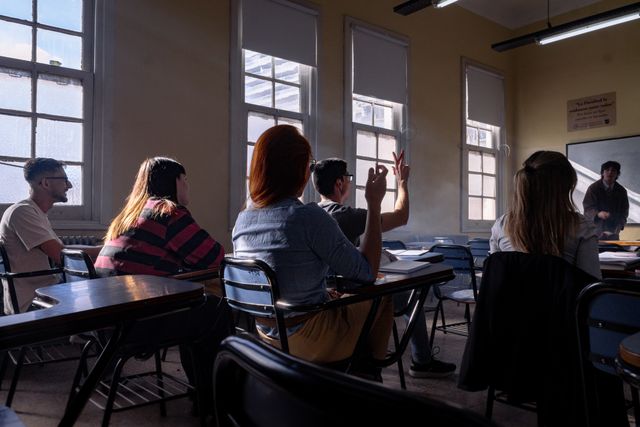
Every educational platform has students who actively participate in discussions, ask questions, post comments and request clarification whenever they encounter a difficult concept. Their activity is visible, making it relatively easy for educators to recognise when they are confused, interested or struggling. However, another group of learners moves through the same educational environment almost silently. They watch lessons, read explanations, attempt quizzes and sometimes complete entire courses without asking a single question. Their silence may be interpreted as confidence, independence or a lack of interest, but none of these assumptions necessarily reflects their actual learning experience.
These learners represent the Invisible Student problem in digital education. They are not invisible because they lack an account, activity history or educational goals. They become invisible because traditional approaches to student engagement often depend on explicit signals such as questions, comments, discussion participation and requests for help. When these signals are absent, a platform may struggle to distinguish a student who understands everything from one who is confused but reluctant to speak.
For example, a student learning programming through an online course may repeatedly encounter errors but avoid posting questions because they fear appearing inexperienced. Another student preparing for a university examination may understand most of a lesson but misunderstand one fundamental concept, quietly continue to the next chapter and gradually accumulate knowledge gaps. A third learner may be studying late at night on a mobile phone, without the time, confidence or stable internet connection required to participate in live discussions. All three may appear inactive from the perspective of classroom conversation, even though their learning needs are very different.
For EasyShiksha, this challenge creates an important opportunity to rethink how educational platforms recognise and support students. Online courses, quizzes, internships, certificates, university programmes, games and career guidance can serve learners with different communication styles, schedules and levels of confidence. The objective should be to make educational support available even when students do not ask for it. A successful platform must learn to recognise uncertainty without treating silence as proof of failure, and it must offer help without making students feel monitored, judged or pressured to participate.
Understanding the Invisible Student Problem
The Invisible Student is a learner whose educational needs remain difficult to identify because the platform receives limited or misleading signals about their understanding. The student may continue using educational resources while struggling with concepts, losing motivation or becoming uncertain about the next step. Since the learner does not explicitly communicate these difficulties, the system may interpret continued activity as evidence of successful progress.
This problem becomes particularly important in digital education because online learning removes many of the informal signals available in a physical classroom. A teacher in a classroom may notice a student’s hesitation, facial expression, repeated requests to see an example or difficulty beginning an assignment. Even these signals can be ambiguous, but they provide additional context. An online platform may only record that a video was played, a page was opened or a quiz was submitted.
A completed video does not necessarily indicate that the student understood the explanation. A high number of quiz attempts may indicate persistence, confusion or experimentation. A learner who spends a long time on a lesson may be thinking carefully, facing technical problems or studying in an environment full of distractions. Without additional evidence, the platform cannot reliably determine which explanation is correct.
The Invisible Student problem therefore involves more than low engagement. It concerns the gap between what the platform can observe and what the learner actually needs. Solving it requires educational systems to interpret activity cautiously, create low-pressure opportunities for communication and provide useful assistance before small difficulties become significant barriers to progress.
Why Students Rarely Ask Questions
Students may avoid asking questions for many reasons, and an effective education platform must recognise that silence is not a single behaviour with a single explanation. Some learners are naturally reserved, while others may have previous educational experiences that made them uncomfortable about admitting confusion. A student who was criticised for asking a basic question in school may carry that hesitation into an online learning environment.
Fear of judgment is especially relevant for beginners. Students often compare their progress with that of other learners, particularly when discussion forums display public questions and answers. They may worry that their confusion is obvious or that classmates will assume they lack ability. Even when a platform is designed to be welcoming, the possibility of being judged can prevent students from requesting help.
Language can create another barrier. Learners studying technical subjects in English may understand the general lesson but struggle to express a precise question in writing. They may know that something is confusing without having the vocabulary required to describe the problem. For students who are more comfortable in Hindi or another language, composing a question in English can create an additional cognitive burden.
Practical circumstances also matter. Some learners use shared devices, study in short periods between work or family responsibilities, or rely on mobile data that makes lengthy discussions inconvenient. Others may be uncertain about how to contact an instructor, whether a response will arrive in time or whether asking a question will interrupt their progress.
There are also students who prefer independent problem-solving. They may not ask for help because they want to explore a concept on their own, and this can be a productive learning strategy. A well-designed platform must distinguish between healthy independence and unsupported confusion rather than assuming that every silent student needs intervention.
The Difference Between Silence and Disengagement
One of the most important design principles for addressing invisible learners is to avoid treating silence as a direct measure of disengagement. A student who never posts a question may be deeply engaged with the material. Another student may post frequently without making meaningful progress. Communication volume alone cannot provide a reliable picture of learning.
The same distinction applies to activity metrics. Watching an entire lesson may suggest progress, but it does not prove understanding. Repeatedly opening a course may indicate commitment, but it may also reflect difficulty finding a particular explanation. A learner who stops interacting for several days may have abandoned the course, or may simply be managing examinations, work or personal responsibilities.
EasyShiksha could address this problem by interpreting multiple forms of evidence together. Quiz performance, repeated errors, progress through prerequisites, assignment outcomes and voluntary requests for assistance could provide a more balanced view of the learner’s experience. These signals would still require careful interpretation, but they could help the platform identify situations in which additional support might be useful.
The purpose would not be to assign every student an engagement label. It would be to recognise when the system lacks enough information to understand a learner’s progress and offer an appropriate way to gather more evidence. Sometimes the best action would be to recommend a diagnostic question. In other situations, it might be better to leave the learner undisturbed and make help available whenever they want it.
Designing Platforms That Notice Confusion Without Demanding Questions
Traditional digital learning often places the responsibility for requesting support entirely on the learner. When students encounter difficulty, they must recognise the problem, decide that help is necessary, identify the correct support channel and formulate a question. Each step creates friction, especially for beginners who do not yet understand what they are missing.
An invisible-student-aware platform could reduce this friction by making support available within the learning experience itself. When a learner answers a question incorrectly, the system could offer a short explanation, an alternative example or an opportunity to revisit the prerequisite concept. Instead of forcing the student to leave the lesson and search for help, the platform could provide an immediate route to clarification.
For instance, a student studying spreadsheets may repeatedly confuse formulas and functions. The platform could display a short comparison with a practical example, followed by a question that checks whether the distinction is now clear. The student would receive assistance without having to announce their confusion publicly.
This approach should remain supportive rather than intrusive. Students should be able to dismiss suggestions, continue independently or request a different explanation. The platform should avoid repeatedly interrupting learners based on weak evidence, because excessive prompts can create frustration and make the learning experience feel controlling.
For EasyShiksha, the principle is straightforward: asking questions should remain an option, not a prerequisite for receiving help. Educational support should be integrated into courses, quizzes and practical activities so that learners can move forward even when they are not comfortable speaking up.
The Quiet Signal Layer: Learning From What Students Do
A platform designed for invisible students could use a carefully constructed learning signal layer to interpret patterns that may indicate difficulty. Rather than relying exclusively on direct communication, it could examine educational evidence such as recurring errors, unsuccessful prerequisite questions, repeated attempts at the same task or differences between practice and assessment performance.
Suppose a learner completes a lesson about conditional statements in programming. They move forward quickly but repeatedly answer questions incorrectly when conditions are nested. This pattern may indicate that the student understands the basic syntax but has not yet mastered how multiple conditions interact. A platform could respond by offering a targeted exercise rather than recommending the entire course again.
However, signals should never be treated as definitive explanations of a student’s behaviour. Repeated quiz attempts may reflect a desire to improve a score, while a long pause could indicate an interruption rather than confusion. The system should therefore use confidence levels, combine relevant evidence and offer students a chance to confirm whether assistance is needed.
The platform should also distinguish between an observed event and an interpretation. It may know that a learner answered three questions incorrectly, but it cannot automatically know whether the cause was a conceptual misunderstanding, an unclear question, a language difficulty or an external distraction. Making this distinction helps prevent inappropriate recommendations.
EasyShiksha could explore this layer by connecting assessment results with concept-level feedback. The aim would be to identify where a learner might benefit from assistance, while preserving the learner’s freedom to decide how to proceed.
AI as a Silent Learning Assistant
Artificial intelligence could help invisible students by making it easier to obtain explanations without entering a public discussion or waiting for an instructor’s response. An AI learning assistant could answer questions in private, explain a difficult concept in simpler language, generate alternative examples and guide learners through problems step by step.
Privacy can be particularly valuable for students who fear that basic questions will reveal gaps in their knowledge. A learner studying cybersecurity, accounting or mathematics could request a beginner-level explanation without worrying about how classmates might react. The assistant could also help students formulate questions when they know that something is wrong but cannot explain the difficulty clearly.
For example, a student studying financial accounting might understand how to record a transaction but struggle to understand why an account is debited or credited. Instead of providing only the correct answer, an AI assistant could use a simple scenario, explain the underlying reasoning and ask the learner to apply the principle to another transaction. This would turn help into a learning interaction rather than an answer-delivery service.
AI assistance must nevertheless be designed with safeguards. Generated explanations can be inaccurate, incomplete or inconsistent with the course curriculum. The assistant should use reliable educational material where possible, acknowledge uncertainty and direct students to a human educator when a problem requires expert judgment.
For EasyShiksha, AI could provide a low-pressure support channel that complements courses, quizzes and instructor assistance. The purpose should not be to replace educators or encourage students to rely entirely on automated answers. It should help learners overcome the hesitation that sometimes prevents them from seeking clarification in the first place.
Building a Private Question Environment
Not every student wants to participate in public discussion forums. Some learners may be comfortable asking questions privately but unwilling to post them where classmates can see their mistakes. A platform that assumes public participation is necessary can unintentionally exclude these students.
A private question environment could allow learners to submit questions directly to an AI assistant, instructor or designated support channel. Depending on the platform’s capabilities, students could choose whether to share a question publicly after receiving an answer. This would give them greater control over how they participate.
The question interface should also reduce the effort required to ask for help. Instead of presenting only an empty text box, it could offer prompts such as asking for a simpler explanation, requesting another example, revisiting a prerequisite or checking a particular step. These options would help students communicate their needs even when they cannot formulate a detailed question.
Multilingual support could make this experience more inclusive. Where the platform can provide reliable language assistance, students could ask questions in a language they understand comfortably and receive explanations that match their preferred level of complexity. Technical terms could be preserved where necessary while the surrounding explanation becomes easier to follow.
An effective private question environment would not attempt to make every learner more talkative. It would make help easier to access in the form that best suits the learner, whether that means private AI assistance, written instructor feedback or a public discussion.
Micro-Interactions That Reveal Understanding
Long assessments are not always the best way to identify confusion. Some students may complete a lengthy quiz only to discover at the end that they misunderstood an early concept. Others may avoid formal assessments because they associate them with grades and judgment.
Micro-interactions offer an alternative. These are brief, low-pressure activities embedded within lessons, such as selecting an example, predicting the next step in a process, identifying an error or explaining a concept in one sentence. Their purpose is to help both the learner and the platform understand whether the lesson is making sense.
A course about digital marketing, for example, could ask students to distinguish between reach and conversion through a small campaign scenario. If the learner struggles, the system could show a short explanation before moving forward. A mathematics lesson could ask the learner to estimate an answer before revealing the full calculation. A programming lesson could invite the student to predict what a short piece of code will do.
These interactions should be formative rather than punitive. Students must be able to make mistakes without feeling that every response will permanently affect their educational record. The platform should focus on explaining concepts and supporting progress rather than turning every moment into a score.
EasyShiksha could incorporate such interactions into courses and quizzes to make understanding more visible without requiring students to ask questions. Over time, these small learning checks could provide more useful information about progress than course completion data alone.
The Invisible Student and Learning Anxiety
Learning anxiety can make it difficult for students to seek support, even when they recognise that they need it. A learner may worry about failing an examination, falling behind classmates or discovering that a subject is more difficult than expected. When these concerns are combined with uncertainty about how to ask for help, students may continue studying without addressing the underlying problem.
Educational platforms should respond by making mistakes a normal part of learning. Feedback should focus on the concept or strategy that needs attention rather than labelling the learner as weak or incapable. A message such as explaining that a particular prerequisite may need revision is more constructive than suggesting that the student is performing badly.
Progress should also be communicated in a way that reflects development rather than comparison. Public rankings, aggressive reminders and constant performance notifications can motivate some students but discourage others. A learner who already feels behind may become less willing to participate if the platform repeatedly emphasises how much progress other people have made.
An AI-supported platform could offer private progress summaries that explain what the learner has understood, what remains uncertain and which next step may be useful. Such feedback should be encouraging without making unsupported claims about the student’s emotional state.
EasyShiksha could make learning more approachable by combining accessible explanations, low-pressure quizzes and clear routes to support. The objective would be to help students feel that confusion is a manageable stage of learning rather than a reason to disengage.
Designing for Different Learning Contexts in India
A platform serving students across India must recognise that learners have different access conditions, language preferences and educational backgrounds. Some may have high-speed internet, personal laptops and quiet study spaces, while others may depend on shared smartphones, limited data or short periods of uninterrupted study.
These differences influence whether students can participate in discussion forums, attend live sessions or write detailed questions. A learner using a phone on a crowded commute may be able to watch a short lesson and answer a few questions but may find it difficult to type a long explanation of a problem. A working learner may study after regular business hours, when immediate instructor support is unavailable.
Accessible design can reduce these barriers. Short explanations, mobile-friendly interactions, clear navigation and lightweight learning activities can help students access support without requiring a particular device or schedule. Where feasible, saved progress and flexible study sessions can allow learners to return to difficult concepts without losing their place.
Language accessibility is equally important. Students may understand a technical concept more easily when the explanation begins with familiar examples and gradually introduces formal terminology. Offering different levels of explanation can support learners with varying levels of prior knowledge without making assumptions about their intelligence or potential.
For EasyShiksha, designing for invisible students means considering not only what learners need to understand, but also the practical conditions under which they are trying to learn. A support system that requires extensive writing, continuous connectivity or public participation may fail precisely the students it intends to help.
From Invisible Student to Visible Learning Progress
The goal of addressing the Invisible Student problem should not be to make every learner constantly visible to the platform. Excessive monitoring can undermine privacy and create pressure to interact merely to appear engaged. The more useful objective is to make learning progress clearer while allowing students to control their participation.
A learner should be able to see which concepts they have studied, which areas they have demonstrated successfully and where further practice could be valuable. This view could combine course history, quiz outcomes and project evidence without pretending that every aspect of understanding can be measured precisely.
Such a learning profile could also help students recognise progress that might otherwise go unnoticed. A beginner who once struggled with basic programming may gradually develop the ability to build a functional project. A learner who was reluctant to ask questions may become more comfortable seeking feedback after receiving consistent, respectful support.
The platform should allow this profile to change as the learner develops. Previous difficulties should not become permanent labels, and students should be able to demonstrate improvement through new assessments and practical work. Their educational history should support future learning rather than restrict future opportunities.
EasyShiksha could connect this progress view with its wider learning ecosystem. Course achievements, quiz performance, project completion, internship experience and certificates could contribute to a broader picture of development, giving students more useful evidence of what they can do and what they might learn next.
Connecting Invisible Students With Projects and Internships
Some students remain quiet during theoretical lessons but become more engaged when they can work on a practical task. A learner who rarely asks questions in a programming course may discover that they learn more effectively by building a small application. Another student studying marketing may find it easier to demonstrate understanding through a campaign project than through a discussion forum.
This makes practical learning an important component of inclusive educational design. Projects allow students to demonstrate understanding through their work, while structured feedback can reveal where additional guidance is required. The platform can use these experiences to identify gaps that may not appear clearly in traditional assessments.
Internships can provide another source of evidence, although their evaluation requires care. Workplace performance is influenced by supervision, task difficulty, team conditions and access to resources, so an internship outcome should not be treated as a pure measure of individual ability. However, structured reflections and feedback on specific tasks can help students understand which skills they have applied and which require further development.
For EasyShiksha, connecting courses with projects and internships could help quiet learners move from passive participation toward practical demonstration. A student would not need to be the most active person in a discussion forum to show that they can solve problems, complete tasks or develop professional capabilities.
The wider principle is that students should have multiple ways to demonstrate learning. Asking questions is valuable, but it should not be the only signal that a learner is engaged or capable.
Measuring Whether Invisible Students Are Receiving Better Support
Educational platforms need meaningful ways to determine whether their support systems are helping learners. Counting questions, comments or discussion posts may reveal participation patterns, but these measures cannot establish whether students understand concepts or receive the help they need.
A more useful evaluation would examine whether learners recover after encountering difficulties, improve on related assessments, complete practical tasks more successfully and retain important concepts over time. It could also examine whether students who rarely ask questions are able to access assistance and make progress without being subjected to unnecessary interruptions.
For example, a platform could compare how students perform on a concept before and after receiving a targeted explanation. It could examine whether a short revision activity helps learners answer new questions that require the same underlying knowledge. It could also gather voluntary feedback about whether the support was relevant, understandable and appropriately timed.
Evaluation should account for differences among students and avoid assuming that one intervention will work for everyone. Some learners may benefit from an AI explanation, while others may prefer a worked example, a short video or human feedback. A successful platform should learn which forms of support are useful in different circumstances without reducing students to fixed categories.
EasyShiksha could use these insights to improve course design and support mechanisms over time. The measure of success would not be whether the platform generates more activity, but whether more learners can understand difficult concepts, recover from confusion and continue toward their educational goals.
Privacy and the Limits of Predicting Student Behaviour
An AI system designed to identify invisible students could easily become overly intrusive if it attempts to infer too much from activity data. Time spent on a page, response speed, pauses and repeated attempts may provide useful context, but they can also reflect circumstances unrelated to learning. A student might pause because of a phone call, use a lesson slowly because they are taking notes or answer incorrectly because a question is poorly written.
The platform should therefore avoid making confident claims about motivation, intelligence or emotional state from weak signals. It should not assume that a student is anxious simply because they do not ask questions, or that a learner has lost interest because they have not opened a course recently. Such interpretations can create unfair labels and unnecessary interventions.
Responsible design requires data minimisation, transparent explanations and meaningful user control. Students should understand how learning signals influence recommendations and should have opportunities to correct misleading assumptions. Sensitive information should not be collected merely because it might improve a prediction, and educational records should not be shared beyond their intended purpose without an appropriate basis and consent where required.
Human support must remain available when automated assistance is insufficient. An AI system can help identify a possible difficulty, but educators and learners are better positioned to understand many personal and contextual factors. Technology should support that understanding rather than replace it.
For EasyShiksha, a trustworthy invisible-student strategy would balance helpful detection with restraint. The platform should make support easier to access while respecting a student’s right to learn privately, independently and at their own pace.
The Future of Education Platforms: Support Without Pressure
The next generation of education platforms may move beyond the assumption that engagement must be demonstrated through constant communication. Instead, systems could combine learning evidence, optional assistance and adaptive explanations to help students receive support in ways that match their needs.
In this model, a student who never posts in a forum could still receive useful feedback after a difficult quiz. A learner who struggles with a prerequisite could be offered a short refresher before beginning an advanced topic. Someone who prefers independent study could continue without interruption, knowing that explanations and instructor support remain available when needed.
Artificial intelligence could help coordinate these experiences by identifying relevant learning resources and adapting explanations to the student’s demonstrated understanding. However, the system would need to remain transparent about uncertainty and provide students with control over recommendations and interventions.
The broader transformation is from participation-centred design to learning-centred design. Rather than asking whether students are communicating enough, educational platforms would ask whether they have a clear path to understanding, whether barriers to assistance are being reduced and whether learners can demonstrate progress in different ways.
For EasyShiksha, this could mean creating stronger connections among courses, quizzes, practical activities, internships and career guidance. Every learner, including the quietest one, should have a way to access explanations, identify learning gaps and build evidence of capability without being forced into a single style of participation.
Conclusion: Every Student Deserves to Be Understood
The Invisible Student problem reveals an important limitation in digital education. A learner’s silence does not necessarily mean that everything is understood, that nothing is happening or that the student lacks interest. It may reflect confidence, personal preference, language barriers, practical constraints or uncertainty about how to request help. Educational platforms that depend only on explicit questions and visible participation risk overlooking students whose needs remain unspoken.
Addressing this problem requires a broader approach to learning design. AI-assisted explanations, concept-level quizzes, private question channels, micro-interactions, practical projects and accessible learning interfaces can create multiple ways for students to receive support and demonstrate understanding. These systems must interpret activity carefully, avoid permanent labels and respect the learner’s privacy and independence.
EasyShiksha could apply these principles across its online courses, quizzes, projects, internships, certificates, university programmes and career guidance. By connecting educational experiences and offering assistance at the point where it may be needed, the platform could help learners progress without requiring them to become the most vocal participants in the room.
The ultimate goal is not to make every student visible through constant tracking. It is to make every student’s learning needs easier to address. Education becomes more inclusive when support is available to those who ask for it and those who are not yet comfortable asking. A well-designed platform should ensure that silence never automatically becomes a barrier to understanding, progress or opportunity.