

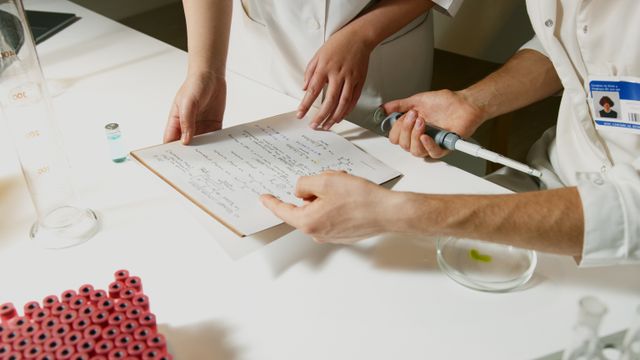
Laboratory education plays an essential role in helping students understand how theoretical knowledge works in practical environments. Whether learners are studying chemistry, physics, biology, engineering, computer science, environmental science, or biotechnology, experiments allow them to investigate concepts, test assumptions, collect evidence, and observe results. However, access to laboratory facilities is not equally distributed across educational institutions. Some universities have advanced research equipment, specialised laboratories, and experienced technical teams, while smaller colleges and schools may have limited facilities, outdated instruments, or insufficient resources for conducting complex experiments.
This difference creates an important educational challenge. Students studying the same subject may have very different opportunities to perform experiments, explore research methods, and develop practical skills. Even when institutions conduct similar experiments, their procedures, equipment configurations, measurement methods, and documentation standards may differ. As a result, students often have limited opportunities to compare experimental results with learners from other institutions or independently reproduce experiments conducted elsewhere.
A digital laboratory exchange could provide a new approach to addressing this challenge. It would operate as a shared educational environment where students and institutions publish documented experiments, exchange reproducible procedures, access approved datasets, and compare results generated under different conditions. Instead of treating laboratory activities as isolated assignments belonging to individual institutions, the platform would connect them through standardised experimental records and shared learning resources.
For example, a university student studying renewable energy could publish an experiment measuring the performance of a small solar panel under specified conditions. Students at another institution could use the same procedure with their available equipment, record their measurements, and compare the results. Differences could then be investigated through variations in sunlight intensity, temperature, equipment specifications, calibration, or experimental technique.
The purpose would not be to make every institution produce identical results. Scientific experiments often produce different outcomes because conditions, instruments, and measurement uncertainties vary. The objective would be to make those differences understandable, traceable, and useful for learning.
For EasyShiksha, a digital laboratory exchange could create a connection between online courses, university programmes, digital worksheets, quizzes, educational games, and practical learning opportunities. Students could learn experimental concepts through online resources, perform or simulate approved activities, publish their results, and compare their work with learners from other institutions. This article explores how such an exchange could operate, how reproducibility could be maintained, and how educational platforms could develop a collaborative laboratory ecosystem.
Understanding the Digital Laboratory Exchange Concept
A digital laboratory exchange is a structured online environment where educational institutions and students share experimental procedures, supporting information, datasets, observations, and reproducibility records. It is designed to make laboratory knowledge accessible across institutional boundaries while maintaining clear information about how each experiment was performed.
Unlike an ordinary file-sharing platform, a laboratory exchange must preserve the relationship between an experiment’s instructions and its results. A published experiment should explain its objective, materials, equipment requirements, procedure, measurement conditions, safety considerations, and method of analysis. Other students should be able to understand what was done and determine whether they can reproduce the activity using their available resources.
The exchange could support physical experiments, computer-based simulations, virtual laboratory activities, and analysis of previously collected experimental datasets. Each format would require different documentation standards. A physical chemistry experiment might need information about concentrations, temperature, equipment, and safety procedures. A software experiment could require code, library versions, operating system details, input data, and execution instructions. A biology activity might need sample preparation methods, observation conditions, and relevant ethical approvals.
The central principle is reproducibility. A student should not merely see another institution’s final result. They should be able to understand the process that produced it and, where suitable facilities and permissions exist, repeat the experiment.
This transforms the digital platform from a collection of laboratory reports into a connected research and learning environment.
Why Laboratory Experiments Should Be Shared Across Institutions
Laboratory learning is often limited by the resources available within an individual institution. Students may study advanced topics but have few opportunities to conduct experiments that require specialised equipment. Some institutions may have instruments that are not available elsewhere, while others may possess useful experimental datasets that are rarely used outside their original research environment.
Sharing documented experiments could help reduce this gap. Students would be able to access practical learning activities developed by different institutions and identify which experiments can be performed using their existing facilities. They could also access datasets from experiments that are too expensive, dangerous, or technically complex to reproduce independently.
This approach could improve the variety of laboratory experiences available to learners. A student studying environmental science at a college with limited laboratory facilities might use an experiment published by another institution to analyse water-quality measurements. A computer science student could access reproducible software performance experiments developed by a university research group. An engineering student could compare the results of a mechanical test conducted using different equipment configurations.
The exchange could also encourage institutions to collaborate instead of independently developing identical introductory experiments. A laboratory activity created by one institution could become a learning resource for others, provided that it is appropriately reviewed, documented, licensed, and maintained.
However, access to a published experiment does not automatically guarantee access to the physical equipment required to perform it. The exchange must clearly identify resource requirements and offer alternative learning routes, such as simulations or approved datasets, where physical replication is not possible.
The Reproducibility Problem in Educational Laboratories
Reproducibility is a central concern in scientific research, but it is equally important in laboratory education. Students should understand that an experiment is not defined only by its final result. Its reliability depends on the methods, equipment, conditions, measurements, and decisions used during the investigation.
Two students may follow instructions that appear identical but obtain different results. These differences could arise from measurement uncertainty, instrument calibration, environmental conditions, human error, sample variation, or differences in the materials used. If the original experiment does not document these factors, another learner may struggle to identify why their results differ.
For example, consider a physics experiment measuring the acceleration due to gravity using a pendulum. The result may be influenced by the pendulum length, timing method, amplitude of oscillation, and measurement precision. If a published experiment provides only the final calculated value without explaining these conditions, another student cannot determine whether a different result reflects a genuine methodological difference or an avoidable measurement problem.
A digital laboratory exchange should therefore encourage complete experimental documentation. It should record not only the intended procedure but also relevant conditions, deviations, observations, and limitations. Students should be encouraged to report unexpected results instead of changing measurements simply to match an expected answer.
This is an important educational benefit. Reproducibility teaches students that scientific investigation involves uncertainty, careful documentation, and evidence-based interpretation rather than producing a predetermined result.
Creating a Standardised Digital Experiment Record
A successful laboratory exchange would need a common format for publishing experiments. Without standardisation, institutions might upload reports using different structures, terminology, measurement units, and levels of detail. Comparing these records would become difficult, particularly when experiments involve several technical variables.
A standardised experiment record could begin with a clear title and research objective. It would describe the scientific principle being investigated and explain the question the experiment is intended to answer. The record would then identify the materials, equipment, software, and other resources required.
The procedure would describe the experimental steps in sufficient detail for another student to understand and repeat them. Relevant variables, measurement methods, environmental conditions, and data collection intervals would also be documented. Where calculations are involved, the record would explain the formulas and assumptions used to interpret the results.
The experiment record should also include the actual observations and the method used to analyse them. Students should be able to distinguish raw measurements from calculated values, estimated quantities, and final conclusions. If the experiment produces unexpected results, the record should preserve them rather than replacing them with idealised values.
Safety instructions and institutional requirements would be essential for physical laboratory activities. Experiments involving chemicals, electrical systems, biological materials, specialised equipment, or human participants would require appropriate approvals and supervision before publication or replication.
This common structure would make experimental records easier to review, search, compare, and reuse across educational institutions.
How Students Could Publish and Exchange Experiments
A digital laboratory exchange could allow students to publish experiments through a guided submission process. Rather than uploading an unstructured report, the student would complete a standard experiment template containing the required technical and educational information.
The student could begin by selecting a subject area and describing the research question. They would then provide the experimental procedure, relevant equipment details, measurement conditions, and supporting materials. If the experiment uses code, spreadsheets, simulation files, or specialised software, the corresponding resources could be attached with version information and execution instructions.
Before publication, the experiment would undergo an appropriate review process. Introductory educational activities might receive review from a course instructor or laboratory supervisor. More advanced experiments involving specialised equipment or safety risks would require qualified subject experts and institutional approval.
Once approved, the experiment could receive a unique identifier. This identifier would allow other institutions to reference the original procedure when conducting their own version. Students reproducing the experiment could submit their results as linked records rather than creating unrelated reports.
The exchange could then display the original experiment alongside the results submitted by different institutions. This would make it possible to compare methods, conditions, measurements, and interpretations without losing the connection to the original work.
The process would also provide students with experience in technical documentation, research communication, and responsible sharing of academic work.
Example: Reproducing a Solar Energy Experiment Across Universities
A practical example can demonstrate how the exchange might operate. Imagine a university publishes an experiment investigating how the angle of a solar panel affects its electrical output. The experiment includes a small photovoltaic panel, a measurement device, a defined procedure, and instructions for recording voltage and current under specified conditions.
The original students publish their procedure, equipment specifications, measurement intervals, weather conditions, and calculations. Another university accesses the experiment and decides to reproduce it using a similar solar panel. Its students follow the documented procedure and record their results.
The second institution may discover that its measurements differ from the original results. Instead of treating this difference as a failure, the students investigate possible explanations. They examine whether the solar panels have different specifications, whether the sunlight conditions were comparable, whether the measurement devices were calibrated, and whether the angle was measured consistently.
A third institution might reproduce the experiment using a different panel type and contribute another dataset. The combined records could help students examine how equipment differences influence the relationship between panel angle and electrical output.
The exchange would therefore create a learning experience that goes beyond following a laboratory manual. Students would investigate experimental variation, compare evidence, and understand why accurate documentation is necessary for scientific conclusions.
The platform could also connect the activity with an online course explaining photovoltaic principles, a worksheet for recording measurements, and a quiz assessing students’ understanding of voltage, current, and power.
Supporting Physical, Virtual, and Computational Laboratories
Not every institution has access to the same laboratory facilities. A digital exchange should therefore support several types of experimental activity while clearly distinguishing between them.
Physical laboratory experiments involve real equipment, materials, and measurements. These activities are important for developing practical skills, understanding instrument behaviour, and experiencing real experimental uncertainty. Their records should include relevant equipment specifications, calibration information, environmental conditions, and safety requirements.
Virtual laboratories use simulations to represent experimental systems. They can help students investigate situations that are difficult, expensive, or unsafe to reproduce physically. For example, students could simulate the movement of a projectile, examine electrical circuits, or investigate chemical reactions through an approved digital model. The exchange should identify the software and model assumptions used so that other students understand what is being simulated.
Computational experiments involve code, algorithms, mathematical models, or data analysis. Students could share reproducible notebooks, scripts, datasets, and instructions for recreating a result. These records should include software versions, dependencies, input data, and relevant configuration details. Without this information, another student may be unable to reproduce the result even when the code appears complete.
The three formats can complement each other. Students might first explore a concept through simulation, then perform a physical experiment, and finally analyse the collected data using computational tools.
For EasyShiksha, supporting these different formats could create opportunities to connect theory-based courses with practical and digital laboratory experiences.
Building Institutional Collaboration Through Shared Laboratory Resources
A digital laboratory exchange could help educational institutions collaborate beyond the boundaries of their individual campuses. Universities, colleges, schools, and research centres could contribute different types of resources according to their facilities and academic strengths.
An institution with an advanced materials science laboratory might publish approved experiments that allow students elsewhere to study material properties through shared datasets. Another institution with strong computer science facilities could contribute computational experiments, programming environments, and reproducible analysis notebooks. A college with limited laboratory resources might contribute local environmental observations or carefully documented introductory experiments.
This exchange would encourage institutions to share educational resources that can support learning without requiring every institution to own identical equipment.
It could also support collaborative laboratory programmes. Two universities might agree to investigate the same research question using different instruments. Their students could compare the effects of measurement methods and identify which conclusions remain consistent across experimental conditions.
Institutional collaboration would require clear agreements about resource ownership, publication permissions, data access, student contributions, and academic recognition. Not every research dataset or experiment can be shared publicly. Institutions may need restricted access for commercially sensitive, confidential, or ethically controlled information.
A well-governed exchange could make institutional collaboration more systematic while respecting academic responsibilities and intellectual property.
Using AI to Improve Experiment Documentation and Reproducibility
Artificial intelligence could support several stages of a digital laboratory exchange. Students may find it difficult to document experiments completely, especially when they are new to research methods. AI-assisted tools could help them identify missing information, organise experimental notes, and check whether essential details have been included.
For example, a student submitting a physics experiment might provide the procedure and final measurements but forget to document the instrument’s precision or the environmental conditions. An AI-assisted system could identify these missing details and request clarification before the experiment is submitted for review.
AI could also help compare experiment records. If two institutions use different names for similar measurement variables, the system could suggest possible correspondences for human verification. It might identify differences in units, detect inconsistent data formats, or flag calculations that require checking.
Another useful application would involve recommending related experiments. A student studying heat transfer might receive suggestions for other experiments involving thermal conductivity, insulation materials, or temperature variation. This could help learners discover connections between laboratory activities and develop a broader understanding of the subject.
However, AI should not automatically declare an experiment reproducible or scientifically valid. A system may identify missing documentation, but it cannot always determine whether an experimental method is appropriate or whether a conclusion is justified. Qualified instructors and subject experts must remain responsible for technical validation.
AI-generated explanations and data summaries should also be checked against the original experimental record. The system must never invent measurements, replace unexpected results, or silently modify observations to make different datasets appear consistent.
The most useful role of AI would be to improve documentation, discovery, and comparison while keeping research decisions transparent and accountable.
Linking Laboratory Exchanges With Online Courses and Digital Worksheets
A laboratory exchange becomes more valuable when students can prepare for experiments through structured learning resources. Many learners may not understand the scientific principles or technical procedures required to reproduce an experiment. They may also need guidance on measurement, data recording, calculations, and interpretation.
Online courses could introduce the concepts before students access the laboratory activity. A course on basic electrical engineering, for example, could explain voltage, current, resistance, power, and measurement instruments before students attempt an electrical circuit experiment.
Digital worksheets could provide a consistent structure for recording observations and calculations. Students could enter their measurements, document relevant conditions, compare expected and actual results, and explain differences. These worksheets could also help instructors identify incomplete records before students publish their experiments.
Quizzes could evaluate whether learners understand the principles behind the experiment. A student completing a chemistry experiment might be asked to interpret concentration changes, recognise relevant safety procedures, or identify the variables that influence the reaction.
This integration would create a learning pathway in which students prepare for an experiment, perform or simulate it, document their findings, and compare their results with other institutions.
For EasyShiksha, the laboratory exchange could become an additional practical layer connecting online courses, quizzes, worksheets, and university programmes. Students would not simply study a concept and answer questions about it. They would gain opportunities to investigate the concept through documented experimental activities.
Educational Games as Preparation for Laboratory Decision-Making
Educational games could help students understand experimental design before they work with actual laboratory equipment. Laboratory work often requires decisions about measurement methods, available resources, experimental variables, and the order of procedures. Beginners may struggle to recognise the consequences of making an incorrect decision.
A simulation-based educational game could present a fictional experiment in which students must select suitable instruments, identify variables, and decide how to collect measurements. The system could show how different decisions affect the quality of the resulting data.
For example, a game based on a water filtration experiment might ask students to compare different filter materials while controlling other conditions. If students change several variables simultaneously, the game could demonstrate why it becomes difficult to identify which factor caused the observed difference.
An advanced version could introduce measurement uncertainty, limited equipment availability, and conflicting observations. Students would need to decide whether the evidence is sufficient to support a conclusion or whether another experiment is required.
These activities could prepare students for laboratory exchanges by developing an understanding of experimental reasoning. They would also make it possible to practise certain decisions in a safe digital environment before performing physical experiments.
The game should remain connected to the scientific principles taught in the corresponding course. Its purpose would be to prepare students for real investigation rather than replace practical laboratory experience.
Creating a Reproducibility Score Without Reducing Science to a Single Number
A digital laboratory exchange might introduce a reproducibility indicator to help users understand how completely an experiment has been documented and whether it has been repeated under comparable conditions. However, such a measure should not be treated as a simple ranking of scientific quality.
An experiment could receive a strong documentation rating because it includes complete procedures, equipment details, measurement conditions, and analysis methods. Yet another institution might still be unable to reproduce its results because the equipment is unavailable or because an important experimental factor has not been recognised.
The platform should therefore distinguish documentation completeness from experimental replication outcomes. It could show whether an experiment has been reviewed, whether another institution has attempted it, whether the procedure was followed as described, and whether the resulting measurements were comparable.
Differences between results should also be recorded rather than automatically treated as evidence of failure. In many scientific investigations, variation is expected and can provide useful information about uncertainty or experimental conditions.
A reproducibility record could describe the conditions under which a replication was successful, partially successful, or inconclusive. It should also explain what changed between the original and repeated experiments.
This approach would provide more useful information than a single score because it would show how an experiment performs across different environments.
Managing Data Quality and Experimental Differences
When students from multiple institutions contribute experimental results, the quality of the combined dataset becomes a major concern. Different institutions may use different equipment, measurement units, sample preparation procedures, and data collection methods. These differences must be documented before the results are compared.
For example, two institutions studying water temperature may record measurements at different intervals or use instruments with different levels of precision. If the platform combines the values without identifying these differences, the resulting dataset may create misleading patterns.
A digital laboratory exchange should therefore encourage standardised data formats and clear unit definitions. Where measurement methods differ, the platform should preserve the original values and record the relevant methodological information. Data transformations should be documented so that another student can understand how the results were prepared for comparison.
Students should also learn the difference between raw data, cleaned data, and interpreted results. Raw measurements should not be silently replaced by corrected or calculated values. If an observation is removed because it is invalid, the reason should be recorded.
University students could use shared datasets to investigate measurement uncertainty, sampling differences, and data quality. This would create an opportunity to learn that experimental results require careful interpretation rather than simple comparison of final numbers.
The exchange should encourage participants to report uncertainty and limitations honestly. A dataset that contains imperfect measurements can still be educationally useful when its limitations are clearly explained.
Protecting Laboratory Safety and Ethical Standards
A digital laboratory exchange must not treat every published experiment as suitable for unrestricted replication. Some experiments involve hazardous chemicals, high-voltage equipment, biological materials, specialised machinery, human participants, or environmental risks. These activities require appropriate institutional supervision, equipment, training, and ethical approval.
Experiments involving school students require particular attention. Young learners should only receive activities suitable for their age and educational environment. A procedure that is acceptable in a supervised university laboratory may be inappropriate for a school setting or an unsupervised home environment.
The platform should classify experiments according to their safety requirements and clearly state whether they require trained supervision or specialist facilities. Higher-risk experiments should only be accessible to appropriately authorised participants and institutions.
Ethical requirements are equally important. Experiments involving human participants, personal information, biological samples, or sensitive datasets may require formal ethical review. Published procedures should identify relevant approvals and restrictions without exposing confidential information.
Institutions must also consider the risks of sharing technical procedures that could be misused. Access controls may be necessary for certain experiments, and the platform should provide a process for reporting unsafe or misleading content.
Safety and ethical review should be part of the experiment publication process, not an additional step introduced only after a problem occurs.
Recognising Student Contributions and Building Research Portfolios
Participating in a digital laboratory exchange could help students build evidence of practical and research-related competencies. A student might contribute an experiment, reproduce a procedure developed by another institution, analyse a shared dataset, or identify a limitation in an existing method.
These activities could become part of a digital research portfolio. The portfolio would show the student’s role, the experiment they worked on, the procedures they followed, the evidence they produced, and the analysis they completed.
For example, a computer science student might publish a reproducible performance benchmark comparing two algorithms. Another student could reproduce the benchmark using a different system configuration and explain why the execution times vary. Both students would have different contributions that demonstrate relevant technical skills.
A chemistry student might document an approved experiment and analyse the measurement uncertainty, while an engineering student could contribute a technical review of an equipment configuration. The resulting portfolio could show experience in documentation, experimental reasoning, collaboration, and evidence interpretation.
For EasyShiksha, these records could be connected with course certificates, university learning pathways, and internship activities. Students could demonstrate practical learning evidence rather than relying exclusively on course completion records.
However, the portfolio should accurately represent individual contributions. It should not suggest that a student performed an experiment when they only analysed an existing dataset or reviewed another participant’s procedure. Clear contribution descriptions would make the record more credible for academic and professional use.
How Internships Could Connect With the Digital Laboratory Exchange
Internships could provide another practical dimension to the laboratory exchange. Some experiments developed in educational environments are connected to problems that also exist in industry. Students could use the exchange to understand an experimental method before applying similar principles in a supervised professional setting.
For example, a student who has studied material testing through shared laboratory experiments could undertake an internship involving quality control or materials analysis. A learner who has worked with environmental datasets might explore an internship in sustainability research or environmental monitoring.
Professionals participating in the exchange could identify suitable educational experiments that demonstrate skills relevant to their industries. They might also contribute anonymised or approved datasets that allow students to practise analysis using realistic information.
However, educational experiments should not automatically be treated as substitutes for professional training. Industrial laboratories may involve additional safety requirements, regulatory standards, equipment specifications, and quality assurance procedures. Students should understand these differences before applying academic methods in workplace environments.
The platform could connect laboratory activities with relevant internship preparation courses and practical assignments. This would help students understand how experimental skills transfer from academic learning to professional work.
Building a Shared Experimental Knowledge Library on EasyShiksha
EasyShiksha could potentially develop a digital laboratory library where approved experiments are organised according to subject, difficulty, equipment requirements, and learning objectives. The library could include original procedures, replication records, datasets, simulation files, and educational explanations.
A student searching for a physics experiment could find resources connected to mechanics, electricity, optics, or thermodynamics. Each experiment could include information about its intended learning level, required equipment, safety conditions, and whether it can be completed through a physical or virtual environment.
The library could also identify experiments that have been reproduced by multiple institutions. Students would be able to examine how results vary across different conditions and learn from the explanations provided by previous participants.
A search system could connect experiments with related online courses, quizzes, and worksheets. For example, a learner accessing a basic electronics experiment could also find a course explaining circuit fundamentals, a worksheet for recording measurements, and a quiz evaluating relevant concepts.
The library would require a review and maintenance system. Technical procedures may become outdated when equipment, software, or scientific standards change. Each experiment should therefore have a version history and an appropriate review status.
The goal would be to develop a reliable collection of reusable educational experiments rather than an unrestricted repository of unverified student uploads.
Challenges in Implementing a Cross-Institution Laboratory Exchange
Despite its potential, a digital laboratory exchange would require significant coordination between educational institutions. One major challenge is the variation in equipment availability. A procedure designed for an advanced university laboratory may not be suitable for a school or a college with limited resources.
The platform would need to identify equipment requirements accurately and provide alternative routes where possible. Some experiments could be adapted for lower-cost equipment, while others might be offered through simulations or shared datasets. These alternatives should be clearly labelled because a simulated result is not identical to a physical measurement.
Another challenge is standardisation. Institutions may follow different laboratory manuals, terminology conventions, and assessment practices. The exchange would need common documentation standards without forcing every institution to abandon its existing academic procedures.
Expert review could also become a bottleneck. A large platform may receive more experimental submissions than its reviewers can assess. Institutions could address this through approved academic partnerships, trained reviewers, subject-specific moderation, and clear review priorities.
Intellectual property and data ownership would require transparent policies. Students and institutions should understand who owns an experiment, which materials can be reused, and whether datasets may be published or modified.
Finally, long-term maintenance is essential. A procedure that worked with an older software version or a discontinued instrument may no longer be reproducible. The platform should allow contributors to report outdated resources and maintain a clear record of revisions.
These challenges do not make the concept impractical, but they demonstrate why governance and quality assurance must be considered from the beginning.
Future Possibilities: A Network of Connected Digital Laboratories
In the future, digital laboratory exchanges could develop into networks in which educational institutions share experiments, datasets, simulations, and research activities across geographical boundaries. Students could participate in experiments designed by institutions in other regions and compare their findings with results produced under different environmental or technical conditions.
For example, an environmental science challenge could involve water-quality observations collected by several institutions in different locations. Students could use common documentation standards while examining how local conditions influence the results. University researchers could analyse the combined dataset, while professionals could explain the practical implications of the findings.
AI-assisted systems could help identify related experiments, recommend suitable replication opportunities, and detect inconsistencies in documentation. Digital laboratories could also connect with remote instruments, allowing students to access certain equipment through supervised online sessions where institutions have the necessary infrastructure.
Another possibility is the development of experiment dependency networks. Students could see which experiments build on earlier concepts and how different procedures contribute to a larger investigation. A basic experiment on electrical resistance could connect to more advanced activities involving circuit behaviour, sensor systems, and energy efficiency.
These networks could help students understand scientific knowledge as a connected process rather than a collection of unrelated laboratory exercises.
However, technological development should not replace the fundamental principles of research. Reliable methods, careful observation, appropriate supervision, transparent documentation, and critical interpretation will remain essential regardless of how advanced the digital infrastructure becomes.
Conclusion: Making Laboratory Knowledge Shareable, Reproducible, and Collaborative
A digital laboratory exchange could transform laboratory education by connecting students and institutions through documented, reproducible experiments. Instead of restricting experimental knowledge to individual campuses, educational platforms could create an environment where learners access approved procedures, reproduce suitable activities, compare results, and understand why experimental outcomes differ.
The most important feature of this model is not simply the ability to upload laboratory reports. It is the ability to preserve the complete relationship between an experiment’s objective, procedure, equipment, conditions, observations, and conclusions. When these details are documented carefully, students can investigate how knowledge is produced and why reproducibility matters.
For EasyShiksha, this concept offers an opportunity to connect online courses, university programmes, digital worksheets, quizzes, educational games, and internships with practical laboratory learning. Students could prepare through courses, practise experimental reasoning through interactive activities, perform or simulate approved experiments, and build research portfolios using documented contributions.
However, the exchange must maintain strong standards for safety, academic review, data quality, intellectual property, and technical maintenance. Not every experiment can be reproduced everywhere, and not every difference in results indicates an error. The platform must help students understand these limitations rather than hide them.
Ultimately, laboratory learning should not depend entirely on the resources available within one institution. A well-designed digital laboratory exchange could allow educational communities to share methods, compare evidence, and build on one another’s work. By making experiments more accessible and reproducible, educational platforms could help students move beyond following instructions towards understanding how scientific and technical knowledge is investigated, tested, and improved.