

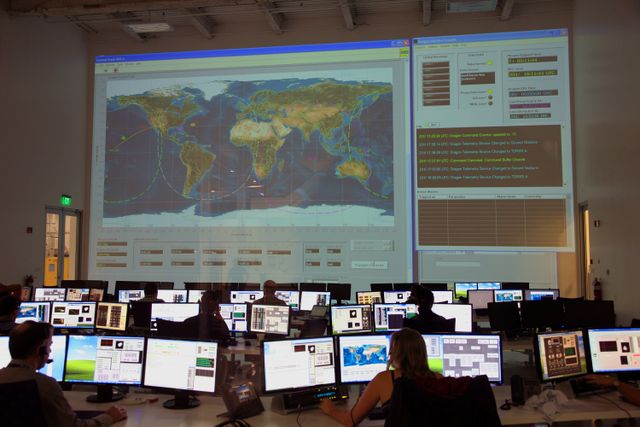
Modern education offers students more learning opportunities than ever before. They can study through online courses, assess their knowledge with quizzes, build practical projects, earn certificates, participate in internships, explore university programmes and prepare for employment through career guidance. Yet the availability of these opportunities does not automatically create a coherent educational journey. Students frequently need to decide what to learn next, when to practise, how to evaluate their progress and which experiences will bring them closer to their professional goals. When every activity operates independently, learners must coordinate the entire process themselves.
This challenge introduces the concept of an Education Mission Control System, a central coordination architecture that connects educational activities, learning goals, assessments, practical experiences and career milestones into one organised system. Rather than treating courses, quizzes, projects and internships as separate products, this model views them as interconnected components of a larger mission: helping each learner develop the knowledge, capabilities and experience required to reach meaningful educational and professional outcomes.
The concept draws inspiration from mission control environments, where multiple activities, changing conditions and important decisions must be coordinated around a shared objective. In education, the objective might be to become a frontend developer, prepare for a professional certification, complete a degree, develop data analytics skills or transition into a new career. Achieving that objective requires more than completing individual learning activities. It requires understanding dependencies, tracking progress, responding to setbacks and ensuring that every activity contributes to the intended outcome.
For an ecosystem such as EasyShiksha, an Education Mission Control System could potentially connect online courses, quizzes, certificates, projects, internships, university programmes, games, career guidance and job-oriented learning through a unified learner experience. The opportunity would not simply be to place every service inside one dashboard. It would be to coordinate these services intelligently so that students understand where they are, what they should focus on next and how their current activities contribute to their longer-term goals.
The future of digital education may therefore depend not only on the quality of individual learning resources, but also on how effectively those resources work together. An Education Mission Control System offers a way to make that coordination an explicit part of educational design.
What Is an Education Mission Control System?
An Education Mission Control System can be understood as a central framework that coordinates a learner’s educational journey around defined objectives, measurable milestones and interconnected learning activities. It combines planning, progress monitoring, assessment, recommendations and practical experience into a system that helps students move from their current capabilities toward a desired outcome.
Traditional learning platforms often organise their interfaces around available products. Students browse a course catalogue, enrol in a programme, attempt quizzes, download certificates and separately search for internships or employment opportunities. Each service may be useful, but the learner must determine how the services fit together. A mission control model reverses this arrangement by beginning with the intended outcome and organising the available resources around it.
Consider a student who wants to become a frontend developer. The student may need to strengthen HTML, CSS and JavaScript, learn React, complete practical projects, demonstrate technical understanding and gain experience through an internship. A mission control system could map these requirements into a coordinated progression. It might recommend a foundational course, use quizzes to assess understanding, introduce a project after relevant concepts have been learned and suggest internship preparation when the student has demonstrated sufficient readiness.
The system would not need to force every learner through an identical sequence. A student who already understands JavaScript could move directly toward more advanced material, while a beginner could receive additional foundational support. The architecture would maintain the overall objective while adapting the route to the learner’s existing knowledge, available time and demonstrated progress.
In this sense, Education Mission Control is not simply another course dashboard. It is a coordination layer that helps educational activities function as parts of a larger system.
Why Education Needs a Coordination Layer
The growing number of digital learning opportunities has created a paradox. Students have more access to educational resources, yet they may find it increasingly difficult to decide which resources matter most. A learner interested in artificial intelligence might discover dozens of courses, tutorials, certificates and project ideas without knowing which combination will develop genuine capability. Another student may complete several introductory courses but never progress toward practical application.
This problem is not always caused by poor educational content. It can emerge because the relationships between activities are unclear. A course may teach a concept without explaining what the student should be able to do afterward. A quiz may produce a score without recommending a useful next step. An internship may provide experience without connecting that experience to the learner’s previous training or future development needs.
A coordination layer addresses these gaps by making educational dependencies visible. It helps students understand why an activity matters, which prerequisites are required and what evidence will indicate that a milestone has been achieved.
For EasyShiksha, this could potentially create a more connected experience across the educational services available within its ecosystem. Courses would contribute to defined capabilities, quizzes would help assess progress, projects would provide opportunities to apply knowledge and internships would introduce workplace experience. Certificates could document achievements, while career guidance could help learners interpret those achievements in relation to future opportunities.
The result would be an educational environment in which students spend less effort navigating disconnected services and more effort developing useful capabilities.
The Mission Objective: Begin With the Desired Outcome
Every effective mission control system needs a clear objective. In education, that objective should be more meaningful than simply completing a particular number of courses. Course completion can be an important milestone, but it does not necessarily establish that a learner can apply the knowledge or perform a relevant task independently.
An educational mission should therefore begin with an outcome that can be described in terms of knowledge, skills, practical performance or a recognised academic achievement. A student might aim to build and deploy a responsive website, analyse a dataset, complete the requirements of a university programme or prepare for a specific professional role.
Once the objective is defined, the system can work backward to identify the capabilities and experiences needed to reach it. For a learner pursuing frontend development, these might include understanding web fundamentals, writing JavaScript, building interactive interfaces, using React, debugging applications and explaining technical decisions. Each capability becomes a smaller objective that can be developed and evaluated.
This approach helps students distinguish between activities that are merely available and activities that contribute directly to their goals. It also makes it easier to identify missing capabilities before a learner invests substantial time in unrelated courses.
An EasyShiksha mission control experience could potentially allow students to select a learning or career objective and receive a structured pathway based on relevant courses, assessments, projects and practical opportunities. The pathway would serve as a starting plan rather than an unchangeable prescription. Students could revise their objectives as their interests and circumstances evolve.
The Mission Dashboard: Understanding the Current State
A central dashboard would provide students with a clear overview of their current learning position. However, its purpose should extend beyond displaying the number of courses completed or certificates earned. It should help learners understand their progress in relation to their objectives.
A useful dashboard could distinguish between capabilities already demonstrated, activities currently in progress, prerequisites that remain incomplete and upcoming milestones. It could also show whether a learner’s progress is supported by assessment evidence or merely by participation. This distinction matters because enrolling in a course does not establish mastery, and watching a lesson does not necessarily demonstrate that a skill can be applied.
For example, a student pursuing data analytics might have completed an introductory statistics course and passed a quiz on descriptive measures. The dashboard could show these achievements while identifying practical data cleaning and visualisation as the next areas to develop. Once the learner completes a project using a dataset, the system could update the progress record based on the evidence available.
The dashboard should also avoid overwhelming students with excessive indicators. A screen filled with dozens of progress bars, alerts and numerical scores may create the appearance of sophistication without helping learners make better decisions. The most important information should be the information that supports a meaningful next action.
For EasyShiksha, the mission dashboard could potentially become the central point from which students navigate their educational journeys. Rather than asking learners to remember what they completed across multiple services, it could present an organised view of their progress and explain which steps deserve attention.
Coordinating Courses With Capability Development
Courses provide structured opportunities to acquire knowledge, understand concepts and build foundational skills. Within an Education Mission Control System, however, courses should be selected and sequenced according to their contribution to the learner’s objective.
This requires the system to understand the relationship between course content and target capabilities. A course on JavaScript fundamentals may support several later activities, including interactive web development, React programming and browser-based applications. A course on financial accounting may prepare a student for bookkeeping software, financial analysis and accounting-related internships.
The system could use these relationships to identify prerequisites and recommend an appropriate learning sequence. If a learner struggles with a foundational concept, the next activity might reinforce that concept before introducing more complex material. If the learner already demonstrates the required knowledge, the system could allow an appropriate alternative route.
Such coordination can reduce unnecessary repetition while protecting essential foundations. It also helps students understand why a course appears in their pathway instead of presenting recommendations without context.
EasyShiksha could potentially connect course outcomes with broader capability descriptions. A learner would not simply see that a course has been completed; they would understand which learning objectives the course supports and what additional evidence may be required before a capability can be considered demonstrated.
Quizzes as Navigation and Diagnostic Instruments
Quizzes are frequently used to evaluate whether students remember information or understand particular concepts. In a mission control architecture, their role could expand to include navigation. Assessment results could help determine whether a learner is ready to move forward, needs further practice or should revisit a prerequisite.
For instance, a student studying programming might complete a module on functions and then attempt a quiz designed to test conceptual understanding. If the student performs well, the system could recommend a practical exercise involving functions in a larger application. If the student repeatedly makes errors related to parameters or return values, the system could suggest a focused revision activity.
The key is to interpret quiz results at the appropriate level. A single incorrect response should not automatically prevent a learner from progressing. The question might have been misunderstood, or the student may have made an isolated mistake. Decisions should consider the assessment’s purpose, the pattern of responses and the importance of the concept being evaluated.
A mission control system should also distinguish between familiarity and independent application. Multiple-choice questions can test conceptual knowledge efficiently, but they may not establish that a student can build a working application or solve a practical business problem. Quizzes should therefore be one source of evidence among several.
Within EasyShiksha, quizzes could potentially operate as decision points connecting courses to further practice. Their purpose would not be merely to generate a score, but to help determine which educational action is most useful next.
Projects as Practical Mission Milestones
Projects transform learning from the acquisition of information into the application of knowledge. They require students to combine concepts, make decisions, solve problems and produce something that can be evaluated. This makes projects particularly important within an Education Mission Control System.
A project milestone should be connected to the capabilities it is intended to demonstrate. A frontend development project might require the learner to build a responsive interface, handle user interactions and organise code effectively. A data analytics project might involve cleaning a dataset, selecting appropriate visualisations and explaining the findings. A digital marketing project could require a campaign plan supported by audience research and measurable objectives.
The project should also fit the learner’s current stage. Introducing a complex capstone before the student has acquired essential foundations may create unnecessary frustration. Conversely, repeatedly assigning simple exercises after a learner has demonstrated competence can slow progress.
A coordinated system could therefore use previous course and assessment results to recommend an appropriate project level. It could define the expected outcome, identify relevant prerequisites and explain what evidence will be needed to complete the milestone. Feedback from the project could then inform the next stage of the learning pathway.
For EasyShiksha, projects could potentially connect online courses with internship preparation and career development. A completed project would not automatically prove professional readiness, but it could provide concrete evidence of application and reveal which capabilities need further development.
Internships as Real-World Missions
Internships introduce students to professional environments where tasks, expectations and constraints differ from those found in structured lessons. Learners may need to collaborate, communicate progress, work within deadlines and adapt when requirements change. These experiences are difficult to reproduce fully through course completion alone.
Within a mission control architecture, internships should be connected to the learner’s previous preparation and future objectives. A student pursuing web development might first complete foundational courses and projects before being directed toward relevant internship opportunities. The internship could then provide experience with practical workflows, team communication and real deliverables.
This does not mean that a platform should automatically decide whether every learner is ready for every internship. Internship providers may have their own requirements, and students may benefit from guidance that helps them understand those expectations. The system should make relevant information available while allowing learners and providers to make appropriate decisions.
The end of an internship should also trigger reflection and progression rather than simply closing the activity. Students could document what they worked on, identify the skills they practised and consider feedback from supervisors where available. These observations could inform the next learning recommendation.
EasyShiksha could potentially use this structure to connect learning with practical exposure. The internship would become a meaningful stage in the learner’s development rather than an isolated opportunity disconnected from previous educational activity.
Certificates as Verified Milestones
Certificates can document course completion, participation or the achievement of specified learning requirements. Within an Education Mission Control System, they would function as milestones in a larger journey rather than as automatic proof of every capability associated with a subject.
A certificate may confirm that a learner completed a course, but it does not necessarily establish that the learner can independently perform a complex professional task. The mission control system should therefore preserve the meaning of each credential and distinguish it from other forms of evidence.
For example, a student might complete a React course and receive a certificate. The system could record that achievement while identifying a practical project as the next step toward demonstrating application. After completing the project, the learner might have a stronger combination of structured learning and practical evidence to present during an internship application.
This approach gives certificates a clear place within the educational journey. They remain valuable records of achievement without being treated as the final measure of capability.
EasyShiksha could potentially connect certificates with the courses, assessments and projects they represent. This would make the learner’s record easier to interpret and help students understand what a certificate establishes, what it does not establish and which experiences could strengthen their professional profile.
Career Milestones and Long-Term Direction
Education becomes more purposeful when students can connect learning activities with future possibilities. Career milestones can help establish this connection by translating a broad ambition into stages that are easier to understand and pursue.
A student interested in data analytics, for example, may begin by developing spreadsheet and statistics skills, then progress toward SQL, data visualisation and practical analysis. Later milestones might involve building a portfolio, preparing for interviews and applying for relevant internships or entry-level roles. Each stage contributes to a broader career objective without implying that completing a fixed sequence guarantees employment.
Career milestones should remain flexible because students frequently discover new interests as they gain experience. An internship may reveal that a learner prefers business analysis over software development. A project may introduce a student to a subject they had not previously considered. The system should support these changes rather than interpreting them as failures to follow the original plan.
EasyShiksha could potentially connect career guidance with course progress, demonstrated skills and practical experience to help students explore suitable pathways. Recommendations should explain their reasoning and present options rather than treating an algorithm’s prediction as a final career decision.
The mission control model would therefore coordinate progress toward a career goal while preserving the learner’s freedom to revise that goal.
Dependency Mapping: Understanding What Must Happen First
Educational milestones often depend on one another. A learner may need foundational programming knowledge before building a complex application, or basic accounting concepts before completing an advanced financial analysis task. When these dependencies remain invisible, students may select activities that are either too difficult or unnecessarily repetitive.
A dependency map represents the relationships between learning objectives and practical milestones. It can show which capabilities support later tasks, which requirements are optional and where alternative routes may exist. This makes the learning pathway more transparent and easier to adapt.
For example, a student interested in machine learning may need mathematical foundations, programming experience and familiarity with data handling. These areas do not always need to be completed in one rigid order, but certain prerequisites will influence how effectively the student can understand advanced concepts. A dependency-aware system could identify these relationships and recommend a sequence that suits the learner’s current knowledge.
Dependencies should not become permanent barriers. Students may demonstrate a prerequisite through previous study, professional experience or an alternative assessment. A flexible mission control system should recognise such evidence rather than requiring everyone to complete every activity in the same order.
For EasyShiksha, dependency mapping could potentially help connect courses, quizzes and projects into pathways that are coherent without becoming inflexible. It would make the logic behind recommendations more visible and help learners understand why a particular milestone is important.
AI as the Coordination Intelligence
Artificial intelligence could support an Education Mission Control System by analysing relevant learning information, identifying potential gaps and recommending suitable next steps. Rather than operating as a separate chatbot that answers isolated questions, AI could help coordinate the relationships between educational activities.
It might recognise that a student has completed the necessary foundational modules, performed well on relevant assessments and is ready to attempt a practical project. It could also identify that a learner repeatedly struggles with a particular prerequisite and suggest targeted revision before the next stage. When circumstances change, the system could help revise the pathway.
However, AI recommendations should remain explainable and open to correction. The system may lack information about a student’s schedule, prior experience or personal priorities. It should not assume that every delay indicates disengagement or that every predicted career match represents the best choice.
Human judgment remains essential when decisions affect important educational or professional opportunities. Students should be able to question recommendations, adjust their goals and choose alternative routes where appropriate. AI should help organise complexity, not take ownership of the learner’s future.
EasyShiksha could potentially use AI as a coordination layer that connects courses, assessments, projects and career resources while preserving student choice. Its value would come from helping learners make better decisions, not from automating every decision available.
Handling Delays, Setbacks and Changing Priorities
No educational journey proceeds exactly according to plan. Students may struggle with a difficult concept, pause learning because of personal commitments, discover that a chosen career path is unsuitable or need more time to complete a project. A rigid mission system could treat these events as failures, while a well-designed system would treat them as conditions requiring adjustment.
A mission control architecture should therefore support replanning. When a learner falls behind, the system could help identify the affected milestone and determine whether the original schedule remains realistic. It might recommend a shorter study sequence, revise deadlines or suggest revisiting a prerequisite before proceeding.
The system should also distinguish between delays that affect learning and delays that simply reflect a different pace. A student who takes longer to complete a course may still develop strong capabilities. The objective should be meaningful progress rather than compliance with a single standardised timeline.
For EasyShiksha, this flexibility could make learning pathways more accessible to students balancing education with employment, family responsibilities or other commitments. Rather than presenting a missed milestone as evidence of failure, the platform could help learners understand their options and resume progress.
A mission control system should make it easier to recover from disruption, not create additional pressure through excessive alerts or rigid progress scores.
Personalisation Without Losing the Overall Mission
Personalisation allows learners to follow different routes toward similar objectives. Some students need more foundational instruction, while others can move quickly into advanced work. Some learn best through structured explanations, while others benefit from practical experimentation. A mission control system should accommodate these differences without losing sight of the intended outcome.
This requires a balance between flexibility and coherence. If every activity is personalised independently, the overall learning journey may become fragmented again. A student could receive recommendations that appear relevant individually but do not contribute to a clear progression. Conversely, a pathway that is too rigid may ignore existing knowledge and force students to repeat material unnecessarily.
A coordinated system can preserve the overall objective while adapting the activities, sequence and support provided along the way. Different learners might complete different courses or projects, but they could still work toward the same clearly defined capability or career milestone.
EasyShiksha could potentially use this approach to support learners with varied backgrounds and levels of experience. The system would not need to assume that every student requires the same pathway. Instead, it could use relevant evidence to propose an appropriate route while making the objective and alternatives visible.
Privacy, Student Autonomy and Responsible Coordination
A central learning dashboard can improve visibility, but connecting multiple educational services also raises privacy concerns. A mission control system may bring together assessment results, course history, project records, internship information and career interests. This information should not become a reason to monitor every aspect of a student’s behaviour.
Only information that is necessary for a defined educational purpose should be used to coordinate the learning journey. Students should understand which information informs recommendations, how it is retained and whether it is shared with other services or organisations. Access should be limited according to legitimate needs, and sensitive information should receive appropriate protection.
Student autonomy is equally important. A mission control system should help learners understand their options rather than creating a single route they feel compelled to follow. Recommendations should be explainable, and students should be able to change objectives, explore alternatives and correct inaccurate records.
For EasyShiksha, these principles could support a learner-centred coordination architecture. The platform could potentially provide integrated progress information without treating every click or pause as a measure of motivation. It could connect meaningful educational evidence while respecting the boundaries between learning support, behavioural monitoring and consequential decisions.
The purpose of coordination is to reduce complexity for students, not to increase control over them.
Measuring Success Beyond Course Completion
An Education Mission Control System requires measures of success that reflect the full learning journey. Course completion, quiz scores and certificate issuance are useful indicators, but they represent different parts of educational progress. None should be treated as a complete measure of career readiness.
A broader evaluation could examine whether students successfully move from foundational knowledge to practical application, whether they demonstrate competencies across relevant tasks and whether their learning records provide useful evidence of development. It could also consider whether students can revise their pathways when goals change and whether they can resume learning after setbacks.
For example, a learner might complete several courses but struggle to apply the material in a project. The mission control system should recognise the completed courses while identifying practical application as an area for development. Another student might have substantial prior experience and demonstrate a target capability through an assessment, making it unnecessary to repeat introductory activities.
These distinctions help prevent the system from rewarding activity alone. The objective is not to maximise the number of courses, projects or certificates a student accumulates. It is to coordinate experiences that produce meaningful development.
For EasyShiksha, success could potentially be evaluated through the quality of transitions between educational stages, the relevance of recommendations and the learner’s ability to demonstrate and communicate capabilities. These indicators would provide a more complete picture than course completion alone.
The Future of Education Mission Control
As digital education expands, students will increasingly combine formal programmes with online courses, practical projects, short credentials, internships and professional learning. Their educational journeys may cross several institutions and platforms, making coordination more important than ever.
An Education Mission Control System could become a central layer that helps learners understand how these experiences fit together. It could maintain a clear view of goals, prerequisites, current activities, completed milestones and possible next steps. AI could support planning and recommendations, while portable learning records could help preserve evidence across educational transitions.
Such a system would not replace teachers, universities, employers or the learner’s own judgment. Instead, it would help coordinate their contributions. Educators could provide instruction and feedback, assessment could reveal areas for improvement, projects could demonstrate application, internships could create workplace experience and career guidance could help students interpret their progress.
For EasyShiksha, this concept offers a way to connect its broader educational ecosystem around the learner’s objectives. Rather than presenting courses, quizzes, certificates, projects and internships as separate destinations, the platform could potentially help students understand how each experience contributes to a larger mission.
The long-term opportunity lies in making educational journeys more coherent, adaptive and transparent without making them rigid or intrusive.
Conclusion: Education Needs Coordination, Not Just More Content
The future of digital education will not be determined solely by how many courses a platform offers or how many certificates students can earn. It will also depend on how effectively learners can move from one educational experience to another, understand their progress and make informed decisions about what comes next.
The Education Mission Control System provides a framework for addressing this challenge. It begins with meaningful objectives, coordinates courses with capability development, uses quizzes to diagnose learning needs, connects projects with practical application, integrates internships with professional experience and treats certificates as milestones within a broader journey. Career guidance then helps students interpret their achievements and explore possible next steps.
For EasyShiksha, the opportunity is to make these connections more visible and useful. A learner should be able to understand not only what they have completed, but also which capabilities they have demonstrated, what remains to be developed and how their current activities relate to their future goals. AI could support this coordination by recommending appropriate actions, while privacy safeguards and learner choice would ensure that the system remains supportive rather than controlling.
Ultimately, an effective Education Mission Control System would not attempt to manage every detail of a student’s life. It would help students coordinate the educational activities that matter, navigate setbacks, adapt their plans and build evidence of meaningful progress.
Education becomes more powerful when its components work together. When courses, quizzes, projects, internships and career milestones are coordinated around the learner’s objectives, the educational journey becomes more than a collection of disconnected activities. It becomes a structured, adaptable system for developing knowledge, practical capability and long-term professional direction.