

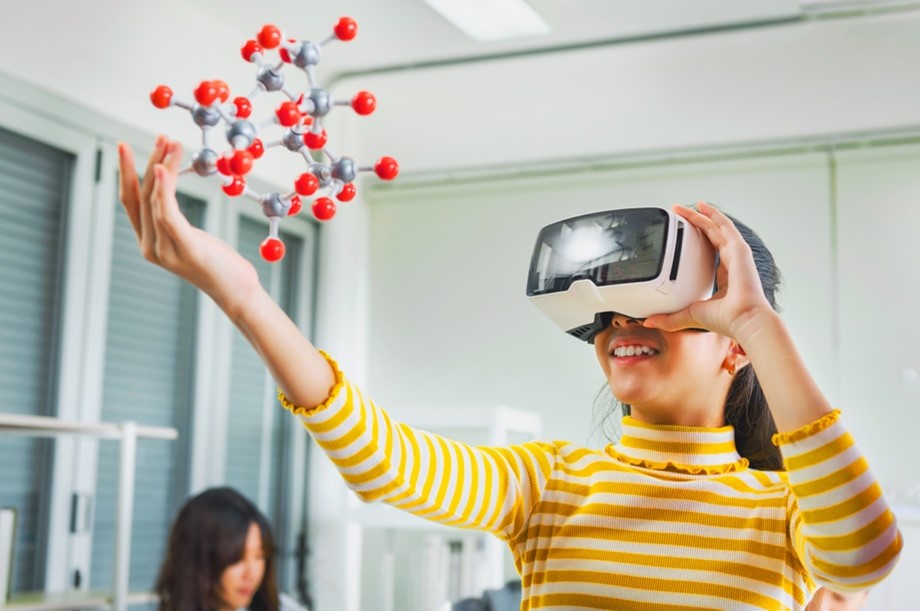
AR & VR in EdTech: Redefining Immersive Learning for 2025
Augmented Reality (AR) and Virtual Reality (VR) have rapidly evolved from futuristic concepts into mainstream EdTech tools reshaping learning experiences worldwide. As digital learning grows, immersive technologies are empowering educators to teach complex concepts visually, interactively, and experientially—far beyond traditional classroom boundaries.
This article explores how AR & VR are transforming education, the top use cases, key benefits, and the future of immersive learning.
What Makes AR & VR So Powerful in Education?
Both technologies bring learning to life:
-
AR overlays digital content on the real world using smartphones, tablets, or AR glasses.
-
VR transports the learner into a fully virtual environment using VR headsets.
This creates a highly interactive and sensory-rich learning experience that improves understanding, engagement, and retention.
Top Applications of AR & VR in Education
1. Virtual Science Labs
Schools and universities can create fully equipped science labs using VR—allowing students to perform experiments safely and cost-effectively.
Benefits:
-
No risk of injury
-
No need for expensive lab equipment
-
Can repeat experiments unlimited times
2. AR-Enhanced Textbooks and Diagrams
AR-enabled textbooks turn flat images into 3D interactive visuals.
Students can:
-
Scan diagrams to view 3D models
-
Watch animations of processes
-
Explore structures layer by layer
Perfect for subjects like biology, chemistry, engineering, and architecture.
3. Virtual Field Trips
VR allows students to travel anywhere in the world—or out of it.
Examples:
-
Exploring the ocean floor
-
Touring historical sites
-
Visiting the solar system
-
Observing wildlife in natural habitats
Virtual tours make learning exciting, affordable, and accessible for all.
4. Skill Training & Job Simulations
VR simulations are now widely used for professional and vocational training:
-
Medical procedures
-
Mechanical repairs
-
Aircraft maintenance
-
Hospitality training
-
Factory operations
Students gain hands-on experience in a safe, controlled environment.
5. Language Learning with AR Characters
AR-powered language apps enable learners to interact with virtual characters in real-world environments.
This improves:
-
Pronunciation
-
Real-life conversation practice
-
Vocabulary building
6. Special Education Support
AR & VR offer personalized tools for special-needs learners, such as:
-
Social skill simulations
-
VR sensory rooms
-
AR visual cues for learning disabilities
These technologies help create inclusive learning experiences.
Benefits of AR & VR in Modern Learning
✔ Enhanced Engagement
Immersive visuals make learning enjoyable and interactive.
✔ Better Conceptual Understanding
Complex ideas become easier to grasp through 3D representation and simulation.
✔ Increased Retention Rates
Students remember more when they learn through experience rather than theory.
✔ Safe Practice Environments
High-risk activities can be practiced without danger.
✔ Cost-Effective Training
Reduces the need for physical equipment, travel, or repeated resources.
✔ Supports Different Learning Styles
Visual, kinesthetic, and auditory learners all benefit from immersive lessons.
Challenges to Consider
While powerful, AR & VR adoption faces challenges such as:
-
High initial cost for hardware
-
Limited content availability in some regions
-
Need for teacher training
-
Device compatibility issues
However, rapid innovation is reducing these barriers each year.
The Future of Immersive EdTech
The next generation of AR & VR in education will include:
-
AI-driven adaptive simulations
-
Holographic classrooms
-
Immersive metaverse campuses
-
Digital twins of laboratories, hospitals, and factories
-
Gesture-based interaction and haptic feedback
Learning will increasingly shift from reading to experiencing.
Conclusion
AR and VR are reshaping the way students learn, helping educators provide richer, deeper, and more impactful educational experiences. As immersive technology becomes more accessible, it will play a central role in the future of education—making learning not just informative, but unforgettable.