

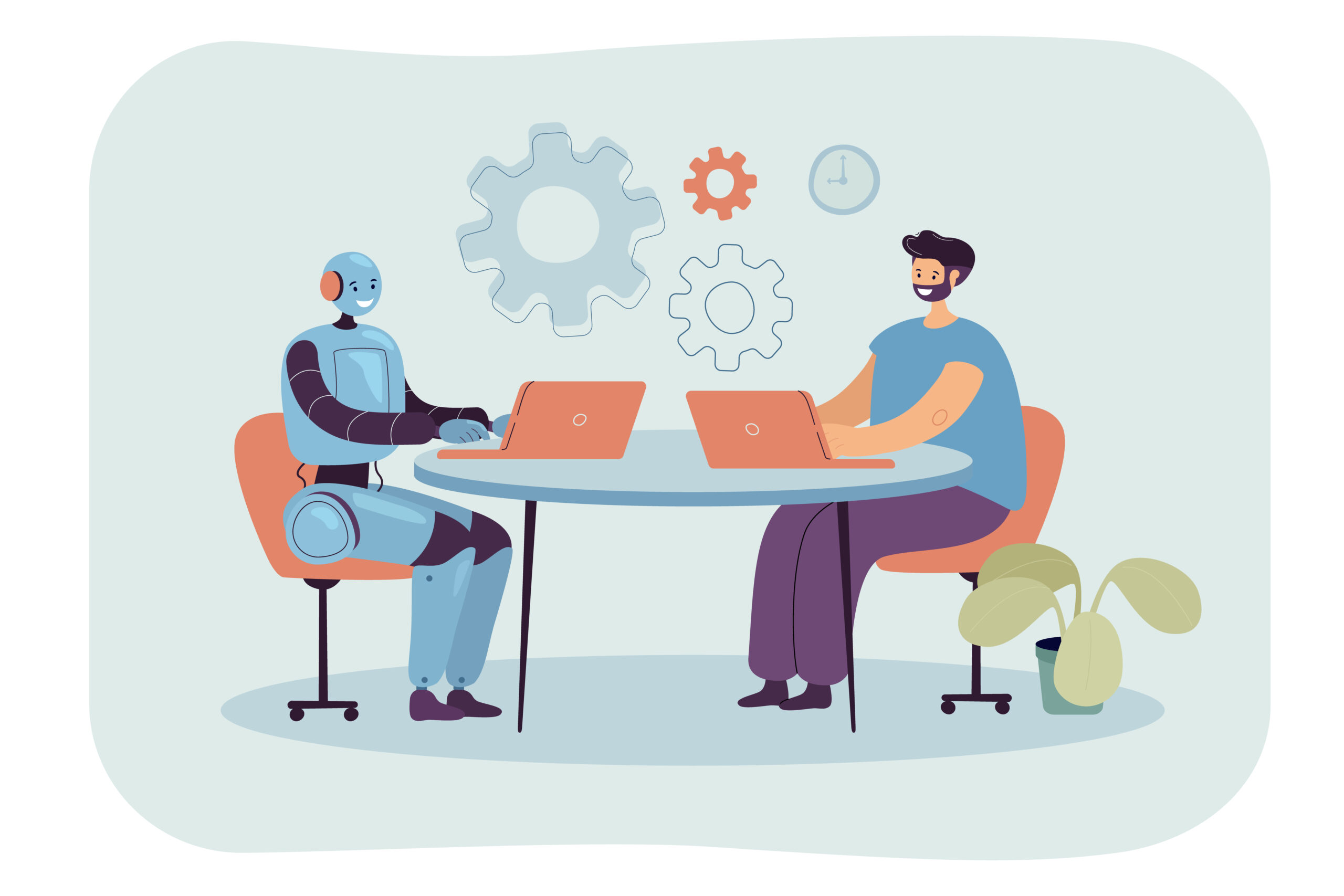
AI Is Replacing Jobs – Here’s How You Can Use AI to Get Hired Instead
“AI is replacing jobs.”
You’ve probably heard this everywhere.
- News headlines warn about automation.
- Social media predicts mass unemployment.
- Students are confused.
- Professionals are anxious.
But here’s the truth most people miss:
- AI is not just replacing jobs.
- AI is replacing people who don’t adapt.
At the same time, it is creating massive opportunities for those who learn how to use it by platforms like EasyShiksha.
The Reality: Is AI Replacing Jobs?
Yes — but not in the way you think.
AI is replacing:
-
Repetitive tasks
-
Manual data entry
-
Basic content generation
-
Routine customer service responses
-
Simple coding tasks
-
Basic analytics work
But AI is also creating demand for:
-
AI specialists
-
Prompt engineers
-
Automation experts
-
AI-integrated marketers
-
Data-driven decision-makers
-
Creative strategists
History shows us something important.
- When computers were introduced, people feared job losses.
- Instead, new industries were born.
- When the internet emerged, traditional jobs changed.
- But millions of new digital careers appeared.
AI is the next evolution.
Why AI Is Transforming the Job Market in 2026
Several factors are accelerating AI adoption:
1. Cost Efficiency
Companies use AI to reduce operational costs.
2. Speed & Productivity
AI tools perform tasks in seconds that humans take hours to complete.
3. Data Explosion
Businesses generate massive data daily — AI helps analyze it quickly.
4. Competitive Pressure
Companies adopting AI outperform those that don’t.
This means one thing:
AI integration is no longer optional.
It is mandatory.
The Biggest Mistake Students Are Making
Many students are:
-
Avoiding AI
-
Ignoring AI tools
-
Fearing automation
-
Complaining about job scarcity
Instead of learning how to leverage AI.
Avoidance is dangerous. Because employers now expect AI familiarity.
If you don’t understand AI tools, someone else will. And they will get hired.
The Shift: From “AI Replacing Jobs” to “AI Augmenting Professionals”
AI does not replace high-value professionals. It enhances them. You also can enroll in such courses.
For example:
A digital marketer using AI can:
-
Analyze audience data faster
-
Generate optimized ad copy
-
Predict customer behavior
-
Improve ROI
A coder using AI can:
-
Debug faster
-
Generate boilerplate code
-
Improve efficiency
A data analyst using AI can:
-
Automate repetitive reporting
-
Identify trends faster
-
Focus on strategy
AI removes low-value tasks.
It amplifies high-value thinking.
The New Hiring Standard: AI + Human Intelligence
In 2026, employers are not asking:
“Do you know AI?”
They are asking: “How do you use AI to improve outcomes?” That difference is critical.
The most attractive candidates now demonstrate:
-
Tool proficiency
-
Strategic thinking
-
AI-assisted productivity
-
Critical evaluation of AI outputs
The future belongs to AI-augmented professionals. You must have at least one certificate related to AI.
High-Demand Careers Emerging Because of AI
Let’s explore roles growing rapidly due to AI expansion.
1. AI Engineer
Designs, trains, and deploys AI systems.
Skills:
-
Python
-
Machine learning
-
Neural networks
-
Deep learning
High salary potential.
2. Prompt Engineer
Crafts precise prompts to generate better AI outputs.
Requires:
-
Language clarity
-
Logical thinking
-
Experimentation
Companies now value professionals who can “talk to AI effectively.”
3. AI Product Manager
Bridges business and AI technology.
Responsibilities:
-
Identifying AI use cases
-
Managing implementation
-
Measuring ROI
Requires both technical and business understanding.
4. AI-Integrated Digital Marketer
Uses AI tools for:
-
Content optimization
-
Ad automation
-
Predictive analytics
-
Audience targeting
These marketers outperform traditional marketers.
5. Automation Specialist
Designs workflows that automate business processes using AI tools.
Highly valuable for startups and enterprises.
Jobs That Are Becoming AI-Proof
Certain careers are harder to replace:
-
Strategic leadership
-
Creative direction
-
Complex problem-solving roles
-
AI system design
-
Relationship-based professions
-
Ethical oversight
These roles require judgment, empathy, and strategic thinking.
AI supports them — but doesn’t replace them.
How Students Can Use AI to Get Hired
Now let’s move from theory to action.
Step 1: Learn AI Tools in Your Field
If you’re in:
Marketing:
-
Use AI for ad copy testing
-
Learn AI-based SEO tools
-
Automate reporting
Coding:
-
Use AI coding assistants
-
Understand prompt-based code generation
Design:
-
Use AI image generation
-
Improve prototyping speed
Business:
-
Use AI for forecasting
-
Analyze customer trends
Tool literacy is essential.
Step 2: Build AI-Enhanced Projects
Instead of saying:
“I know AI.”
Show:
-
AI-based chatbot project
-
AI-driven marketing campaign
-
AI-automated reporting system
-
Machine learning prediction model
Projects build credibility.
Step 3: Develop AI + Domain Combination
AI alone is not enough.
Combine it with domain expertise.
Examples:
- AI + Healthcare
- AI + Finance
- AI + Cybersecurity
- AI + Education
- AI + Marketing
This makes you rare.
And rare professionals get hired faster.
Step 4: Focus on Critical Thinking
AI makes mistakes.
Employers value professionals who:
-
Verify AI outputs
-
Detect biases
-
Improve AI results
-
Apply human judgment
Your brain is still the ultimate competitive advantage.
Step 5: Gain Practical Experience
Internships and real-world exposure teach:
-
AI implementation challenges
-
Workflow integration
-
Real problem-solving
Theory is not enough.
Execution wins.
AI and the Competitive Job Market
In competitive hiring environments:
Candidates are screened by:
-
Skill relevance
-
Tool familiarity
-
Project portfolios
-
Adaptability
Students who ignore AI appear outdated.
Students who integrate AI appear future-ready.
Which side do you want to be on?
The Psychology of AI Fear
Fear comes from uncertainty.
But uncertainty reduces with understanding.
Instead of fearing AI:
Study it. Experiment with it. Leverage it.
Fear transforms into opportunity when knowledge increases.
How to Future-Proof Your Career Against AI
Here’s a practical framework.
1. Develop Deep Expertise
- Become excellent at one domain.
- AI tools support specialists.
- They do not replace experts.
2. Build Cross-Functional Skills
Understand:
-
Communication
-
Data interpretation
-
Automation
This makes you versatile.
3. Stay Updated Continuously
AI evolves fast.
Follow:
-
Industry blogs
-
Research updates
-
Tool releases
-
Market trends
Lifelong learning is mandatory now.
4. Build a Strong Portfolio
Recruiters prefer evidence.
Your portfolio should show:
-
AI-assisted projects
-
Problem-solving capability
-
Measurable impact
Proof beats promises.
The Salary Advantage of AI Skills
Professionals with AI capabilities often:
-
Earn higher starting salaries
-
Get promoted faster
-
Access global opportunities
-
Transition into leadership roles
Because they increase productivity.
Companies pay for productivity.
The Global Opportunity Angle
AI skills are globally transferable.
Remote work opportunities are expanding.
You can:
-
Work for international startups
-
Freelance globally
-
Build AI-based digital products
AI removes geographical limitations.
The Hiring Prediction
Companies will increasingly:
-
Test AI tool usage
-
Assign practical tasks
-
Evaluate automation understanding
-
Prioritize AI-augmented productivity
Students who prepare now gain massive advantage.
Final Thoughts: Adaptation Is the Real Skill
AI is not your enemy. Irrelevance is.
The future belongs to those who:
-
Embrace technology
-
Combine AI with human intelligence
-
Build strong portfolios
-
Execute confidently
The narrative should change from:
“AI is replacing jobs.”
To:
“AI is upgrading careers.”