

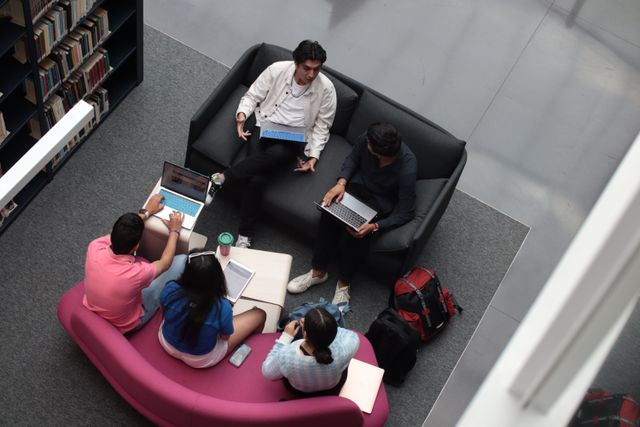
Traditional education often separates theoretical learning from practical business experience. Students study marketing, finance, management, software development, communication, and entrepreneurship through individual courses, while internships and university projects are usually completed as separate academic activities. Although these experiences provide valuable knowledge, learners do not always get an opportunity to apply everything they have studied within one continuous project. A student may understand how a business operates but never experience the responsibility of managing its daily activities. Another may complete a marketing assignment without having to attract actual customers, analyse campaign performance, or manage a limited promotional budget.
What if students could build and operate a small digital business as part of their education? Instead of completing disconnected assignments, learners could establish a digital micro-enterprise that functions as a combined course, internship, and university project. They would identify a business opportunity, develop a product or service, create a digital presence, manage operations, interact with customers, monitor financial performance, and evaluate the results. Every stage would become an opportunity to apply academic concepts in a controlled and supervised environment.
A digital micro-enterprise could be a small online business designed around a specific product, service, digital resource, or specialised customer requirement. It might involve selling original educational resources, providing website maintenance services, developing digital templates, offering design services, creating niche information products, or supporting small businesses with digital marketing. The scale would remain appropriate for students, but the responsibilities would reflect genuine business activities.
For EasyShiksha, this model could introduce a new connection between online courses, internships, university programmes, practical assignments, educational games, and career development. Students would not simply learn how to start a business through theoretical lessons. They would apply their knowledge while operating a real or carefully controlled micro-enterprise under appropriate academic and professional supervision.
The idea would also create a stronger relationship between learning outcomes and practical evidence. Students could demonstrate how they developed a business model, handled customer requirements, managed resources, solved operational problems, and adapted their decisions based on performance data. Rather than receiving recognition only for completing lessons, they could build a portfolio that demonstrates their ability to manage a complete business activity.
Understanding the Digital Micro-Enterprise Education Model
A digital micro-enterprise education model would transform a small business into a structured learning environment. It would combine the academic objectives of a course, the practical responsibilities of an internship, and the research and documentation requirements of a university project.
The enterprise would operate around a clearly defined business idea. Students might develop a digital service, sell a small collection of original products, create educational resources, or provide a specialised solution to a particular customer group. The business would have a defined purpose, a target audience, an operating plan, and measurable objectives. Students would be responsible for managing its activities within the limits established by their educational institution and project supervisors.
The most important feature would be the integration of academic learning with actual decision-making. A marketing lesson would become useful when students plan a campaign for their enterprise. A finance module would become practical when they calculate costs, estimate revenue, and prepare a budget. A web development course would connect directly with building and maintaining the enterprise website. A communication lesson would become relevant when students respond to customer questions or explain a service.
The same enterprise could continue across an academic term or semester. Instead of starting a completely new project for every subject, students could apply different disciplines to the same business environment. This would help them understand how business functions influence one another.
For example, a student team developing an online design service would need to understand customer requirements, pricing, website management, service delivery, quality control, financial tracking, and customer retention. A change in pricing could affect demand, while an increase in customer requests could create additional operational responsibilities. These relationships would make academic concepts easier to understand because students would experience their practical consequences.
Turning a Course Into a Practical Business Development Programme
The first stage of the model would involve selecting a business concept and connecting it with the learning objectives of a course. Students would study the principles of entrepreneurship, market research, business planning, digital operations, and financial management before applying them to their own enterprise.
An entrepreneurship course, for example, could guide students through opportunity identification, customer research, business model development, competitive analysis, and initial planning. Instead of submitting a conventional business plan based entirely on assumptions, learners would gradually test their ideas through practical activities.
A digital marketing course could become the foundation for developing the enterprise’s online presence. Students would learn how to identify their target audience, prepare content, understand search intent, plan social media communication, and evaluate marketing performance. The results of their campaigns could become part of their course assessments.
Similarly, a finance course could introduce practical budgeting, cost classification, pricing, revenue tracking, cash-flow management, and basic financial reporting. Students would work with the financial information generated by their own enterprise rather than relying exclusively on fictional case studies.
This approach would make course completion more meaningful. Students would not only demonstrate that they understand a concept but also show how they applied it to a business decision. Instructors could assess both the academic understanding and the quality of the practical implementation.
The course would remain structured and educational. Students would receive defined learning materials, supervised exercises, assessment criteria, and opportunities to reflect on their decisions. The enterprise would serve as the practical environment in which those concepts are tested.
Selecting a Business Idea With a Realistic Market Opportunity
A successful learning experience would begin with a business idea that is achievable within the available time, resources, and student skill level. The objective would not be to encourage students to establish large companies immediately. Instead, they would learn how to identify a specific problem and develop a small, manageable solution.
Students could explore opportunities in digital education, graphic design, website maintenance, content services, online productivity resources, data organisation, digital templates, or specialised consulting activities appropriate to their experience. A learner with web development skills might offer basic website maintenance to small organisations, while a student interested in design could create original digital templates for a clearly defined audience.
The idea selection process would involve investigating customer needs, existing alternatives, pricing expectations, and the resources required to deliver the proposed product or service. Students would learn that a business idea should not be selected only because it appears interesting. It must also be feasible, relevant to a customer requirement, and suitable for the educational objectives of the project.
EasyShiksha could introduce structured worksheets that help students compare possible opportunities. These activities could examine whether the problem is clearly defined, whether the target customer is identifiable, and whether the proposed solution can be developed within the project period. Students could also identify technical, financial, operational, and legal limitations before committing to a business direction.
This stage would develop an important entrepreneurial skill: learning to evaluate opportunities before investing significant time and resources. Students would understand that rejecting an impractical idea after research can be a better decision than continuing with a business concept that cannot be delivered effectively.
Creating the Digital Business Infrastructure
Once the business concept has been selected, students would need to create the digital infrastructure required to operate it. This could include a website, service catalogue, product pages, contact system, customer enquiry process, digital content, and basic administrative tools.
Students studying web development could build the enterprise website as part of their technical coursework. They would learn how to structure pages, design navigation, create responsive layouts, improve accessibility, and maintain a consistent user experience. The project could also introduce practical concepts such as website security, performance optimisation, search engine visibility, and content management.
A student team developing an online educational resource business, for example, might create a website containing product descriptions, previews, customer information, and a structured enquiry process. Another team providing website maintenance services could develop a professional service page explaining its scope, delivery process, and support arrangements.
The website would become a working technical asset rather than a demonstration project that is abandoned after assessment. Students would need to maintain accurate information, respond to technical problems, and improve the user experience based on feedback.
The digital infrastructure could also include tools for task management, document storage, customer communication, and financial tracking. Students would learn how different software systems support business operations and why information must be organised consistently.
However, students should not be expected to collect unnecessary personal information or store sensitive customer data without appropriate safeguards. The platform and supervising institution would need to establish clear rules for data protection, account access, payment handling, and digital security.
Integrating the Enterprise With an Internship Experience
The internship component would introduce students to the responsibilities associated with operating a business. Traditional internships often place learners within an existing organisation, where they observe professional processes or complete assigned tasks. A digital micro-enterprise would provide a different form of practical exposure by allowing students to manage defined business responsibilities within a supervised educational project.
Students could experience activities such as customer communication, service delivery, content preparation, quality assurance, order management, marketing coordination, and operational reporting. Each activity would be connected with a professional skill and a measurable learning outcome.
For example, a student managing a digital design service might receive a customer requirement, clarify the expected outcome, estimate the work involved, prepare a design, collect feedback, and complete the agreed revisions. This process would develop communication, time management, technical execution, and quality-control skills.
A student working on an educational content enterprise might coordinate research, content development, editing, website publication, and customer support. The learner would experience how different responsibilities must be managed together to deliver a consistent product.
Industry mentors could supervise selected activities and provide feedback on professional standards. They might review customer communication, examine the quality of deliverables, or explain how a business handles deadlines and service expectations.
The internship should have clearly defined educational responsibilities rather than becoming unpaid labour for an external organisation. Students should understand the scope of their work, the supervision available, the assessment process, and the expected learning outcomes. If real customers are involved, their participation and any commercial arrangements should also be handled transparently.
Connecting University Projects With Actual Business Operations
The university project component could turn the enterprise into a formal academic investigation. Students would not simply operate a business and report that it generated revenue. They would examine a defined research question, apply relevant academic methods, collect appropriate evidence, and evaluate the results.
A business management student might investigate how pricing changes influence customer enquiries. A computer science student could study how website performance affects user engagement. A marketing student might examine how different content formats influence campaign responses. A finance student could analyse the relationship between operating costs and revenue stability.
The project would connect academic theory with observations generated through the enterprise. Students could identify variables, develop research questions, select suitable methods, and analyse the information collected during operations.
For example, a student team operating an online digital service might investigate whether introducing a structured enquiry form reduces the time required to understand customer requirements. The team could compare the enquiry process before and after implementation, document the methods used, and evaluate whether the change improved operational efficiency.
University supervisors would help ensure that the research question is academically meaningful and that the methodology is appropriate. They would also guide students on research ethics, data handling, limitations, and the difference between observations and conclusions.
This structure could make university projects more relevant to professional practice. Instead of preparing a theoretical report about an imaginary business, students would investigate a business environment they had actively helped operate.
Creating Interdisciplinary Student Enterprise Teams
A digital micro-enterprise could become particularly valuable when students from different academic disciplines collaborate. Modern businesses require several capabilities, and a single learner may not possess all the skills needed to develop and operate an enterprise.
A team could include students studying computer science, marketing, finance, business management, graphic design, and communication. Each participant would contribute a different area of expertise while learning how their responsibilities affect the overall business.
For example, a computer science student might develop the website and maintain its technical infrastructure. A marketing student could manage audience research and promotional activities. A finance student could monitor expenses and prepare financial reports, while a business management student could coordinate operations and customer requirements.
This arrangement would help learners understand the relationships between departments. A marketing campaign may generate more enquiries than the operations team can handle. A technical improvement may increase development costs. A change in service pricing could affect both customer demand and revenue. Students would experience how decisions made by one team influence the work of others.
The platform could provide collaborative project spaces where teams document responsibilities, deadlines, decisions, and progress. Students would learn to communicate across disciplines, manage disagreements, and resolve operational problems.
Individual accountability would remain important. Each student should have clearly defined responsibilities and be assessed on their own contribution as well as the team’s overall performance. This would prevent the enterprise from becoming a project in which some learners complete most of the work while others receive identical recognition without equivalent participation.
Learning Customer Research and Real Market Behaviour
One of the most valuable aspects of operating a digital micro-enterprise would be direct exposure to customer needs. Students often learn about market segmentation, customer behaviour, and product positioning through textbooks and case studies. A working enterprise would allow them to examine these concepts in a practical setting.
The first step would involve defining the intended customer group. Students would investigate who might use their product or service, what problem those customers experience, what alternatives they currently use, and what factors influence their purchasing decisions.
For example, a team creating digital study resources might initially assume that students prefer large collections of downloadable notes. Customer interviews or feedback may reveal that learners are more interested in concise revision material, practice assessments, or subject-specific explanations. This information could lead the team to revise its product.
Students would also learn that customer feedback is not always consistent. Different users may have different expectations, budgets, and preferences. The enterprise would need to identify which requirements are most relevant to its target audience rather than attempting to satisfy every request.
EasyShiksha could support this stage through courses and worksheets covering customer research, survey design, interview techniques, and market segmentation. Students could practise developing research questions and analysing responses while learning about ethical data collection.
The objective would be to replace unsupported business assumptions with evidence. Learners would understand that market research is an ongoing activity, not a one-time exercise completed before launching a product.
Managing Pricing, Revenue, and Financial Responsibilities
Operating a digital micro-enterprise would introduce students to the financial decisions involved in running even a small business. Learners would need to understand the relationship between costs, pricing, revenue, cash flow, and operational sustainability.
A student offering website maintenance services, for example, would need to estimate the time required for each task, account for software or hosting expenses, and determine a reasonable service price. A learner selling original digital templates would need to consider development time, distribution costs, promotional expenses, and customer support.
The finance component could begin with a basic operating budget. Students would identify expected costs, estimate possible revenue, and distinguish between fixed and variable expenses. They would learn why revenue does not automatically represent profit and why cash flow matters even when a business appears financially successful.
The enterprise could operate using a simulated budget during its early stages. This would allow students to practise financial decisions without exposing them to unnecessary commercial risk. Where real transactions are introduced, the institution should establish appropriate rules for payment processing, refunds, taxation, accounting, and financial responsibility.
Students could also investigate different pricing strategies. They might compare fixed-price services, subscription models, one-time digital product sales, or project-based fees. The goal would be to understand how pricing influences customer expectations and business sustainability.
A particularly valuable learning activity would involve analysing a financially unsuccessful decision. If students spend more on promotion than the resulting revenue can justify, they would need to investigate the cause and revise their strategy. Such experiences would teach financial accountability more effectively than memorising definitions alone.
Using Digital Marketing to Develop the Enterprise
A digital business requires a way to reach potential customers. The micro-enterprise model could therefore connect marketing courses with real campaign planning and evaluation.
Students would learn how to develop a brand identity, define a communication strategy, create useful content, and select appropriate digital channels. They could explore search engine optimisation, social media marketing, email communication, content marketing, and online advertising through practical exercises.
For instance, a team offering digital productivity templates might create educational articles explaining how its resources help users organise their work. A student providing website maintenance services could publish technical guides addressing common website problems. These activities would allow learners to apply content strategy and search intent concepts while building a digital presence.
Campaign performance could be evaluated through appropriate indicators such as relevant website visits, enquiry rates, engagement, conversion rates, and customer feedback. Students would learn that a campaign generating a large number of views may still fail to attract the intended audience.
The platform could also introduce controlled marketing simulations before students spend real money. Learners could test different campaign strategies using fictional budgets and compare their expected outcomes. If actual campaigns are used, spending limits and approval procedures should be established in advance.
This component would help students understand that digital marketing is not simply about publishing content frequently. It requires research, audience understanding, consistent communication, and careful evaluation of results.
Introducing Artificial Intelligence Into Micro-Enterprise Operations
Artificial intelligence could support several activities within a student-run digital business. It could help learners organise information, prepare draft content, analyse customer feedback, generate initial ideas, and identify possible operational improvements.
A student team managing a digital service might use AI tools to categorise common customer enquiries or summarise feedback received through an approved system. A marketing team could use AI to explore content ideas and prepare initial campaign drafts. A finance student might use analytical tools to identify unusual changes in recorded expenses.
AI could also support operational planning by helping students compare possible workflows, estimate resource requirements, and identify recurring tasks that may be automated. These applications would introduce learners to the growing role of AI in business operations.
However, students should understand that AI-generated information requires human verification. Automated tools may produce inaccurate financial interpretations, misleading customer responses, or content that does not reflect the enterprise’s actual capabilities. Learners must remain responsible for the decisions they make and the information they communicate.
Customer data and confidential business information must also be handled carefully. Students should use approved tools and understand the relevant privacy policies before entering personal or commercially sensitive information into AI systems.
The educational objective would be to teach students how to use AI responsibly as a productivity and analytical tool rather than allowing it to replace critical thinking, professional judgement, or accountability.
Managing Operational Challenges and Business Failures
A micro-enterprise would provide an opportunity to experience problems that are difficult to reproduce through conventional classroom assignments. Students might face missed deadlines, customer complaints, technical failures, unexpected expenses, supplier delays, or changes in demand.
These challenges would become learning opportunities when they are managed within an appropriate supervision framework. Students would need to investigate the cause of a problem, identify its impact, consider available solutions, and explain why they selected a particular response.
For example, a team providing website services might discover that a delivered website does not work correctly on certain mobile devices. The students would need to reproduce the issue, identify the technical cause, correct the problem, and communicate the revised delivery timeline to the customer.
Another team might experience a sudden increase in customer enquiries following a marketing campaign. The additional demand could exceed the team’s capacity. Students would need to consider whether to limit new requests, improve the workflow, revise delivery estimates, or expand the team.
A business project may also fail to generate sufficient demand. Rather than treating this as a meaningless outcome, students could examine whether the target audience was incorrectly identified, the product lacked differentiation, the pricing was unsuitable, or the marketing message failed to communicate value.
The platform should encourage honest reporting of unsuccessful experiments and decisions. Students should not be assessed only on whether their enterprise generates revenue. Their ability to analyse problems, explain mistakes, and make evidence-based improvements is equally important.
Developing Professional Communication and Customer Service Skills
Operating a digital micro-enterprise would require students to communicate with people outside their immediate academic environment. This could help them develop professional communication skills that are relevant to almost every career.
Students would learn to respond to enquiries, clarify requirements, explain service limitations, provide realistic delivery estimates, and handle feedback professionally. They would also practise writing business emails, preparing proposals, documenting agreements, and communicating changes in project scope.
For example, a customer might request additional features that were not included in the original service agreement. Students would need to clarify the request, estimate the additional work, and explain whether the revised requirement could be accommodated within the existing timeline and budget.
Another customer might be dissatisfied with a delivered product. The team would need to examine the complaint, verify the original requirements, and decide how to resolve the issue fairly. These situations would help students understand the importance of clear expectations and professional conduct.
The communication component could be supported by EasyShiksha courses on business writing, presentation skills, negotiation, customer relationship management, and workplace communication. Students could practise these skills through realistic scenarios before handling actual enquiries.
This experience would be especially valuable for learners preparing for employment because professional success often depends on the ability to communicate clearly, manage expectations, and work responsibly with others.
Connecting the Enterprise With Internships and Industry Mentorship
Industry mentorship could help students understand how their micro-enterprises compare with professional business practices. Mentors could review business plans, technical deliverables, marketing strategies, operational processes, and financial decisions.
A mentor from a digital agency might help a student team improve its client onboarding process. An entrepreneur could explain how to validate demand before developing a product. A finance professional could review the team’s budget and identify weaknesses in its cost estimates.
The internship component could also introduce short, supervised placements in relevant business functions. Students might observe how professional teams manage customer communication, maintain digital products, analyse performance, or coordinate projects.
Alternatively, an enterprise could be connected with a real organisation that provides a clearly defined challenge. For example, a local business might need a basic website improvement plan or a digital content strategy. Students could investigate the requirement and develop a solution under academic and industry supervision.
Such collaborations should have clear boundaries. The organisation should understand that students are participating in an educational project, while learners should receive appropriate guidance and recognition for their contributions. Confidentiality, ownership, payment arrangements, and the scope of work should be agreed upon before any external assignment begins.
This would allow the micro-enterprise to function as a bridge between academic learning and workplace experience without turning student education into uncontrolled commercial work.
Measuring Student Performance Through Business Evidence
The combined course, internship, and university project would require an assessment system that recognises different types of achievement. Traditional examinations can measure subject knowledge, but they may not fully capture a student’s ability to operate a business or respond to unexpected challenges.
The platform could assess students through the quality of their business planning, technical implementation, customer research, operational decisions, financial records, communication, and project documentation. Each component would be linked to specific academic learning outcomes.
For example, a marketing student could be evaluated on audience research, campaign planning, and performance interpretation. A computer science student could be assessed on website functionality, security, accessibility, and technical maintenance. A business management student could demonstrate competence through workflow coordination, resource planning, and operational reporting.
The university project would evaluate the quality of the student’s research question, methodology, analysis, and final report. The internship component would examine professional behaviour, responsibility, collaboration, and the ability to apply knowledge in practical situations.
Assessment should also recognise individual contributions within team projects. A shared business outcome cannot automatically demonstrate that every participant has developed the same skills. Personal reflections, task records, mentor feedback, and individual presentations could help supervisors evaluate each learner’s work.
Revenue or profit should not become the primary measure of academic success. Market conditions, limited resources, and the nature of the business idea can influence financial results. A student who conducts strong research and makes sound decisions may achieve valuable learning outcomes even if the enterprise does not become commercially profitable.
Addressing Legal, Ethical, and Financial Responsibilities
A student-run enterprise introduces responsibilities that must be addressed before any real commercial activity begins. Educational institutions and platforms would need to establish clear rules concerning business registration, taxation, consumer rights, intellectual property, payment processing, data protection, and financial management.
Students should not assume that a classroom project is automatically exempt from applicable laws simply because it is educational. If an enterprise sells products or services, receives payments, collects customer information, or makes commercial claims, relevant legal and regulatory requirements may apply.
Intellectual property would also require careful attention. Students may use third-party images, software, fonts, datasets, or other materials while developing their products. They must understand licensing requirements and avoid presenting someone else’s work as their own. Where students create original products or technical solutions, the ownership arrangements should be defined by the institution and any relevant agreements.
Customer protection and honest advertising should form part of the learning programme. Students must not make misleading promises about products, hide important costs, misuse customer information, or offer services beyond their technical capabilities. If a service involves specialised or regulated professional advice, students should not provide it without appropriate qualifications and supervision.
The platform should also establish financial safeguards. Students should work with limited, approved budgets and should not be required to invest personal money to complete academic assessments. Simulated transactions could be used during the early stages, with real commercial activities introduced only when appropriate arrangements are in place.
These responsibilities would teach students that entrepreneurship involves more than generating revenue. It also requires fairness, transparency, legal awareness, and respect for customers.
Building a Digital Enterprise Portfolio for Career Development
At the end of the project, each student could receive a structured digital portfolio documenting the enterprise’s development and their individual contributions. This portfolio would provide evidence of practical experience that can support future job applications, postgraduate admissions, and entrepreneurship opportunities.
The portfolio could contain the original business concept, market research, business model, website or digital product, project documentation, marketing activities, financial analysis, operational reports, and mentor feedback. It could also record how the enterprise changed during the project and which challenges students successfully addressed.
For a frontend developer, the portfolio might demonstrate the development of a responsive business website and explain the technical decisions behind it. A marketing student could showcase a campaign and its performance analysis, while a finance student could present an anonymised financial report and explain how the budget was managed.
Students would also be able to demonstrate transferable skills such as teamwork, communication, problem-solving, customer interaction, project management, and professional accountability.
The portfolio should distinguish between simulated business activities and actual commercial work. It should also identify the student’s role accurately rather than suggesting that every participant independently managed the entire enterprise.
This approach would make the learning experience more valuable during recruitment because employers could examine concrete examples of how students applied their knowledge rather than relying exclusively on course completion certificates.
How EasyShiksha Could Introduce the Digital Micro-Enterprise Programme
EasyShiksha could develop the digital micro-enterprise model as an integrated programme connecting its existing courses, internships, quizzes, educational games, university programmes, and career development resources.
The journey could begin with an entrepreneurship or technical course that helps students identify a business opportunity. Learners could then complete market research exercises and develop a business model through digital worksheets. Once their ideas have been reviewed, they could build the enterprise website or digital product using relevant technical courses.
Quizzes could assess their understanding of marketing, finance, business operations, customer communication, and digital security. Educational games could simulate business decisions involving limited budgets, changing customer demand, operational failures, and competitive conditions.
The internship component could introduce industry mentors, supervised client challenges, or short practical placements. University programmes could use the enterprise as a semester-long project, requiring students to investigate a defined business question and submit a formal academic report.
The platform could also provide a digital enterprise dashboard that records project milestones, responsibilities, feedback, and performance indicators. Students would be able to track progress while instructors and mentors review the educational outcomes.
At the end of the programme, learners could receive a structured record of their participation and demonstrated skills. Where real business activity has occurred, the record could describe the nature of that activity accurately. Where the work has been simulated, it should be labelled as a simulation rather than a commercial enterprise.
This integrated model could create a distinctive learning experience in which students move from understanding a concept to applying it in a business environment and evaluating the results through academic research.
The Future of Education Through Student-Operated Digital Enterprises
The digital micro-enterprise model could change how educational platforms connect academic knowledge with professional responsibilities. Instead of separating courses, internships, and university projects, students could work within one continuous business environment where every subject contributes to a practical outcome.
The experience would teach learners how different business functions interact, why customer research matters, how financial decisions influence operations, and how technical solutions must be supported by communication and planning. It would also help students understand that running a business involves uncertainty, limitations, and decisions that cannot always be resolved through textbook examples.
For universities, the model could create more applied project opportunities and stronger connections with industry mentors. For employers, it could provide graduates with practical evidence of their abilities. For students, it could offer an opportunity to develop confidence, professional judgement, and an understanding of how organisations operate.
For EasyShiksha, the concept could become an important extension of its education ecosystem by connecting online learning with practical business development, internships, academic research, and career preparation. It would encourage students to apply knowledge across disciplines rather than treating every course as an isolated requirement.
Ultimately, the goal would not be to turn every student into an entrepreneur or require every educational project to generate revenue. It would be to provide learners with a supervised environment in which they can understand how ideas become services, products, and operational systems. By building and operating a digital micro-enterprise, students could experience the relationship between learning and responsibility while developing skills that remain valuable whether they choose entrepreneurship, employment, higher education, or further research.