

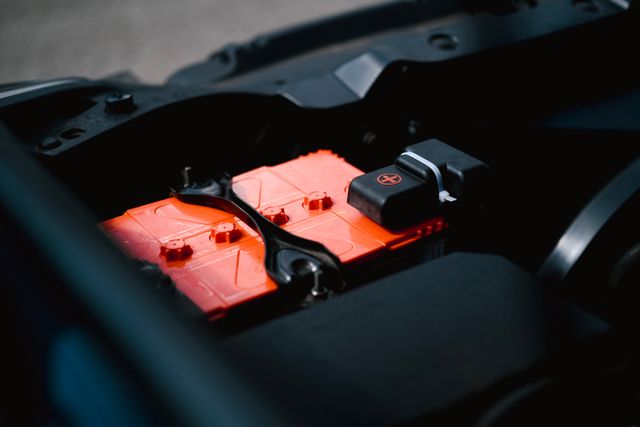
The rapid expansion of electric vehicles, renewable energy systems and portable electronic devices is increasing the demand for advanced battery technologies. Batteries are becoming essential to transportation, electricity storage, industrial operations and everyday digital infrastructure. However, a battery does not necessarily become useless when it can no longer meet the performance requirements of its original application. An electric vehicle battery, for example, may lose some of its original energy-storage capacity after years of operation but still retain enough useful performance for a less demanding application. Instead of immediately recycling the entire battery, engineers may be able to evaluate, reorganise and reuse suitable battery components in a second application. This process is known as second-life battery deployment.
Second-life battery systems are attracting attention because they could extend the useful service of batteries before material recovery and recycling become necessary. Batteries retired from electric vehicles may potentially be assessed for stationary energy storage, renewable energy integration, backup power or other applications with different performance requirements. However, reusing a battery is not as simple as connecting it to a new device. Every battery has a history of charging, discharging, temperature exposure, storage and ageing. Its remaining capacity, internal resistance, safety condition and expected future performance may differ from those of another battery of the same model and age.
This creates a new engineering challenge that requires a combination of battery science, artificial intelligence, computational modelling, electrical engineering, data analytics, power electronics and safety management. Engineers must learn how to determine whether a battery is suitable for reuse, estimate how long it can continue operating, organise different battery components into reliable systems and monitor their behaviour after deployment. The ability to make these decisions is becoming an important part of the emerging field of battery intelligence.
For students, this development creates a new educational opportunity. Traditional battery education often concentrates on electrochemistry, battery construction, charging mechanisms and electrical performance. Second-life battery engineering requires an additional set of capabilities because students must learn to interpret imperfect battery histories, work with uncertain measurements and make decisions about systems that have already experienced years of use. For EasyShiksha, this subject offers an opportunity to connect online courses, quizzes, programming, artificial intelligence, engineering projects, internships, certificates, university programmes and career guidance with the evolving energy-storage industry.
Understanding the Second-Life Battery Concept
A second-life battery is a battery that has completed its original intended service but retains sufficient usable capability for another application. The most familiar example involves electric vehicle batteries. As an electric vehicle battery ages, its ability to store and deliver energy gradually changes. Eventually, its performance may no longer satisfy the vehicle manufacturer’s requirements for range, acceleration, charging behaviour or reliability. However, the same battery may still be capable of supporting a stationary energy-storage application where operating conditions and performance expectations are different.
The important distinction is that the battery has not necessarily reached the end of its physical life. It has reached a point where its condition is no longer suitable for its original duty. A stationary energy-storage system, for example, may tolerate a different power profile or operating range from an electric vehicle. Whether reuse is appropriate depends on the battery’s actual condition, its chemistry, its design, its operating history and the requirements of the proposed application.
Second-life deployment can potentially improve the utilisation of battery materials and delay the need for recycling. It may also create additional energy-storage capacity using components that would otherwise leave their original application. However, reuse is not automatically more sustainable or economically attractive. Testing, transportation, refurbishment, replacement components, system integration, monitoring and eventual recycling all contribute to the total lifecycle impact.
Students must therefore understand second-life batteries as an engineering and lifecycle-management problem rather than simply a battery-reuse activity. The objective is to determine whether a battery can perform another useful function safely, reliably and economically.
Why Battery Intelligence Is Becoming Important
Battery intelligence refers to the ability to collect, interpret and use information about battery condition and behaviour to make informed engineering decisions. It combines physical measurements, historical records, computational models and operational data to understand how a battery is performing and how its condition may change over time.
In a second-life application, this intelligence becomes particularly important because batteries entering the reuse process may have different histories. Two battery packs may have operated in similar vehicles for the same number of years but experienced different temperatures, charging patterns, workloads and maintenance conditions. Their remaining capabilities may therefore differ significantly.
An engineer cannot make a reliable reuse decision based only on the battery’s age or original rated capacity. The assessment must consider available evidence about the battery’s present condition and its likely behaviour under a new operating profile. This requires students to develop the ability to interpret multiple indicators rather than depend on one measurement.
Battery intelligence also involves continuous monitoring after deployment. A battery that passes an initial assessment may continue to age, and its operating conditions may change. Engineers need methods to detect abnormal behaviour, identify declining performance and determine when maintenance, reconfiguration or retirement is appropriate.
The educational challenge is therefore broader than learning battery chemistry. Students must understand how information about physical systems becomes useful engineering knowledge.
Battery State of Health: Learning to Measure What Remains
One of the most important concepts in second-life battery engineering is State of Health, commonly abbreviated as SOH. It represents an assessment of a battery’s condition relative to an appropriate reference state. Depending on the method, it may consider remaining capacity, internal resistance, power capability or other indicators associated with degradation.
Students should understand that State of Health is not always a single directly measured quantity. It is often estimated using a combination of measurements and models. A battery may retain a certain percentage of its original capacity while experiencing changes in resistance or power delivery that affect its suitability for a particular application. Therefore, capacity alone cannot provide a complete picture of battery condition.
For example, a battery with reduced energy capacity may still be useful in an application with modest energy requirements, provided its power capability and safety condition remain acceptable. Another battery with similar capacity may be unsuitable because of abnormal resistance, temperature behaviour or internal damage.
This introduces students to measurement uncertainty and diagnostic reasoning. They must learn how testing conditions influence results, why measurement methods need consistency and why an estimate should be interpreted alongside other evidence. An important educational outcome is the ability to explain what a health estimate actually represents and what it cannot establish.
State of Charge and the Difference Between Energy and Health
State of Charge, or SOC, describes the estimated amount of charge remaining in a battery relative to its usable capacity under defined conditions. It is commonly used to understand how much energy is available during operation. Although SOC and SOH are related, they describe different aspects of battery behaviour.
A battery may have a high State of Charge while having significantly reduced State of Health. This means it may be nearly full relative to its current usable capacity but still store less energy than it could when new. Students must understand this distinction because confusing SOC with SOH can lead to incorrect assumptions about battery capability.
Estimating SOC is not always straightforward. Voltage, current, temperature and the battery’s operating history can influence the estimate. Different battery chemistries also have different voltage characteristics and charging behaviour. Engineers may use methods such as coulomb counting, voltage-based estimation and model-based approaches, often combining them to improve reliability.
For students, learning SOC and SOH together provides a foundation for understanding battery management systems. It also demonstrates why second-life engineering requires a deeper interpretation of battery data than simply checking whether a battery is charged.
Battery Ageing and Degradation Intelligence
Battery ageing is a complex process influenced by several interacting factors. Repeated charging and discharging, temperature exposure, storage conditions, charging rates and operating depth can contribute to changes in electrochemical performance. The exact degradation behaviour depends on the battery chemistry, cell design and operating environment.
Students need to distinguish between calendar ageing and cycle ageing. Calendar ageing describes changes that occur over time, even when a battery is not being actively cycled. Cycle ageing refers to degradation associated with charging and discharging activity. In real applications, both processes may occur together, and their effects can interact.
Battery degradation can influence capacity, internal resistance, power delivery and thermal behaviour. It may also occur unevenly across cells within the same battery pack. This is particularly important for second-life systems because the overall performance of a battery pack may be limited by its weakest or most problematic components.
Computational analysis can help students explore how different operating conditions relate to degradation. They can examine datasets containing temperature, current, voltage and capacity measurements to investigate patterns over time. However, they should also understand that correlation does not automatically establish causation. A model trained on one battery type or operating environment may not accurately predict degradation in another.
The ability to understand degradation mechanisms and evaluate predictive models will be an important skill for future battery engineers.
Battery Data Forensics: Reconstructing a Battery’s History
One of the distinctive challenges of second-life battery systems is that engineers may not have complete access to the battery’s original operating history. Some batteries may arrive with detailed records, while others may have incomplete, inconsistent or unavailable information about their previous use.
This creates a need for what can be described as battery data forensics: examining available measurements and records to reconstruct the likely condition and operational history of a battery. Engineers may need to study charging patterns, temperature records, voltage behaviour, diagnostic information and available maintenance documentation.
Students should learn how to assess the reliability of battery records. A missing temperature history, for example, creates uncertainty about the conditions under which the battery operated. Inconsistent measurements may indicate sensor problems, data-processing errors or differences in testing methods. A battery with incomplete records should not automatically be classified as unusable, but the uncertainty must influence the assessment and testing strategy.
This skill connects battery engineering with data analysis and evidence evaluation. Students must understand how to separate verified measurements from estimates, identify missing information and explain the consequences of uncertainty.
For EasyShiksha, battery data forensics could become an advanced learning theme through projects in Python, data visualisation and engineering diagnostics. Learners could work with simulated or openly available battery datasets to practise identifying unusual patterns and evaluating data quality.
The Challenge of Battery Cell Matching
A battery pack may contain many individual cells connected in series, parallel or a combination of both. Over time, these cells may age at different rates. Even cells that began with similar characteristics can develop differences because of variations in temperature, operating conditions and manufacturing tolerances.
When batteries are repurposed, engineers must consider whether cells or modules can be safely and effectively grouped together. Differences in capacity, internal resistance and voltage behaviour can influence how the assembled system performs. Poor matching may create imbalance, reduce usable energy and increase stress on individual components.
Students need to understand why the average condition of a battery pack may not represent the condition of every cell. A pack with a reasonable overall capacity estimate may still contain a small number of weak or abnormal cells. This makes cell-level assessment important when the design and available equipment permit it.
Battery matching is also an optimisation problem. Engineers must evaluate which components can be combined while respecting electrical, thermal and safety constraints. Computational tools can help compare candidate combinations, but the final decision must be supported by appropriate measurements and engineering validation.
Artificial Intelligence for Battery Health Prediction
Artificial intelligence can support second-life battery engineering by analysing complex data and identifying patterns associated with battery condition. Machine learning models may use historical measurements to estimate remaining capacity, predict degradation trends or identify abnormal operating behaviour.
A predictive model can potentially help engineers compare different batteries and assess their suitability for specific applications. For example, a model trained on suitable historical data might estimate how a battery’s performance could change under a proposed stationary storage profile. Such predictions can help guide further testing and planning.
However, AI-based battery assessment introduces important challenges. The accuracy of a model depends on the quality and representativeness of its training data. A model trained using one battery chemistry may not generalise to another. Similarly, data collected under controlled laboratory conditions may not fully represent batteries exposed to variable real-world environments.
Students should therefore learn model validation, error analysis and uncertainty estimation. They must understand why a prediction should be accompanied by information about the data and conditions on which it depends. In safety-sensitive engineering, a model’s output should support professional judgement rather than replace appropriate testing and protection mechanisms.
Digital Twins for Second-Life Battery Systems
A digital twin is a digital representation of a physical system that can be updated using information from the real system. In battery engineering, a digital twin may represent a battery pack’s electrical behaviour, thermal condition, operating history and estimated degradation.
For second-life applications, digital twins could help engineers evaluate how a battery may behave under different operating conditions. A system could compare potential applications, simulate expected energy demand and examine how temperature or charging patterns might influence performance. Once deployed, monitoring data could help update the model and improve its representation of the battery’s current state.
Students can explore digital twins through computational projects. They might build a simplified battery model, provide it with sample voltage and temperature data, and compare its predicted behaviour with a dataset. They can then examine how changes in operating assumptions influence the results.
This creates a practical connection between programming, mathematics, electrical engineering and data science. It also teaches students that a digital twin is not simply a three-dimensional model or a dashboard. Its value depends on how accurately it represents the physical system and how effectively it is updated with reliable information.
Battery Management Systems and Intelligent Monitoring
A Battery Management System, or BMS, is responsible for monitoring and protecting a battery pack. Depending on its design, it can measure cell voltages, current and temperature, estimate SOC and SOH, support cell balancing and control operating limits. It plays a critical role in maintaining battery performance and safety.
Second-life applications may require additional attention because the battery’s condition and operating requirements can differ from those of its original application. Engineers need to evaluate whether the existing management system is suitable, whether its measurements remain reliable and whether the battery requires a different monitoring and protection arrangement.
Students should learn the relationship between sensors, embedded controllers, communication protocols and battery protection functions. They can explore how a BMS receives information, identifies abnormal conditions and communicates with other components in an energy-storage system.
The educational value extends beyond battery technology. These concepts are also relevant to embedded systems, the Internet of Things, industrial automation and electric mobility. Students who understand how software monitors and controls physical systems develop skills that can be applied across multiple engineering sectors.
Thermal Intelligence and Battery Safety
Temperature is a major consideration in battery operation. Batteries generate heat during charging and discharging, and their performance and ageing behaviour can be influenced by thermal conditions. Excessive temperature or abnormal thermal behaviour can create serious safety risks.
Second-life systems require careful thermal assessment because their previous operating histories may be uncertain and their internal condition may have changed. Engineers must determine whether the battery can operate within appropriate temperature limits under its proposed workload. They must also consider cooling requirements, environmental conditions, enclosure design and the possibility of abnormal heating.
Students need to understand thermal management as part of the complete battery system rather than as an additional feature. Electrical behaviour, heat generation and physical design are connected. A battery pack that performs adequately under one load profile may experience different thermal conditions under another.
Computational models can help estimate temperature distribution and examine how operating conditions influence heat generation. However, model predictions need appropriate validation, and real battery systems require professionally designed protection mechanisms. Educational activities should focus on simulation, established safety principles and supervised low-risk demonstrations rather than hazardous battery experimentation.
Matching Second-Life Batteries With New Applications
Not every battery is suitable for every second-life application. The engineering task involves matching the remaining capabilities of a battery with the requirements of a new system. This requires consideration of energy capacity, power capability, expected operating cycles, response time, reliability, thermal conditions and safety requirements.
Stationary energy storage is one important potential application. Batteries may be used to store electricity generated by solar or wind systems, provide backup power or support energy management. However, each application has different operational requirements. A system designed for frequent cycling may place different demands on a battery from one used primarily for occasional backup.
Students should learn to evaluate application suitability through structured engineering comparisons. They can examine the energy demand of a proposed application, compare it with the estimated battery capability and identify constraints that require further testing. They should also consider the costs of refurbishment, system integration, monitoring and eventual recycling.
This introduces a valuable form of engineering judgement: the best reuse decision is not necessarily the one that extracts the maximum amount of remaining energy. It is the one that creates a safe, technically suitable and economically reasonable application for the battery’s verified condition.
Battery Economics and Lifecycle Assessment
Second-life battery engineering involves financial and environmental decisions as well as technical ones. A battery may retain useful capacity, but the cost of collecting, testing, transporting, refurbishing and integrating it can influence whether reuse is practical.
Students should understand the difference between technical feasibility and economic viability. A battery system may function correctly but still be too expensive to refurbish compared with a new battery or another energy-storage technology. Conversely, a system may offer value when testing and integration costs are controlled and the application can use its remaining capabilities effectively.
Lifecycle assessment provides another important perspective. It examines environmental impacts across different stages, including material extraction, manufacturing, transportation, operation, reuse and recycling. Second-life deployment may extend the useful service of a battery and delay material recovery, but the overall environmental benefit depends on the complete lifecycle.
An educational project could compare a hypothetical second-life battery system with a newly manufactured storage system using clearly stated assumptions. Students could examine the effects of refurbishment costs, expected service life, efficiency and end-of-life processing. This would connect engineering with sustainability, economics and data analysis.
The New Educational Skill: Engineering Under Uncertainty
Perhaps the most important educational challenge in second-life battery systems is learning to make decisions when information is incomplete. In conventional classroom exercises, students are often given clearly defined values and asked to calculate a result. Real battery engineering can involve missing records, measurement uncertainty, inconsistent components and changing operating conditions.
Students must learn to identify what is known, what is estimated and what still requires verification. They should be able to explain why a battery cannot be classified as suitable merely because one performance indicator appears acceptable. They must also understand when additional testing is necessary and when uncertainty is too high to justify deployment.
This requires a combination of analytical thinking, scientific reasoning and safety awareness. Students should learn to communicate uncertainty rather than hide it behind a single numerical score. They should also understand that engineering decisions may need to be revised when new measurements become available.
For EasyShiksha, this could become a distinctive educational theme. Courses and assessments can move beyond formula-based battery questions towards realistic engineering scenarios in which learners must evaluate incomplete evidence, compare possible applications and justify their decisions.
Building Practical Projects Through Digital Education
Students can begin learning second-life battery engineering through computational projects without immediately handling used battery packs. Simulation and data analysis provide safer and more accessible ways to understand the underlying principles.
A beginner project could involve examining a dataset containing battery voltage, current, temperature and capacity measurements. Students could visualise how these variables change over time and identify possible signs of degradation. An intermediate project could compare different battery health indicators and investigate why capacity alone may not establish suitability for reuse.
Advanced learners could develop a simplified model that estimates battery performance under different operating profiles. They could compare a proposed stationary storage application with the battery’s estimated capabilities and identify the additional evidence required before deployment. Another project could involve designing a conceptual battery monitoring dashboard that displays operational measurements and highlights abnormal patterns.
Such projects should be based on simulated or appropriately sourced datasets and should not be presented as substitutes for certified battery testing. Physical testing, refurbishment and system assembly require appropriate equipment, professional supervision and compliance with applicable safety standards.
Internships and Industry Exposure
Second-life battery systems connect several industries, including electric mobility, renewable energy, battery manufacturing, energy storage, power electronics, testing laboratories and recycling. Students can explore these sectors through internships that develop relevant technical and professional capabilities.
An internship in an energy-storage organisation may introduce learners to battery monitoring, system documentation or performance analysis. A role in an electric mobility company could provide exposure to battery packs, vehicle systems and diagnostic information. Students with programming skills may explore data analysis, software development or monitoring applications, while those studying electrical engineering may develop an interest in power electronics and energy management.
Not every internship will involve second-life batteries directly. Experience in related fields can still provide transferable skills. Programming, embedded systems, data analysis, electrical measurement and technical documentation are relevant foundations for future specialisation.
EasyShiksha can help learners connect their courses with appropriate project and internship opportunities. Career guidance can also help students understand the qualifications required for different roles, particularly when specialised battery testing or advanced research requires formal engineering education.
Career Opportunities in Battery Intelligence
The growth of electric mobility and energy storage is increasing interest in professionals who can work across battery technology, data analysis and energy systems. Second-life battery engineering creates potential pathways in battery diagnostics, battery management systems, energy-storage integration, battery testing, predictive maintenance and lifecycle assessment.
Students with electrical engineering backgrounds may explore battery systems, power electronics and energy-storage integration. Those with computer science or data science skills may focus on battery analytics, machine learning, monitoring software and predictive modelling. Materials science and chemical engineering students may pursue battery chemistry, degradation mechanisms and material characterisation.
Some research and specialised engineering positions require postgraduate education or substantial laboratory experience. Other roles may involve software, data engineering, embedded programming or system monitoring. Students should therefore identify the combination of academic qualifications and practical skills required for their preferred career direction.
The field also creates opportunities for professionals who can communicate across disciplines. Battery reuse decisions involve technical, financial, environmental and safety considerations. Engineers who can connect these perspectives may be valuable in organisations developing energy-storage solutions.
How EasyShiksha Can Prepare Students for the Battery Intelligence Challenge
EasyShiksha can introduce second-life battery engineering through a connected educational pathway that brings together several areas of learning. Foundational courses in physics, chemistry, electrical engineering and mathematics can help students understand how batteries operate. Programming and data science courses can introduce the tools required to analyse battery measurements, while artificial intelligence courses can explain predictive modelling and intelligent monitoring.
Quizzes can assess understanding of battery chemistry, SOC, SOH, degradation, thermal management and battery safety. Project-based learning can help students work with sample datasets, build computational models and evaluate the suitability of hypothetical batteries for different applications. Certificates can document completed learning and project work, while university programmes can provide deeper academic foundations in electrical engineering, electronics, energy systems, materials science and related disciplines.
Internships can help learners connect theoretical understanding with industry practices, depending on the opportunities available. Career guidance can help students identify suitable roles and determine whether they need additional qualifications or specialised training. This creates a learning journey that connects scientific foundations with computational skills, practical understanding and career development.
The opportunity is not simply to introduce another technical subject. It is to help students understand how several existing disciplines combine to solve a new engineering problem. A learner studying Python may discover an application in battery health prediction, while an electrical engineering student may explore how data analytics improves energy-storage management. This connection between subjects can make learning more relevant to emerging industry requirements.
The Future of Second-Life Battery Engineering
The future of second-life battery systems will depend on improvements in battery diagnostics, standardised testing, safety assessment, system integration and economic feasibility. More reliable information about battery condition could help engineers make better reuse decisions. Improved monitoring and predictive models may support longer-term performance assessment, while advances in power electronics and energy-management systems could make certain reuse applications more practical.
However, challenges remain. Batteries may have incomplete histories, different chemistries and inconsistent ageing patterns. Transportation and refurbishment costs can affect economic feasibility, while safety requirements must be addressed throughout the reuse process. Recycling will also remain essential because second-life deployment does not eliminate the eventual need to recover valuable battery materials.
Education must evolve alongside these developments. Students need to understand not only how batteries store energy but also how their condition changes, how uncertainty influences engineering decisions and how digital tools can support responsible reuse. The most useful learning programmes will combine foundational science with data-driven assessment, practical projects and safety-focused engineering.
Conclusion: Engineering the Next Life of Battery Systems
Second-life battery systems represent an important opportunity to improve the utilisation of energy-storage resources, but they also introduce a more complex engineering challenge. A battery that has completed its original application cannot be reused safely and effectively through a simple visual inspection or a single capacity measurement. Engineers must understand its history, evaluate its present condition, estimate future performance and determine whether it is suitable for a new application.
This requires a new combination of educational skills. Students need knowledge of battery chemistry, State of Charge, State of Health, degradation, cell matching, thermal management, battery management systems and electrical safety. They also need programming, data analytics, artificial intelligence, computational modelling, lifecycle assessment and the ability to make decisions under uncertainty.
For EasyShiksha, the Battery Intelligence Challenge offers an opportunity to connect online courses, quizzes, computational projects, certificates, internships, university programmes and career guidance with an emerging area of energy engineering. Students can progress from foundational scientific knowledge to battery data analysis, predictive modelling and application-based engineering projects. With appropriate supervision and advanced training, they can continue towards specialised battery research and industry experience.
The future of battery engineering will not be defined only by developing batteries with higher capacity or faster charging. It will also depend on understanding how existing batteries can be evaluated, reused, monitored and eventually recycled responsibly. Preparing students for this future means teaching them to look beyond a battery’s original performance and determine what useful, safe and economically justified role it may still perform.