

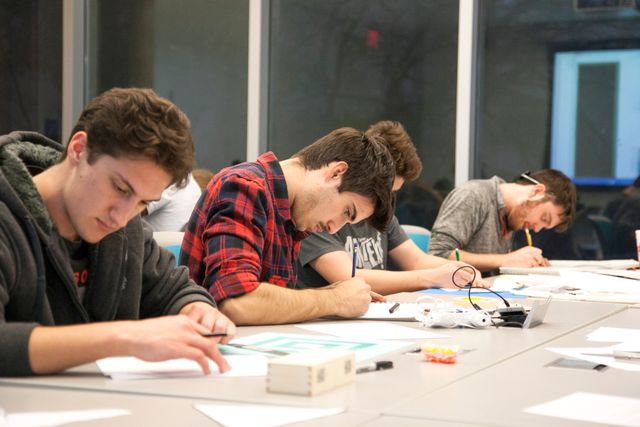
Education generally prepares students to solve problems under a defined set of conditions. A project provides requirements, an assignment describes a situation and an examination presents a problem with enough information to reach a particular answer. Students learn to identify the relevant variables, select an appropriate method and produce a solution that satisfies the stated conditions. This approach develops essential analytical and technical abilities, but professional environments rarely remain as predictable as academic exercises. The conditions under which a solution is designed today may change significantly before it is implemented, and the direction of that change may be difficult to anticipate.
A business may prepare for a future in which demand increases, only to experience a sudden decline. An educational institution may invest in advanced digital infrastructure while discovering that a large section of its students still depends on limited internet connectivity. A manufacturer may design its operations around affordable raw materials, but supply disruptions may make those materials expensive or unavailable. A software company may build a system for rapid expansion, while changing economic conditions force it to reduce operating costs and simplify its infrastructure. In each situation, the future does not follow one consistent direction. Different conditions can emerge, sometimes contradicting the assumptions on which the original solution was based.
This raises an important question for modern education: what if students were required to design solutions that remained useful under multiple contradictory future conditions rather than optimising their work for one expected scenario? Such an approach would change the purpose of problem-solving assignments. Students would not simply be asked to develop the most efficient solution for a given situation. They would need to create systems, strategies and designs that could continue delivering value when important conditions changed in different directions.
This concept can be understood as Contradictory-Future Design. It is a proposed educational approach in which learners examine several plausible futures that impose conflicting requirements and develop solutions capable of responding to them without losing their essential purpose. The objective is not to predict the future perfectly. It is to prepare students to design for uncertainty, recognise competing demands and build solutions that remain useful even when their original assumptions no longer hold.
For EasyShiksha, this creates an opportunity to connect technical education with a deeper form of professional judgement. Online courses, quizzes, projects, games, internships, university programmes and career guidance could support learning experiences in which students are evaluated not only on whether their solutions work today, but also on whether those solutions can adapt to different future conditions.
Understanding Contradictory-Future Design
Contradictory-Future Design begins with a simple observation: future conditions are not always predictable in a single direction. A solution designed for lower costs may need to operate under rising costs. A system created for rapid expansion may later need to function with limited resources. A product designed for advanced technology users may also need to remain accessible to people with older devices and limited digital experience.
These requirements may appear incompatible because they place different demands on the same solution. However, many real-world systems must accommodate such variation. A successful design may need to provide advanced functionality without becoming unnecessarily complicated, support growth without creating excessive operating costs and remain reliable despite changes in infrastructure.
The purpose of contradictory-future design is not to create one perfect solution that satisfies every imaginable condition. Such a solution may be impossible or economically unreasonable. Instead, students learn to identify which functions must remain stable, which features can change, which decisions should be delayed and which trade-offs are acceptable under different circumstances.
This makes the design process more realistic. Rather than assuming that the future will preserve the conditions of the present, learners examine how their solutions might behave when those conditions change.
Why Designing for One Expected Future Is Not Enough
Traditional project design often begins with a preferred future scenario. A student identifies the most likely conditions, makes assumptions about available resources and develops a solution that performs well within those assumptions. This method is useful when requirements are stable, but it can create fragile solutions when the environment changes.
For example, a student may develop an online learning platform based on the assumption that every user has access to a high-speed internet connection and a modern smartphone. The platform may provide high-quality video lessons, interactive simulations and advanced assessment features. Under the expected conditions, it performs effectively. However, if a significant number of users experience unreliable connectivity or use older devices, the platform may become inaccessible to the very learners it was intended to serve.
The problem is not necessarily the quality of the original design. The problem is that the design was evaluated against only one set of conditions. A more resilient approach would examine how the same platform performs when connectivity is reliable and when it is limited, when users have advanced devices and when they have basic devices, and when operating resources are abundant and when they are restricted.
Students would then be encouraged to develop a design that preserves essential learning access across these different situations. This might involve downloadable resources, lightweight interfaces, adjustable media quality and offline assessment options. The resulting system may not be the most advanced solution under every condition, but it could remain useful across a wider range of circumstances.
What Makes Future Conditions Contradictory?
Future conditions become contradictory when they demand different or competing characteristics from the same solution. These conflicts can occur across technology, economics, infrastructure, society, environment and organisational requirements.
A business may need a system that supports both rapid expansion and strict cost control. A healthcare service may need to increase digital access while protecting sensitive information. A manufacturer may need to improve production speed while reducing energy consumption. An educational platform may need to provide personalised learning while ensuring that students can still access essential resources without expensive devices or continuous connectivity.
The contradiction does not always mean that both conditions are impossible to satisfy together. It means that optimising the solution for one condition may weaken its performance under another. A highly centralised system may be easier to manage at scale but less resilient when connectivity fails. A highly customised product may satisfy individual preferences but increase production and maintenance costs. A system with extensive automation may reduce repetitive work while creating greater dependence on technical infrastructure.
Students must therefore learn to recognise the structure of these conflicts. They need to understand which requirements can coexist, which create trade-offs and which may require alternative operating modes. This ability is central to designing solutions that remain useful across changing circumstances.
From Prediction-Based Design to Multi-Condition Design
Prediction-based design attempts to identify the future situation that is most likely to occur and optimises the solution accordingly. Multi-condition design takes a different approach. It recognises that several plausible futures may emerge and examines whether a solution can remain useful across them.
Consider a student designing a digital inventory system for a small business. A prediction-based approach might assume that the business will grow steadily, adopt more digital tools and increase its number of transactions. The student may therefore create a system with advanced automation and extensive reporting features.
A multi-condition approach would also consider a future in which the business remains small, faces financial pressure or operates in areas with unreliable internet connectivity. The student would need to determine which functions are essential across all these situations and which features should be optional. The system might use a simple core structure that operates reliably at a small scale while allowing additional capabilities to be introduced when the business grows.
The distinction is important because students are not expected to know which future will occur. They are expected to develop a solution that can respond intelligently when conditions change. This shifts the emphasis from predicting correctly to designing responsibly.
The Stable Core and the Adaptable Structure
One of the most useful principles in contradictory-future design is separating a solution’s stable core from its adaptable structure. The stable core consists of the functions and principles that must remain reliable regardless of changing conditions. The adaptable structure contains features, processes and operating choices that can be modified when the environment changes.
For example, an online education platform has a stable purpose: helping learners access educational content and develop knowledge. The way that purpose is delivered may change according to connectivity, device availability, learning preferences and institutional requirements. Video lessons may be suitable for some users, while downloadable reading material, audio explanations or low-data interactive exercises may be more practical for others.
The core educational objective remains consistent even though the delivery method changes. This is a powerful design principle because it prevents students from treating every changing condition as a reason to rebuild an entire solution.
In software development, the stable core may consist of essential business rules, while the interface and integrations remain adaptable. In manufacturing, the core product requirements may remain unchanged while suppliers, production methods or material choices can vary. In business strategy, the central customer need may remain stable even when distribution channels and pricing models change.
Students who learn to distinguish between essential purpose and adjustable implementation become better prepared to create systems that can evolve without losing their original value.
Scenario Contradiction Testing: Evaluating a Solution Against Conflicting Futures
A practical way to teach this concept is through Scenario Contradiction Testing. This proposed assessment method requires students to evaluate one solution against several future conditions that place different demands on its design.
Instead of giving learners one fixed set of project requirements, educators could introduce multiple scenarios during the design process. A software project might initially be developed for a growing organisation, then evaluated under a future with a reduced budget, limited internet access or stricter data-protection requirements. An engineering design could be examined under conditions of material shortages, increased demand and tighter energy restrictions.
The student would need to explain which parts of the original design continue to work, which parts become unsuitable and what changes would preserve the solution’s essential purpose. The assessment would focus on the quality of the reasoning rather than simply rewarding the number of features added.
An important part of this process would be identifying the limits of adaptability. Students should not be expected to claim that one design can satisfy every possible future. They should be able to explain which conditions their solution can accommodate, where compromises are necessary and when a different approach would be required.
This would create a more meaningful understanding of design quality. A strong solution would not be one that performs perfectly under a single favourable scenario, but one whose strengths and limitations are understood across several plausible conditions.
Designing for Economic Contradictions
Economic conditions are among the most influential sources of uncertainty for organisations. Prices, wages, financing costs, customer demand and access to investment can change over time. A solution that appears affordable during one economic period may become difficult to maintain when costs rise or revenue declines.
Students studying business, finance, management and entrepreneurship could explore how their proposals behave under contradictory economic conditions. A business plan might need to remain viable when customer demand increases and when it decreases. A production strategy might need to accommodate both stable material prices and sudden supply-cost increases. A technology investment might need to deliver value when funding is available while allowing essential operations to continue when budgets become restricted.
For example, a student designing a subscription-based learning service could consider a future in which users are willing to pay for advanced features and another in which affordability becomes the primary concern. A flexible model might preserve essential educational access while offering additional paid services to users who need them. This would require the student to distinguish between features that are central to the service’s purpose and those that can be adjusted according to economic conditions.
Such exercises would teach learners to understand financial sustainability as a design requirement rather than a separate calculation performed after the solution has been created.
Designing for Technological Contradictions
Technology creates another major challenge because future systems may need to operate across different levels of technological development. An organisation may adopt advanced automation while continuing to depend on older equipment. A software product may need to integrate with modern cloud services while remaining compatible with existing systems. A digital service may need to provide advanced functionality without excluding users who have limited access to modern devices.
Students should learn that technological advancement does not always happen uniformly. Different organisations, regions and users adopt new technologies at different speeds. A solution that assumes everyone will immediately adopt the latest technology may become impractical.
Consider an agricultural monitoring system designed to use advanced sensors and real-time cloud analytics. The system may provide detailed information when connectivity and sensor infrastructure are available. However, farmers in areas with inconsistent network access may need a system that can store data locally and synchronise it later. A useful design could combine advanced monitoring with basic offline functionality.
This approach does not reject innovation. It recognises that technological progress and technological limitations can exist at the same time. Students who understand this relationship can develop solutions that support advanced users without making the entire system dependent on ideal infrastructure.
Designing for Environmental Contradictions
Environmental conditions can also create conflicting requirements. Organisations may need to increase production while reducing resource consumption, develop infrastructure while protecting natural systems or maintain reliable operations despite changing weather patterns.
A student designing a water-management system, for example, may need to consider both periods of water abundance and periods of severe shortage. A system designed only to distribute large quantities of water may perform poorly when resources become limited. A more adaptable design could prioritise essential consumption during shortages while allowing broader distribution when supplies are sufficient.
Similarly, a building designed for energy efficiency may need to operate under both extreme heat and unusually cold conditions. A transport system may need to accommodate increasing passenger demand while reducing emissions and energy consumption.
These examples demonstrate that environmental resilience is not simply about surviving one extreme event. It involves understanding how a solution behaves when different environmental pressures emerge. Through such projects, students can learn to incorporate resource efficiency, adaptability and long-term environmental responsibility into their designs.
Designing for Contradictory User Needs
Solutions are often developed for groups of people whose requirements differ. A product may need to serve beginners and advanced users, young learners and working professionals, people with modern devices and people with basic devices, or users who prefer automation and those who need greater control.
These differences can create design conflicts. A highly simplified interface may be easy for beginners but restrict advanced users. A system with extensive customisation may provide flexibility but overwhelm people who need straightforward guidance. A platform that relies heavily on automated recommendations may be convenient for some learners while reducing the sense of control experienced by others.
Students should therefore learn to identify the common purpose shared by different users and design adaptable experiences around it. Instead of forcing every user into the same interaction pattern, a solution might provide adjustable complexity, different access modes or optional advanced features.
For EasyShiksha, this principle is particularly relevant because students, freshers, graduates and professionals may have different levels of knowledge, time availability and learning preferences. A learning experience that serves these audiences effectively may need to provide multiple routes toward the same educational objective. The content can remain academically consistent while its presentation, pace and level of support adapt to the learner.
The Role of Modularity in Contradictory-Future Design
Modularity can help students build solutions that respond to changing conditions without requiring a complete redesign. A modular system is organised into components that can be modified, replaced or expanded while preserving the functions of the overall system.
In software, modular architecture allows individual components to be updated without changing every part of an application. In manufacturing, modular equipment can support different production requirements. In education, modular learning pathways can allow students to develop new capabilities without repeating entire programmes.
The value of modularity becomes especially clear when future requirements are uncertain. If one component becomes outdated, the remaining system may continue to operate. If a new requirement appears, an additional component may be introduced without disrupting the entire design.
However, modularity also introduces trade-offs. Too many components can increase complexity, integration costs and maintenance responsibilities. Students must therefore understand that modularity is a design choice, not an automatic guarantee of resilience.
A useful project could require learners to identify which parts of a system are most likely to change and isolate those components from functions that should remain stable. This would encourage students to think about future modification during the initial design process rather than treating it as an afterthought.
Reversible Decisions and the Value of Keeping Options Open
Some design decisions are difficult or expensive to reverse. Choosing a particular technology, signing a long-term supply agreement, constructing specialised infrastructure or committing an organisation to a particular operating model can create long-lasting consequences. When the future is uncertain, making irreversible decisions too early can increase risk.
Contradictory-future design encourages students to recognise the difference between decisions that can be changed easily and decisions that create significant long-term commitments. Where possible, learners could design projects that allow organisations to test an approach before making a large investment.
For example, a business considering a new digital system might begin with a limited implementation before replacing its entire infrastructure. A manufacturer might test an alternative material in a small production run before changing its complete supply chain. An educational institution might introduce a new learning platform to a selected programme before adopting it across the organisation.
These approaches preserve options while providing information about actual performance. Students learn that responsible design sometimes involves delaying a permanent decision until enough evidence is available.
This is particularly important in professional environments where uncertainty cannot be eliminated but the consequences of premature commitments can be reduced.
The Difference Between Flexibility and Endless Adaptation
A solution that remains useful under different conditions needs flexibility, but flexibility should not be confused with the ability to change everything continuously. Excessive adaptation can make a system difficult to understand, expensive to maintain and unreliable in its operation.
A design that attempts to satisfy every possible future may become overloaded with features and exceptions. Each additional capability can introduce new dependencies and increase the likelihood of errors. In trying to become universally adaptable, the solution may lose its clarity and efficiency.
Students should therefore learn to define the boundaries of flexibility. They need to identify which future conditions are relevant to the problem, which variations can be supported economically and which situations require a different solution entirely.
For example, a learning platform may support different devices, connection speeds and learning preferences, but it cannot guarantee that every course will be suitable for every learner without adaptation. A manufacturing system may support several materials and production volumes, but there may be economic limits beyond which a different production method is necessary.
The objective is not unlimited flexibility. It is purposeful adaptability that preserves the solution’s main value without creating unnecessary complexity.
AI as a Scenario Exploration Partner
Artificial intelligence could potentially help students explore contradictory futures by generating alternative scenarios and examining how a proposed solution might respond to them. A learner developing a business strategy could use an AI assistant to investigate changes in customer demand, supply costs, competition or regulation. A student designing a software application could examine how the system might behave under different traffic levels, security requirements or infrastructure limitations.
AI could also help identify assumptions that students have overlooked. If a project assumes continuous internet access, the system might ask how the design would behave during a network outage. If a manufacturing plan depends on one supplier, it might encourage the learner to consider what happens when that supplier becomes unavailable.
However, AI-generated scenarios should not be treated as reliable predictions. They are possibilities for exploration, not evidence that a particular future will occur. Students must evaluate whether the scenarios are relevant, realistic and supported by appropriate information.
The educational value lies in using AI to expand the range of conditions students consider while preserving human responsibility for selecting assumptions, evaluating trade-offs and making final design decisions.
Measuring the Quality of a Solution Across Multiple Futures
If students are required to design for contradictory future conditions, conventional evaluation methods may need to be expanded. A project that performs exceptionally well in one scenario but fails completely in another may not demonstrate the same level of resilience as a solution that delivers consistent value across several scenarios.
A proposed Multi-Future Utility Assessment could examine how effectively a solution preserves its essential purpose when conditions change. It would consider whether the student identified relevant contradictions, distinguished stable requirements from adjustable features, anticipated failure points and explained the trade-offs involved.
The assessment should also consider whether the proposed solution remains economically and operationally reasonable. A design that can technically operate under every scenario but requires excessive resources may not represent a practical achievement. Similarly, a solution that survives a change but loses its central purpose may not be genuinely useful.
Students should be rewarded for explaining limitations honestly. If a solution cannot accommodate one particular future condition without unreasonable cost or risk, recognising that boundary is part of good design judgement. The goal is to develop thoughtful professionals rather than encourage unrealistic claims of universal adaptability.
Integrating Contradictory-Future Design into EasyShiksha Courses
EasyShiksha’s online courses could potentially introduce contradictory-future design through practical assignments that gradually increase in complexity. Beginners could start by examining simple examples in which a change in one condition affects the usefulness of a solution. Advanced learners could work with projects involving multiple competing requirements.
A web development course could ask students to create an application that works across modern and older devices, supports both reliable and limited connectivity, and remains maintainable within different budget conditions. A finance course could examine how a business decision performs under both growth and contraction. An AI course could require students to compare the operational requirements of a high-performance model with a smaller model that uses fewer resources.
University programmes could incorporate these assignments into project work, while quizzes could test students’ understanding of trade-offs and scenario-based reasoning. Certificates could potentially recognise demonstrated design capabilities alongside course completion, giving learners a more meaningful record of practical work.
This would help connect academic knowledge with the uncertainty students are likely to encounter in professional environments. Instead of learning only how to solve a problem under fixed conditions, they would learn how to develop solutions that remain useful when those conditions change.
Games and Simulations as Contradictory-Future Learning Environments
Games and simulations can provide an engaging environment for exploring conflicting future conditions because they allow learners to experience the consequences of their decisions. A student could design a transport network, manage a simulated business or operate a virtual manufacturing system while the environment changes over time.
A simulation might initially provide sufficient resources and stable demand. Later, it could introduce rising costs, supply shortages, changing user expectations or infrastructure failures. Students would need to decide whether their original design remains suitable or whether certain components should be modified.
The important learning outcome would not be achieving the highest score through one strategy. It would be understanding why a strategy succeeds under one set of conditions and fails under another. Students could compare different approaches and examine which decisions created unnecessary dependencies.
For EasyShiksha, game-based learning could potentially make complex ideas such as adaptability, resource allocation and resilience easier to explore. Students could experience how decisions made at the beginning of a project influence its ability to respond to future changes.
Internships and Real-World Exposure to Conflicting Requirements
Internships can strengthen this learning approach by showing students that professional organisations rarely operate under one consistent set of priorities. A company may need to improve performance while reducing expenses, introduce new technology while maintaining older systems or expand operations without increasing its workforce significantly.
Students participating in internships may observe how teams respond to these competing demands. A software developer may see a technically ideal improvement delayed because of compatibility requirements. A marketing intern may discover that a campaign designed for one customer segment must be adjusted for another. An engineering intern may observe how production teams balance speed, quality, safety and material availability.
These experiences can help students understand that contradictions are not always problems that can be eliminated. Often, they are conditions that professionals must manage through informed decisions and carefully designed systems.
EasyShiksha could encourage learners to reflect on such experiences through internship assignments that examine how organisations maintain essential operations while responding to changing requirements. This would help students connect their academic projects with the practical realities of professional decision-making.
Preparing Students for Careers That Will Not Follow One Fixed Path
The same principle applies to career development. Students often select a profession based on current industry requirements, but the skills associated with that profession may change throughout their working lives. A software developer may need to work with technologies that did not exist when their education began. A finance professional may encounter new automation systems and regulatory requirements. An engineer may need to adapt to new materials, production technologies and environmental standards.
Career preparation should therefore develop capabilities that remain useful across different professional conditions. Technical knowledge is important, but so are analytical reasoning, communication, adaptability, problem-solving and the ability to learn unfamiliar systems.
Career guidance within EasyShiksha could potentially help students examine how their chosen fields may evolve and identify learning pathways that preserve flexibility. Instead of encouraging learners to depend on one narrow set of tools, it could help them build a combination of foundational knowledge, current technical skills and the ability to acquire new capabilities.
The objective is not to make students prepare for every possible career. It is to help them develop a professional foundation that remains valuable when the direction of their industry changes.
Conclusion: Education Should Prepare Students for More Than One Possible Future
The future rarely follows a single predictable path. Technological progress, economic conditions, environmental changes, infrastructure limitations and human expectations can create competing demands on the same solution. A design that performs exceptionally well under one set of assumptions may become unsuitable when those assumptions change. This makes the ability to design for contradictory future conditions an increasingly valuable professional capability.
Contradictory-Future Design offers a way to introduce this capability into education. It asks students to identify what must remain stable, determine what can change, examine competing requirements and build solutions that preserve their essential value across several plausible futures. It also teaches them to recognise the limits of adaptability and explain the trade-offs involved in their decisions.
For EasyShiksha, this approach could connect online courses, quizzes, projects, simulations, games, internships, certificates, university programmes and career guidance around a more advanced form of problem-solving. Students would learn not only to create solutions that work under present conditions but also to evaluate how those solutions might perform when the future develops differently from what they expected.
The most valuable solution may not be the one that performs perfectly in one carefully predicted environment. It may be the one that continues delivering meaningful value when circumstances change, priorities conflict and original assumptions no longer hold. By teaching students to design for multiple contradictory futures, education can help develop professionals who are not dependent on one version of the world to succeed.
The future of learning should therefore move beyond preparing students to predict what comes next. It should prepare them to create solutions that remain useful even when the future refuses to follow a single direction.