

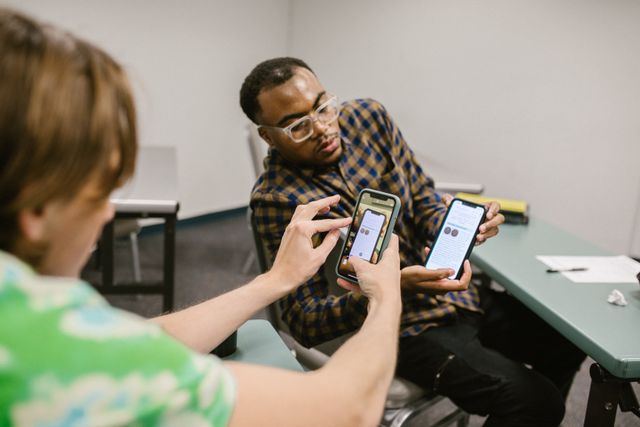
Learning is often considered an individual process in which students receive information, understand concepts, practise skills and gradually develop knowledge. However, education does not take place in isolation. Students continuously exchange explanations, discuss difficult topics, share notes, recommend learning resources, participate in group projects and seek help from classmates. These interactions create informal networks through which knowledge travels across classrooms, universities, online communities and professional learning environments. While these networks can strengthen understanding, they can also spread inaccurate explanations and misconceptions.
A student may misunderstand a scientific concept and explain it incorrectly to a friend. That friend may share the explanation with a study group, where several learners begin using it in assignments and examinations. Over time, the original misunderstanding may become a commonly accepted explanation within the group. Students may continue repeating it because they hear it from multiple people, even when the explanation is scientifically incorrect. The problem becomes more complicated when the misconception is supported by incomplete notes, outdated online resources, misleading videos or AI-generated explanations that appear convincing.
This phenomenon can be examined through a Knowledge Propagation Model, an approach that studies how information, explanations, beliefs and misconceptions move through interconnected learning communities. The model draws on ideas from network science, information diffusion, social learning and knowledge management. Instead of examining only whether an individual student understands a concept, it investigates how that understanding changes as information moves between people and educational environments.
For EasyShiksha, this creates an important opportunity to explore how online courses, quizzes, games, projects, internships, university programmes and career guidance could contribute to a more reliable learning ecosystem. A connected education platform can potentially help students access verified explanations, identify common misunderstandings and develop the ability to evaluate information before sharing it. The objective is not to control student discussions or eliminate informal learning. It is to understand how knowledge spreads and create conditions in which accurate explanations travel more effectively than misconceptions.
What Is a Knowledge Propagation Model?
A Knowledge Propagation Model describes how information moves between individuals, groups and learning environments, and how its meaning or accuracy may change during that movement. In education, the model can be used to examine how students acquire explanations from teachers, classmates, online platforms, discussion forums, social media, digital courses and AI assistants.
Knowledge propagation is not always a straightforward transfer of information. When students receive an explanation, they interpret it using their existing understanding. They may simplify it, combine it with previous beliefs or communicate it differently to others. As a result, the explanation that reaches another student may not be identical to the original source.
For example, a teacher may explain that correlation between two variables does not automatically establish a causal relationship. A student may remember the explanation incompletely and tell a classmate that correlated variables are unrelated. The classmate may then use this interpretation in a statistics assignment. The original concept has changed during transmission, creating a misconception that can spread through the group.
A knowledge propagation model examines these changes rather than assuming that information remains accurate after it is shared. It considers the source of an explanation, the network through which it travels, the way recipients interpret it and the conditions that influence whether they accept or reject it.
The model is particularly relevant to modern education because students now learn through a combination of formal instruction and informal digital interactions. A misconception may originate in a classroom, spread through a messaging group and receive further reinforcement from a social media post. Understanding this process requires looking beyond individual test scores and examining the wider information environment in which students learn.
How Misconceptions Originate in Learning Communities
Misconceptions can originate in several ways. Sometimes students misunderstand a concept because the explanation is too complex, the teaching material is incomplete or the learner lacks essential prerequisite knowledge. In other cases, students develop incorrect conclusions by applying a familiar idea to a situation where it does not work.
For instance, a student learning programming may assume that JavaScript executes every asynchronous operation in exactly the order in which it appears in the source code. This misunderstanding may come from limited exposure to promises, callbacks and the event loop. If the student explains this assumption to classmates, the misconception may become part of a shared approach to solving programming problems.
Misconceptions can also originate outside formal education. Students may encounter simplified scientific explanations in short videos, unverified study notes, online discussion forums or content created without appropriate subject expertise. These resources can be useful starting points for exploration, but they may omit important conditions or present uncertain claims as established facts.
Another source is the repetition of outdated knowledge. A student may receive notes from a previous academic year and assume that every explanation remains current. In subjects where research and professional practices change rapidly, older information may become incomplete or misleading. When such material is shared widely, an outdated explanation can continue circulating even after better evidence becomes available.
The origin of a misconception is therefore not always an individual student’s lack of ability. It may reflect weaknesses in educational communication, content quality, source verification or the broader learning environment.
The Role of Student Networks in Knowledge Diffusion
Students naturally form networks through friendships, classrooms, study groups, online communities and collaborative projects. These networks influence which explanations learners encounter and which sources they consider trustworthy.
Network science provides a useful way to represent these interactions. Each student can be represented as a node, while communication or learning relationships can be represented as connections between nodes. Information moves through these connections, and the structure of the network can influence how quickly and widely an explanation spreads.
A student who regularly helps classmates may become an important information source within a study group. If that student provides accurate explanations, their influence can support collective understanding. However, if the explanation is incorrect, the same position in the network may help the misconception reach many learners.
Some students also belong to multiple communities. A learner may participate in a university study group, an online programming forum and a professional networking community. Such individuals can connect otherwise separate groups. In network science, these connections can be important because information may move between communities through people who participate in more than one network.
This means that the spread of a misconception depends not only on the accuracy of its original explanation but also on the structure of the community through which it travels. A small misunderstanding within a tightly connected group may remain local, while an incorrect explanation shared by a highly influential member may reach a much larger audience.
For EasyShiksha, understanding these patterns could help inform the design of collaborative learning activities and community-based educational features. The purpose would be to support reliable knowledge exchange while making it easier for students to identify when a shared explanation requires verification.
Why Misconceptions Sometimes Spread Faster Than Correct Explanations
Incorrect information does not always spread faster than accurate information, but certain characteristics can make misconceptions particularly difficult to correct. A simplified explanation may be easier to remember than a scientifically precise one. A confident statement may appear more convincing than an explanation that carefully communicates uncertainty. A familiar misconception may also fit a student’s existing beliefs, making it easier to accept without further examination.
Consider the misconception that heavier objects always fall faster than lighter objects. The statement appears consistent with everyday experiences involving objects that are affected by air resistance. Because it seems intuitive, students may repeat it without considering the conditions under which objects fall or the difference between gravitational acceleration and air resistance.
Another example occurs in digital education when students assume that watching a programming tutorial is equivalent to being able to write code independently. The belief is attractive because it makes learning appear faster and less demanding. However, recognising an explanation while watching a video does not necessarily demonstrate the ability to reproduce or apply the concept without assistance.
Social reinforcement can make these misconceptions more persistent. When students hear the same explanation from several classmates, they may interpret repetition as evidence of accuracy. The explanation gains social credibility even if its scientific or technical foundation remains weak.
This creates an important challenge for educational platforms. Correcting a misconception requires more than publishing an accurate explanation. The system must also understand why the incorrect explanation appears convincing and provide evidence that helps students reconsider it.
The Difference Between Knowledge Sharing and Misconception Propagation
Knowledge sharing is a valuable part of collaborative education. Students often understand difficult concepts more easily when classmates explain them using familiar examples or alternative approaches. Peer learning can encourage discussion, strengthen communication skills and expose learners to different ways of thinking.
Misconception propagation occurs when information is transmitted without sufficient attention to its accuracy or limitations. The difference is not simply whether students share information. It is whether the shared explanation remains faithful to the underlying concept and evidence.
A peer explanation may be informal but accurate. A student might use a simple analogy to explain how a database stores information. Although the analogy does not describe every technical detail, it can help a beginner develop an appropriate initial understanding. Another student might use the same analogy too literally and assume that every database operates exactly like a physical filing cabinet. In that case, the explanation may create a misconception if its limitations are not clarified.
Educational systems should therefore avoid discouraging informal learning. Instead, they should help students distinguish between useful simplification and inaccurate representation. Students should understand that an explanation can be helpful at an introductory level while still requiring additional detail when they study the concept more deeply.
The Role of Confirmation Bias in Misconception Spread
Confirmation bias refers to the tendency to favour information that supports existing beliefs while giving less attention to information that challenges them. In learning communities, this tendency can influence which explanations students accept and share.
A student who already believes that mathematics is based mainly on memorising formulas may pay more attention to study advice that emphasises memorisation. They may overlook explanations that demonstrate how mathematical reasoning works. When classmates share similar beliefs, the group can reinforce the same understanding, making alternative explanations less likely to be considered.
Confirmation bias can also influence discussions about scientific topics. Students may selectively share information that supports an existing interpretation while ignoring evidence that introduces important qualifications. Over time, the group may develop a shared understanding that is more confident than the available evidence justifies.
The educational response should not be to label students as biased or irrational. Instead, learning activities can encourage students to examine competing explanations, identify supporting evidence and consider what information might challenge their conclusions.
For EasyShiksha, this could be incorporated into quizzes and interactive learning experiences. Students might compare two explanations of the same concept, examine the evidence behind each one and identify which explanation is more consistent with established knowledge. Such activities could help learners develop stronger evaluation habits before they share information with others.
Digital Communities and the Acceleration of Misconceptions
Digital communication has changed the speed and scale at which students exchange information. Messaging applications, social media platforms, online forums and collaborative learning spaces allow explanations to reach large groups almost instantly.
This creates significant educational opportunities. Students can ask questions outside classroom hours, receive peer support and access explanations from different communities. However, digital communication can also increase the circulation of incomplete or misleading information.
A short video may simplify a scientific concept to make it more engaging, but the simplification may remove important conditions. A programming answer copied from an online forum may work for one situation but fail in another. A study note shared in a messaging group may contain an incorrect formula that is repeatedly reused because it appears in several versions of the same document.
Digital repetition can make a misconception seem established. When the same explanation appears across multiple platforms, students may assume that it has been independently verified. In reality, several posts may have originated from one inaccurate source.
This is why source awareness is important. Students should learn to identify original evidence, examine the credibility of authors and distinguish independent confirmation from repeated copying. Digital literacy should therefore be treated as an essential part of contemporary education rather than an optional technical skill.
AI-Generated Content and the New Risk of Scalable Misconceptions
Generative AI has introduced another dimension to knowledge propagation. Students can now request explanations, summaries, examples, code and study notes within seconds. These tools can make learning more accessible, particularly when students need alternative explanations or immediate assistance.
However, AI-generated content can sometimes contain factual errors, incomplete reasoning or fabricated references. The language may sound fluent and confident even when the underlying explanation is unreliable. If students share such content without checking it, an incorrect answer can move rapidly through study groups and online communities.
The risk becomes greater when the same AI-generated explanation is copied into multiple notes, presentations or discussion posts. Students may encounter the same claim in several places and mistake repetition for independent verification.
Educational platforms should therefore encourage students to treat AI-generated explanations as material that requires evaluation. AI can help explain concepts, but students should compare important claims with verified learning resources, recognised academic sources and appropriate expert guidance.
EasyShiksha could potentially support this process by connecting AI-assisted learning with reviewed course content, explanatory resources and assessment activities. Students could be encouraged to check whether an AI-generated answer is consistent with the concepts taught in their courses. This would help transform AI from an unquestioned source of answers into a tool for exploration and critical evaluation.
How Misconceptions Change as They Move Between Students
A misconception may not remain identical throughout its spread. Each student can modify the explanation according to their existing knowledge, communication style and understanding of the subject.
For example, a learner may initially misunderstand a scientific principle in a relatively narrow way. When explaining it to a friend, they may simplify the statement further. The friend may combine it with another incorrect assumption and communicate a new version to a study group. The final explanation may be significantly different from the original misunderstanding.
This process resembles information transformation during transmission. It can involve omission, exaggeration, incorrect generalisation and the loss of important conditions. A statement that was originally true only under specific circumstances may become a universal claim after repeated simplification.
Consider a programming example in which a student learns that JavaScript promises represent the eventual completion or failure of asynchronous operations. The student may simplify this to the idea that promises automatically make code execute faster. When the explanation is shared, other learners may assume that using promises always improves application performance. The original concept has been transformed into an inaccurate general rule.
Understanding this process is important because correcting only the final version may not address the underlying pattern. Educational systems need to identify which part of the explanation has changed and why the altered version appears reasonable to students.
A Network-Based Model of Misconception Propagation
A proposed Knowledge Propagation Model for education could represent how explanations move through student communities and how their accuracy changes over time. The model would begin by identifying the original information source, which might be a teacher, textbook, online course, student, social media post or AI assistant.
The next stage would examine the communication network through which the explanation travels. This network could include classroom discussions, study groups, online communities and collaborative assignments. Each interaction would represent an opportunity for the information to be repeated, modified, questioned or corrected.
The model would then consider how students interpret the explanation. Their prior knowledge, confidence, source trust and familiarity with the subject may influence whether they accept the information. A student who has strong foundational knowledge may recognise an error, while a beginner may accept the explanation because they lack the background required to evaluate it.
Finally, the model would examine the consequences of propagation. It could investigate whether the explanation appears in repeated quiz errors, assignment submissions, discussion patterns or shared learning resources. This would not prove that every student received the misconception from the same source, but it could provide signals that a common misunderstanding deserves further examination.
The purpose of such a model would be to identify patterns early enough for educators to respond with accurate explanations and targeted learning activities.
Detecting Misconceptions Through Quizzes and Assessment Patterns
Quizzes can provide valuable evidence about misconceptions because incorrect answers often reveal more than a simple lack of knowledge. When students repeatedly select the same incorrect option, their responses may indicate a shared misunderstanding.
For example, a statistics quiz may reveal that several students consistently interpret correlation as proof of causation. A programming assessment may show repeated confusion between equality and assignment operators. A finance quiz may reveal that learners misunderstand the difference between revenue and profit.
If the same error appears across a large number of students, educators can investigate whether the problem originates from a common explanation, an unclear lesson or a gap in prerequisite knowledge.
EasyShiksha could potentially use quiz analytics to identify recurring incorrect response patterns across courses. The platform might compare responses across different assessments and determine whether the same misconception appears in multiple learning contexts. When a pattern becomes visible, educators could review the relevant lesson and introduce a targeted explanation.
The system should not automatically conclude that every repeated incorrect answer represents the same misconception. Students may choose an incorrect option for different reasons. Additional diagnostic questions and expert review would be necessary to understand the underlying reasoning.
AI-Powered Misconception Detection and Correction
AI could support misconception detection by analysing patterns in student responses, written explanations and learning interactions. Natural language processing could help identify recurring phrases or incorrect claims in submitted explanations. Machine learning could identify assessment patterns associated with particular misunderstandings, while knowledge graphs could connect those misunderstandings with the concepts they affect.
For example, if students repeatedly describe a programming function as something that must immediately return a value, an AI-supported system could flag the explanation for review. An educator could then determine whether students are confusing return behaviour with asynchronous execution or misunderstanding functions more generally.
AI could also help generate corrective learning material. Once a misconception has been verified, the system might provide a clearer explanation, a counterexample or a question that helps students recognise the error. It could compare the incorrect belief with an accurate explanation while preserving the reasoning needed to understand the difference.
However, automated correction requires careful oversight. AI systems can misinterpret student language, misunderstand context or incorrectly classify a valid alternative explanation as a misconception. Students should not be penalised simply because their wording differs from a standard textbook definition. Human review and transparent evidence should remain central to the process.
The Importance of Corrective Learning Rather Than Simple Fact Replacement
Correcting a misconception is more difficult than presenting the correct answer. Students may have built several other beliefs around the incorrect explanation. If the original misconception is deeply connected to their existing understanding, replacing one sentence may not change the wider mental model.
Effective correction should therefore address why the misconception appears plausible. Students need to understand what makes the incorrect explanation attractive, where its reasoning fails and under what conditions the accurate concept applies.
For example, a student who believes that heavier objects always fall faster should not simply be told that the statement is wrong. They should explore how gravity and air resistance influence falling objects, compare different conditions and understand why everyday observations can produce misleading conclusions.
The same approach can be used in programming education. A student who believes that asynchronous JavaScript executes tasks faster merely because promises are used should examine execution order, waiting behaviour and the role of the event loop. A practical demonstration can reveal why the original assumption is incomplete.
For EasyShiksha, corrective learning could be integrated into courses, quizzes and interactive activities. Rather than displaying only the correct option after a wrong answer, a learning experience could explain the underlying misconception and provide an opportunity to test the revised understanding.
Peer Learning as a Defence Against Misconception Spread
Student communities should not be viewed only as potential sources of misinformation. They can also become powerful environments for correcting misunderstandings. Peer discussions allow students to question explanations, compare interpretations and identify contradictions.
The challenge is to create a culture in which questioning shared information is considered a normal part of learning. Students should feel comfortable asking where an explanation came from, what evidence supports it and whether alternative interpretations exist.
Collaborative activities could encourage learners to explain concepts to one another and then verify those explanations using reliable learning material. A student might present an initial interpretation, while another examines its assumptions and identifies missing conditions. The group could then compare its conclusions with an expert-reviewed explanation.
This approach encourages intellectual responsibility without discouraging collaboration. Students learn that sharing knowledge involves more than repeating information. It also requires checking accuracy and being willing to revise an explanation when new evidence becomes available.
EasyShiksha could potentially support such activities through collaborative quizzes, discussion-based projects and structured peer-learning experiences. The platform could help students benefit from community learning while maintaining connections to reliable educational resources.
Educational Content Provenance and Source Verification
One of the most important ways to reduce misconception propagation is to improve the traceability of educational information. Students should be able to understand where an explanation originated, who reviewed it and whether it reflects established knowledge or an evolving interpretation.
This is the purpose of educational content provenance. A learning resource could include information about its author, subject reviewer, publication date, reference material and revision history. If the content is updated, the reason for the change could also be recorded.
Provenance becomes particularly important when information is shared between students. A study note copied from an online course should ideally retain a reference to the original lesson. A scientific claim should be connected to an appropriate source rather than circulating as an unattributed statement. An AI-generated summary should be clearly distinguished from expert-reviewed material.
For EasyShiksha, content provenance could potentially strengthen trust across its educational ecosystem. Students could access structured courses and supporting resources while understanding the sources behind important explanations. This would make it easier to identify outdated or unverified material before it becomes widely shared.
A Proposed Knowledge Propagation Intelligence Framework for EasyShiksha
EasyShiksha could explore a Knowledge Propagation Intelligence Framework designed to understand how explanations move through learning communities and identify patterns associated with recurring misconceptions. The framework would connect educational content, student assessments, peer-learning interactions and verified knowledge sources.
The first component would be a structured knowledge base containing concepts, definitions, prerequisite relationships and reviewed explanations. This would provide a reference against which student responses and shared learning material could be examined. The second component would analyse recurring assessment patterns, particularly incorrect responses that appear across multiple students or learning activities.
The third component would examine how learning information travels through available educational interactions. Where students voluntarily participate in collaborative activities or discussion spaces, the system could identify commonly repeated explanations and flag those that may require verification. It should not monitor private conversations or collect personal communications without clear consent and an appropriate educational purpose.
The fourth component would support misconception evaluation. AI could identify potentially inaccurate explanations, but subject experts would review important cases before the platform treats them as confirmed misconceptions. Once verified, the system could recommend corrective learning activities, updated course material or additional assessment questions.
The final component would evaluate whether the correction has improved understanding. Students could attempt a new question, explain the concept in their own words or apply it through a project. This would help determine whether the misconception has been corrected rather than merely replaced by temporary memorisation.
Measuring the Spread and Correction of Misconceptions
A knowledge propagation system needs meaningful ways to evaluate its effectiveness. Simply counting incorrect answers would not be sufficient because students make mistakes for different reasons. A more useful approach would examine how frequently a verified misconception appears, how many learning contexts it affects and whether its frequency changes after corrective instruction.
For example, an institution might identify a recurring misunderstanding about a mathematical concept across several course assessments. After introducing a revised explanation and additional practice activities, educators could compare student responses in subsequent assessments. A reduction in the same error may indicate that the intervention has helped, although further testing would be needed to establish whether understanding has improved more broadly.
The system could also examine whether students can explain the concept independently and apply it in unfamiliar situations. If they select the correct answer but continue using the incorrect reasoning in projects, the misconception may not have been fully resolved.
Evaluation should also consider the time required to identify and correct a misconception. An educational platform that detects recurring misunderstandings early may help prevent them from influencing later learning. However, speed should never take priority over accurate diagnosis and responsible intervention.
The Risks of Monitoring Student Knowledge Networks
Although knowledge propagation analysis could improve educational quality, it also creates risks if implemented without appropriate safeguards. Students should not be labelled as misinformation sources simply because they share an incorrect explanation. Misconceptions are a normal part of learning, and students should be able to ask questions, experiment with ideas and revise their understanding without fear of punishment.
Another concern is the possibility of confusing disagreement with misinformation. Scientific and academic subjects may contain legitimate differences in interpretation, particularly when evidence is developing. An educational system should not automatically classify every alternative explanation as incorrect. It must distinguish between established facts, reasonable interpretations, incomplete explanations and demonstrably false claims.
Privacy is equally important. A platform should not attempt to monitor private student conversations to identify misconceptions. Analysis should be limited to appropriate educational data, such as submitted assessments, voluntary discussions within learning environments and content that students have explicitly chosen to share for educational review.
Transparency should guide the entire process. Students should understand why an explanation has been flagged, what evidence supports the correction and how they can challenge an inaccurate classification. The purpose of knowledge propagation analysis should be to strengthen learning communities, not to create an environment of surveillance or excessive control.
The Future of Education: From Individual Understanding to Community Knowledge Quality
As education becomes increasingly digital and collaborative, the quality of learning will depend not only on what individual students understand but also on the information environments in which they participate. Students will continue to learn from teachers, classmates, online platforms, professional communities and AI systems. These sources can complement one another, but they can also create conflicting explanations and reinforce misunderstandings.
Future educational platforms may therefore need to evaluate knowledge quality at both individual and community levels. They could examine whether learners understand important concepts, whether explanations remain accurate as they are shared and whether corrective information reaches the students who need it.
AI could assist with identifying recurring patterns, while knowledge graphs could represent relationships between concepts and common misconceptions. Verified content sources could provide reliable reference material, and collaborative learning activities could encourage students to examine and correct explanations together.
For EasyShiksha, this approach could support a more connected educational ecosystem in which courses, quizzes, games, projects, internships and career guidance contribute to both individual learning and community knowledge quality. Students would gain access to information while developing the skills needed to evaluate, explain and responsibly share it.
Conclusion: Building Learning Communities Where Accurate Knowledge Travels Further
The Knowledge Propagation Model highlights an important reality of modern education: information does not remain confined to the classroom or the individual learner. It travels through student relationships, study groups, digital communities, social media, educational platforms and AI-assisted interactions. During this process, accurate explanations can strengthen collective understanding, while incomplete or incorrect explanations can become misconceptions that spread across entire learning communities.
Understanding this process requires more than identifying individual mistakes. Educational systems need to examine where misconceptions originate, how they move between students, why they appear convincing and which interventions can correct them effectively. Network science, knowledge graphs, AI-powered assessment analysis and educational content provenance could help make these processes more visible.
For EasyShiksha, this creates an opportunity to develop learning experiences that combine accessible education with reliable knowledge verification. Online courses can provide reviewed explanations, quizzes can reveal recurring misunderstandings, projects can test conceptual application and collaborative activities can encourage students to question and validate shared information. AI could support this process by identifying patterns, while educators and subject experts would remain responsible for evaluating important academic claims.
The goal should not be to eliminate discussion, disagreement or experimentation from student communities. These are essential parts of learning. Instead, education should help students become more responsible participants in the movement of knowledge. They should learn not only how to receive and share explanations but also how to examine evidence, recognise uncertainty and correct misunderstandings.
The future of intelligent education will depend not only on how effectively knowledge reaches students, but also on how accurately it travels between them.