

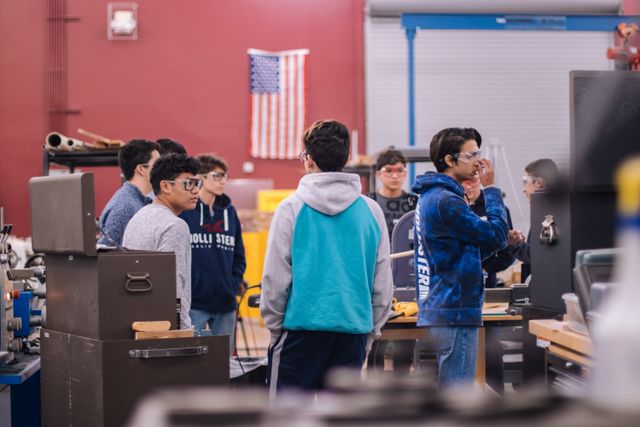
Student projects are traditionally viewed as educational activities. A learner builds a website to practise programming, creates a marketing campaign to understand digital advertising, analyses a dataset to develop analytical skills, or designs an application as part of an academic assignment. These activities are usually evaluated through grades, feedback, certificates, or portfolio recognition. Once the assessment is complete, the project may be stored in a folder, uploaded to a portfolio, or forgotten entirely.
However, many student projects have value beyond the classroom. A website developed during a course might provide a useful starting point for a small business. A student-created research summary could help an organisation understand a new market. A carefully designed educational resource could be reused by teachers, while a data visualisation could help a nonprofit communicate an important issue. In these situations, learner-created work becomes more than an exercise. It becomes a resource that someone else may find useful.
This creates an important question for the future of education: who benefits when student work becomes economically or operationally valuable? The student gains experience and perhaps a certificate, but a company, institution, educator, platform, or community may also benefit from the output. Sometimes this exchange is transparent and mutually beneficial. In other situations, the value created by the learner may be greater than the recognition, compensation, or learning opportunity they receive in return.
The concept of a Hidden Labor Market of Student Projects describes this overlooked space in which learner-created work can generate value for other people or organisations without always being treated as a contribution to a broader economy. It does not suggest that every classroom assignment is commercial labour or that every student project deserves payment. Rather, it asks how educational systems can distinguish between practice, collaboration, reusable intellectual work, and genuine productive contributions.
For EasyShiksha, this question connects directly with online courses, quizzes, practical projects, internships, certificates, university programmes, and career guidance. These learning experiences could form a connected system in which students develop skills, create useful work, receive appropriate recognition, and understand their rights when their contributions are used beyond the original learning activity. The opportunity is not simply to create another project marketplace. It is to build a more transparent relationship between learning, contribution, ownership, and value.
What Is the Hidden Labor Market of Student Projects?
A labour market is commonly understood as the environment in which people provide their skills and effort in exchange for wages, opportunities, or other forms of compensation. Student projects do not automatically belong to this category. Many are created for practice, personal development, academic assessment, or creative exploration, without any expectation that an external organisation will use them.
The hidden market emerges when learner-created work begins serving purposes beyond its original educational context. An organisation may adopt a student-developed prototype, a business may adapt a marketing strategy, a teacher may reuse a learning resource, or a platform may showcase student-generated material to attract users. The project may create measurable value even when the learner receives only a grade or a general statement of completion.
The word hidden refers to the limited visibility of these exchanges, not necessarily to deliberate wrongdoing. The student may not know that the work could be reused. The organisation may not have considered the difference between reviewing a sample and using a finished deliverable. The educational institution may focus on assessment rather than the project’s later applications. As a result, the contribution can move from a learning environment into practical use without a clearly defined agreement about ownership, attribution, or compensation.
A useful distinction must therefore be maintained between learning and labour. A student who completes a hypothetical case study for practice is not automatically performing commercial work. A learner who voluntarily publishes an open-source project is not necessarily expecting payment. However, when a business specifically requests a usable deliverable and incorporates it into its operations, the relationship may require a different level of clarity.
Understanding this distinction is the first step toward making learner-created work more visible and ensuring that its value is handled responsibly.
Why Student Projects Can Create Value Beyond Education
The value of a student project depends on its quality, relevance, usability, and context. A basic exercise may have little practical application outside the course. A more developed project, however, can solve a real problem or provide a useful foundation for further work.
Consider a student who develops a responsive website while learning frontend development. Initially, the project demonstrates an understanding of HTML, CSS, and JavaScript. If the website is well structured, accessible, secure, and adaptable to a real organisation’s requirements, it may also have practical value. A small business might use the project as a prototype, while another developer might use it as a starting point for a larger application.
A similar situation can occur in other fields. A student studying finance might create a spreadsheet model that helps explain cash flow. A learner studying digital marketing could develop a content calendar and audience analysis. A student exploring artificial intelligence might build a prototype that classifies documents or organises information. These outputs can demonstrate capability while also offering something useful to a potential user.
Yet educational value and commercial value are not identical. A project can be excellent for learning but unsuitable for direct deployment. It may contain security weaknesses, incomplete documentation, inaccurate assumptions, or dependencies that require further development. An organisation using such work may need to invest additional time before it becomes operational.
A transparent system should therefore evaluate what the project actually provides rather than assuming that every completed assignment is a market-ready product. Recognising potential value should encourage responsible opportunities, not create unrealistic expectations about student earnings.
Who Benefits From Learner-Created Work?
The student is the most obvious beneficiary of a project-based learning experience. By completing a project, the learner can practise skills, receive feedback, develop problem-solving ability, and produce evidence that can support future applications. A strong project can make a portfolio more convincing because it shows what the student has actually built rather than merely listing completed courses.
However, other participants may benefit as well. Educational institutions can use student work to demonstrate the practical relevance of their programmes. Instructors can use projects to improve teaching materials or develop new case studies. Companies can discover emerging talent, evaluate potential collaborators, and explore prototype ideas. Nonprofit organisations can gain access to research, digital resources, or communication materials that support their missions.
Educational platforms can also benefit when student projects demonstrate the usefulness of their learning experiences. A collection of high-quality projects can help prospective learners understand what a course enables them to create. Project showcases can improve engagement, demonstrate educational outcomes, and provide evidence of practical learning.
Communities may benefit when learners address local challenges, such as creating accessible information resources, improving digital services, or analysing public data. In these cases, the value may not be financial. A project could save time, improve access to information, or help people understand a problem more clearly.
The important issue is not that every beneficiary must pay the student. It is that the benefits should be understood, and the terms of use should be appropriate to the relationship. A project created for a class, a voluntary community contribution, and a paid client assignment represent different arrangements and should not be treated as interchangeable.
The Difference Between a Learning Exercise and Productive Work
One of the most difficult questions is determining when student work becomes a productive contribution. The answer cannot depend solely on whether the project looks professional or whether an organisation finds it useful.
A learning exercise is primarily designed to develop understanding. The student may work with a fictional company, use a simplified dataset, or follow a predefined brief. The objective is to practise a concept, and the output may not be suitable for direct use. Such exercises are an essential part of education and should not automatically be interpreted as unpaid labour.
Productive work involves a different set of expectations. The task may respond to a real requirement, use actual organisational constraints, or produce a deliverable intended for adoption. The organisation may specify deadlines, revisions, quality standards, or technical requirements. In these circumstances, the student may be contributing to an operational or commercial objective rather than merely demonstrating knowledge.
Some projects sit between these categories. A company-sponsored challenge may offer students a real problem but use the resulting work only for evaluation. A nonprofit may invite volunteers to develop an open resource. An internship may involve supervised work that contributes to an organisation while also providing structured learning. Each arrangement requires its own terms.
EasyShiksha could help learners understand these differences by making project expectations explicit. Before starting an activity, students could see whether it is a practice exercise, a portfolio project, a collaborative challenge, a voluntary contribution, or a client-oriented assignment. This classification would make it easier to understand the intended outcome and the rights associated with the work.
The Ownership Problem: Who Owns a Student Project?
Ownership becomes especially important when learner-created work is reused or distributed. A student may assume that anything they create automatically belongs to them, while an organisation may believe that participation in a programme grants it permission to use the output. Neither assumption should replace a clear agreement.
The legal position can depend on the jurisdiction, the type of work, employment or internship arrangements, institutional policies, contractual terms, and applicable intellectual property law. Copyright, software licensing, confidentiality, and other rights may apply differently depending on the circumstances. This is why a general educational platform should avoid promising that every student automatically retains all rights or that every organisation automatically acquires them.
For example, a student might create a website independently as part of a portfolio. In a separate situation, the same student might build a website for a company under an internship agreement that specifies how the deliverable can be used. A third situation could involve an open-source project released under a licence that permits specified forms of reuse. These arrangements may lead to different outcomes.
The essential principle is informed consent. Students should understand who may use their work, whether it can be modified, whether it may be published, and whether commercial use is permitted. Organisations should understand what rights they receive and what restrictions remain.
EasyShiksha could potentially support this process through clear project terms, ownership declarations, licensing information, and records of permissions. Such features would not replace legal advice where necessary, but they could make expectations more visible before a project begins.
The Problem of Invisible Compensation
Compensation is often discussed only in financial terms, but learner-created work can involve several forms of exchange. A student might receive money, a stipend, mentorship, access to professional tools, structured feedback, a credible reference, or an opportunity to collaborate with experienced practitioners.
These benefits can be meaningful, particularly when they directly support the learner’s development. However, they should not be treated as automatically equivalent to payment for productive work. A certificate does not necessarily compensate a student for creating a deliverable that an organisation uses commercially. Similarly, the promise of exposure may provide little practical value if the student receives no meaningful recognition or opportunity.
The appropriate exchange depends on the purpose and scope of the project. A voluntary open-source contribution may be valuable because it supports a shared resource and gives the learner experience with collaborative development. A supervised educational challenge may provide feedback and a chance to demonstrate skills. A client assignment that replaces work the organisation would otherwise need to purchase raises different questions about compensation and fairness.
A transparent system should help students evaluate the exchange rather than assuming that every opportunity is beneficial. Learners should be able to understand what they will receive, what they are expected to provide, and whether the arrangement fits their goals.
This is particularly important for students who are eager to build experience. Their desire for internships, certificates, and portfolio projects can make them vulnerable to opportunities that demand extensive work without delivering the promised educational benefit.
How the Hidden Market Can Affect Students From Different Backgrounds
The distribution of benefits from learner-created work can be unequal. Students with access to strong networks, advanced equipment, professional mentorship, and established institutions may find it easier to turn projects into internships, paid assignments, or business opportunities. Other learners may produce equally promising work but lack the connections required to reach potential users.
Financial circumstances can influence these outcomes as well. A student who needs immediate income may find it difficult to participate in a lengthy unpaid project, even if it offers useful experience. A learner with fewer financial constraints may be able to devote more time to portfolio development and networking. Over time, these differences can affect access to employment opportunities.
Recognition also matters. If an organisation adopts a student project without acknowledging its creator, the learner may lose an opportunity to demonstrate the impact of their work. Conversely, a properly documented contribution can help the student explain how a project was used, which responsibilities they handled, and what capabilities they developed.
An inclusive learner-contribution system should therefore consider more than whether projects are available. It should examine whether opportunities are accessible, expectations are reasonable, recognition is meaningful, and students can participate without bearing disproportionate costs.
For EasyShiksha, this could mean designing project pathways that accommodate different levels of experience and access to resources. A learner should not need expensive software or an extensive professional network to begin creating credible evidence of capability. Open tools, guided assignments, transparent evaluation, and accessible mentoring could help broaden participation.
A Verified Contribution Record for Student Work
One possible solution is a verified contribution record that documents what a learner created, what role they played, and how the work was evaluated. This would be more informative than a simple certificate stating that the student completed a course or participated in a project.
A contribution record could describe the project’s purpose, the student’s responsibilities, the skills demonstrated, the tools used, and the status of the deliverable. Where appropriate, it could include a reference to a published project, a supervisor’s evaluation, or evidence that the work was used by an external organisation. It could also record whether the work was collaborative and distinguish the learner’s contribution from the contributions of other team members.
Verification would need to be carefully defined. A platform confirming that a project file was submitted does not necessarily prove that the student created every part of it or that the project works correctly. A more meaningful record would explain what was verified, by whom, and under which conditions.
For example, a student might submit a web application and receive a record confirming that they implemented specific interface components, completed a documented testing process, and presented the work for evaluation. This would provide more useful evidence than a generic participation certificate, while avoiding unsupported claims about professional readiness.
Within EasyShiksha, a verified contribution record could connect learning outcomes with practical projects, internships, and career profiles. It could help learners explain their work to employers and help organisations evaluate the evidence available to them.
Artificial Intelligence and the New Scale of Student Work
Artificial intelligence is changing how quickly learners can produce digital content, code, research summaries, designs, and prototypes. This creates new opportunities for education, but it also complicates the relationship between effort, authorship, and value.
A student may use AI tools to generate an initial draft, debug code, explore alternative designs, or analyse a dataset. The resulting project may still demonstrate meaningful capability if the student can explain the decisions, verify the output, correct errors, and adapt the work to the task. In other cases, a submission may rely heavily on generated material that the student cannot independently evaluate.
This distinction matters when projects are used to demonstrate competence or contribute to an organisation’s work. Simply possessing a finished output does not establish which capabilities the learner demonstrated. The contribution record should make the student’s role clear, including relevant AI assistance where disclosure is required by the project rules.
AI also increases the potential volume of learner-created work. More students may be able to build prototypes and produce digital resources that would previously have required greater technical experience. However, an abundance of outputs can make quality assurance more difficult. Organisations still need to determine whether a project is accurate, safe, maintainable, original where required, and suitable for its intended purpose.
EasyShiksha could incorporate responsible AI-use expectations into project guidance and evaluation. The emphasis should be on understanding, verification, attribution, and accountability rather than automatically rejecting AI-assisted work. In a changing professional environment, the ability to use AI responsibly may itself be an important capability.
Building a Responsible Student Project Ecosystem
A responsible ecosystem for learner-created work would need to connect students, educators, organisations, and potential users without treating every project as a commercial product. Its foundation would be clarity about purpose.
Before a project begins, the learner should understand the problem being addressed, the expected deliverable, the evaluation criteria, the intended audience, and whether the work may be used outside the learning environment. If the project is connected to a real organisation, the terms should explain any relevant confidentiality requirements, ownership arrangements, licensing conditions, and compensation.
Quality assurance would be another essential component. A project should not be presented as production-ready merely because it has been completed. Technical work may require security checks, testing, documentation, accessibility review, or professional supervision. Research-based work may require fact-checking, methodological review, and appropriate handling of data. The level of review should match the risks associated with the intended use.
The ecosystem should also support meaningful feedback. Students need to understand not only whether their projects meet the requirements but also what they did well, what requires improvement, and which capabilities they demonstrated. This makes the project valuable even when it is not adopted by an external organisation.
Finally, learners should be able to decide whether they wish to participate in projects intended for external use. Participation should not require them to surrender rights without understanding the consequences, and educational assessment should not depend on agreeing to unrelated commercial reuse unless that arrangement has been made explicit and is appropriate to the programme.
EasyShiksha as a Bridge Between Learning and Contribution
EasyShiksha’s combination of courses, quizzes, projects, internships, certificates, university programmes, and career guidance provides a useful foundation for thinking about how learner-created work could become part of a connected educational journey.
A student could begin by learning a skill through an online course, demonstrate understanding through assessments, and apply the knowledge in a guided project. The next stage might involve improving the project through feedback, documenting the learner’s contribution, and presenting the work in a portfolio. Where a suitable opportunity exists, the student could then explore a supervised internship, collaborative challenge, or project with a clearly defined external purpose.
This structure would help distinguish between learning milestones and productive contributions. Completing a course would demonstrate participation and learning progress. Completing a project would provide evidence of application. Having the project independently reviewed could add information about quality, while verified external use could demonstrate that the work served a practical purpose. Each stage would communicate something different.
A proposed EasyShiksha contribution ecosystem could also help students discover opportunities that match their current skills without exaggerating their readiness. Beginners might work on structured practice projects, while more experienced learners could pursue complex collaborative assignments. Organisations could specify the problem they need solved and the level of experience required, allowing learners to make informed decisions about participation.
The central objective would be to connect learning with real-world contribution while preserving the educational purpose of the experience. Students should gain more than a completed task. They should gain understanding, evidence, feedback, and a clearer view of how their capabilities can create value.
Measuring Value Without Reducing Education to a Marketplace
The idea of a hidden labour market raises an important concern: if student projects become measurable economic assets, could education begin to value learners primarily according to the usefulness of their output?
This would be a serious mistake. The purpose of education extends beyond producing work for organisations. Students need opportunities to explore unfamiliar subjects, experiment, make mistakes, and create projects that may never have a commercial application. Some of the most valuable learning experiences involve questions that do not have immediate economic returns.
A responsible system should therefore distinguish educational value from external utility. A project can be educationally successful even if nobody uses it commercially. Conversely, a project that produces a useful deliverable may still offer limited learning if the student performs repetitive tasks without meaningful feedback or skill development.
Evaluation should consider whether the learner developed capability, whether the project met its intended purpose, whether the contribution was recognised appropriately, and whether the arrangement was fair. These dimensions should complement one another rather than being collapsed into a single score.
For EasyShiksha, this distinction would be especially important if project opportunities were connected with career profiles or certificates. Recognition should communicate the actual achievement without implying that every project has market demand or that external adoption guarantees professional competence.
A balanced model would treat economic value as one possible outcome of learning, not the sole measure of its success.
The Future: From Student Assignments to Recognised Contributions
As education becomes more project-oriented, the boundary between learning and professional contribution may become more complex. Students increasingly build portfolios, collaborate online, use AI tools, participate in open-source communities, and engage with organisations through internships and practical challenges. These experiences can produce work that has value beyond the original assignment.
The future challenge is to ensure that the value created through these activities is visible, fairly handled, and educationally meaningful. Students should understand what they have created, how it may be used, what rights apply, and how the experience can support their future development. Organisations should be able to identify the limits of a project’s quality and the conditions under which it may be used. Educational platforms should help both parties establish clear expectations.
Technology may make it possible to maintain more detailed records of contributions, verification, feedback, and permissions. However, digital records alone cannot guarantee fairness. Clear agreements, responsible supervision, transparent evaluation, and appropriate protection of student interests remain essential.
The most promising future is not one in which every learner is expected to monetise every assignment. It is one in which meaningful contributions can be recognised when appropriate, students retain agency over their work, and educational experiences create opportunities for learning as well as practical impact.
Conclusion: Student Work Deserves More Than a Completion Certificate
The hidden labour market of student projects reveals a question that traditional educational systems have not always addressed clearly: what happens when work created for learning becomes useful to someone else? The student may gain skills, the organisation may receive a valuable resource, the institution may demonstrate educational outcomes, and the platform may showcase the success of its learning model. These benefits can coexist, but they should not remain invisible or depend on unclear assumptions.
Recognising learner-created work does not mean treating every assignment as paid labour. It means distinguishing between practice, voluntary collaboration, educational assessment, and productive work intended for external use. It means making ownership, permission, attribution, compensation, and quality expectations clear before misunderstandings arise.
For EasyShiksha, this presents an opportunity to connect online courses, quizzes, practical projects, internships, certificates, and career guidance into a more transparent contribution pathway. Students could learn a skill, apply it, receive feedback, document their role, and explore suitable opportunities to use their work. Where an external organisation benefits from a project, the terms of that relationship could be made explicit and appropriate to the circumstances.
The real value of such an ecosystem would not be measured only by the number of projects completed or the revenue they generate. It would be measured by whether learners become more capable, whether their contributions are recognised accurately, and whether opportunities are structured fairly.
Student projects should remain a foundation for learning, but when they create value beyond the classroom, that value deserves transparency, responsible use, and meaningful recognition for the people who created it.