

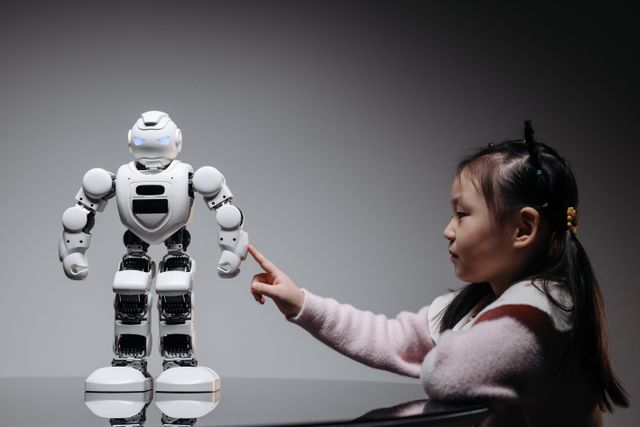
Artificial intelligence is rapidly becoming part of how students search for information, complete assignments, learn difficult concepts, prepare for examinations, practise skills and explore career opportunities. AI tutors, generative AI tools and intelligent learning platforms can explain complex subjects within seconds and provide students with personalised assistance at almost any stage of their education. However, the growing presence of AI in education introduces an important challenge that cannot be solved simply by teaching students how to use AI. Students must also learn how to recognise when AI is wrong.
This creates the possibility of a new educational discipline: the AI Hallucination Curriculum. Instead of treating AI-generated mistakes as occasional technical failures, education platforms could teach students how to identify unsupported claims, fabricated references, inaccurate explanations, outdated information and logically inconsistent answers. The objective would not be to make students suspicious of every AI response. Instead, it would develop a more sophisticated relationship between students and intelligent systems, where AI becomes a learning assistant rather than an unquestioned authority.
For an education platform such as EasyShiksha, this concept is particularly relevant because modern learning is increasingly moving beyond static courses. EasyShiksha brings together online courses, quizzes, internships, university programs, games, certificates, degree opportunities, career guidance and job-oriented learning. As AI becomes embedded across these experiences, students need another layer of capability: the ability to evaluate the intelligence they are using.
The future-ready student may therefore need two different skills. The first is knowing how to ask AI the right questions. The second is knowing whether the answer deserves to be trusted.
AI Is Becoming Part of the Learning Process
Traditional education generally assumes that the teacher, textbook or academic resource is responsible for delivering reliable knowledge. Students are expected to learn information from these sources and demonstrate their understanding through assignments, examinations and practical work. Generative AI changes this structure because students can now create their own explanations, examples, summaries and research starting points through conversations with intelligent systems.
This flexibility can make learning faster and more personalised. A student struggling with programming can request another explanation. A business student can ask for a simulated case study. A language learner can practise conversations. A cybersecurity student can explore hypothetical scenarios. A learner preparing for an interview can ask AI to simulate an interviewer.
However, the same system that can generate useful explanations can also produce incorrect information with remarkable confidence. AI does not always distinguish between what is factually established and what sounds plausible. A response may appear well written, structured and authoritative while containing a subtle factual error.
This creates a new educational problem. Students are no longer only learning information. They are increasingly learning through information generated dynamically by machines. Consequently, the ability to evaluate AI output becomes part of digital literacy.
What Is an AI Hallucination?
An AI hallucination occurs when an artificial intelligence system generates information that appears plausible but is unsupported, inaccurate, fabricated or inconsistent with available evidence. The problem becomes particularly concerning when the response is presented with confidence and the student assumes that confidence represents correctness.
An AI system might invent a citation that does not exist, attribute a statement to the wrong researcher, provide an incorrect historical date, describe a programming function inaccurately or present a fictional organisation as real. In other situations, the answer may contain a mixture of accurate and inaccurate information, making detection more difficult.
The educational challenge is therefore not simply that AI sometimes makes mistakes. Human beings also make mistakes. The deeper problem is that AI can produce mistakes at a scale and speed that can influence thousands of learning decisions.
If a student accepts one incorrect answer during a casual conversation, the consequence may be small. If that incorrect explanation becomes part of the student’s understanding of mathematics, programming, science, finance or professional practice, the error can become a foundation for future mistakes.
The AI Hallucination Curriculum would address this problem by making verification an intentional learning capability.
Why Detecting AI Mistakes Could Become a Core Student Skill
Education has historically taught students to evaluate information from different sources. Research skills, critical thinking, source evaluation and academic reasoning already exist. AI hallucination detection can be considered a natural extension of these capabilities.
The difference is that AI-generated information can feel more conversational and personalised than traditional sources. A student may trust an answer because it responds directly to their question, uses familiar language and appears confident. The interaction can feel closer to speaking with a knowledgeable tutor than reading an unfamiliar webpage.
This makes AI verification especially important. Students need to understand that an AI system can be useful without being infallible.
The future student should be able to ask questions such as whether the claim is supported by evidence, whether the source actually exists, whether the information is current, whether the explanation contradicts established knowledge and whether another reliable source confirms the answer.
This does not mean students should reject AI. It means they should develop calibrated trust.
From AI Literacy to AI Verification Literacy
AI literacy is often discussed in terms of knowing how artificial intelligence works, understanding prompts and using AI tools effectively. These capabilities are important, but they may not be sufficient for education.
AI verification literacy adds another dimension. A student with AI verification literacy understands that an AI response is a generated output that requires evaluation depending on the importance of the decision.
For a creative writing exercise, a fictional response may be perfectly acceptable. For a medical explanation, legal interpretation, academic citation or financial calculation, verification becomes significantly more important.
This distinction can teach students that not every AI response requires the same level of scrutiny. Instead of creating unnecessary fear around AI, education can teach students how to determine when verification matters most.
This approach could become an important part of responsible digital education.
The AI Hallucination Curriculum as a New Learning Layer
An AI Hallucination Curriculum could operate as an additional layer across existing educational experiences rather than becoming a completely separate subject.
Imagine a student completing an online course on digital marketing. Instead of receiving only traditional learning material, the course could occasionally present an AI-generated marketing claim and ask the student to determine whether the statement is reliable. The student could then inspect supporting evidence and identify the specific problem in the AI response.
A computer science learner could receive an AI-generated piece of code containing a subtle logical error. Rather than simply correcting the code, the student would learn to identify why the AI-generated solution fails.
A history learner could analyse an AI-generated explanation containing a fabricated historical detail. A finance learner could evaluate an AI-generated financial calculation. A cybersecurity learner could investigate an AI-generated security recommendation containing an unsafe assumption.
The educational value comes from transforming AI mistakes into learning opportunities.
Learning to Detect Different Types of AI Errors
AI mistakes are not all identical. Some are obvious factual errors, while others are more difficult to detect. A strong curriculum would therefore teach students to recognise different categories of unreliable AI output.
A factual hallucination occurs when the system provides information that is simply incorrect. This could include an incorrect date, statistic, definition or description.
A fabricated-source hallucination occurs when AI provides a citation, study, website or publication that cannot be verified. This is particularly important for students conducting academic research.
A contextual error happens when information may be correct in general but does not apply to the specific situation. An AI response might provide a technically valid explanation while misunderstanding the student’s actual circumstances.
A reasoning error occurs when the conclusion does not logically follow from the information presented. The individual facts may appear reasonable while the final conclusion is flawed.
An outdated-information problem can also create misleading answers. AI systems may not always have access to the most recent information, and students need to understand that knowledge can change over time.
Teaching students to distinguish between these different problems would make AI verification more sophisticated than simply asking whether an answer is “right” or “wrong.”
Quizzes Could Become AI Verification Laboratories
EasyShiksha’s quiz ecosystem provides a natural environment for introducing this concept. Traditional quizzes primarily evaluate whether students know the correct answer. AI-aware quizzes could also evaluate whether students can evaluate an AI-generated answer.
A quiz could present a question followed by an AI-generated response. The student’s task would be to determine whether the response is accurate, incomplete, misleading or unsupported. The student could then identify the evidence needed to verify it.
This changes the role of assessment. The quiz no longer measures only subject knowledge. It also measures information judgment.
For example, an AI-generated answer in a programming course might produce code that works in one situation but fails in another. The student would need to recognise the limitation. In a marketing course, AI might recommend a strategy based on an assumption that is not supported by the available data. The student would need to challenge the assumption.
Such assessments could help develop a generation of learners who are comfortable questioning intelligent systems.
AI Mistakes Can Become Diagnostic Learning Signals
An important opportunity exists beyond simply teaching students to identify hallucinations. The way a student responds to an AI mistake can reveal something about the student’s own understanding.
If a learner immediately accepts an incorrect explanation, the issue may involve weak source evaluation skills. If the learner detects factual errors but cannot identify reasoning errors, their critical reasoning ability may require further development. If the learner correctly identifies a problem but cannot explain why it is wrong, they may need deeper conceptual understanding.
AI verification activities could therefore become diagnostic.
EasyShiksha could potentially use these interactions alongside courses, quizzes and practical experiences to understand where a learner needs additional support. Instead of treating every incorrect response as the same type of failure, an intelligent learning system could identify whether the student has a knowledge problem, reasoning problem, verification problem or confidence problem.
This creates a more sophisticated learning journey.
The Difference Between Trust and Blind Trust
The objective of an AI Hallucination Curriculum should not be to make students distrust artificial intelligence. Blind trust and blind distrust are both educationally unhelpful.
If students assume everything AI says is correct, they become vulnerable to misinformation. If they assume everything AI produces is wrong, they lose access to one of the most powerful learning technologies available to them.
The better approach is calibrated trust.
Students should learn that AI can be extremely useful for generating ideas, explaining concepts, creating practice exercises, summarising information and supporting learning. At the same time, they should understand that important claims require verification.
This creates a mature relationship with AI. The student remains responsible for judgment while the AI provides assistance.
From Prompt Engineering to Verification Engineering
Much of the early conversation around generative AI education focused on prompt engineering. Students learned how to structure instructions so that AI could produce better results.
The next stage may be verification engineering.
Verification engineering in education would involve designing processes through which students examine AI-generated information before accepting it. This could include comparing multiple sources, checking original references, testing calculations, running code, examining assumptions and looking for contradictions.
The shift is significant because better prompting does not guarantee correct information. A carefully written prompt can still produce a hallucinated answer.
Therefore, students need both sides of the AI interaction. They need to know how to generate useful outputs and how to evaluate those outputs.
Games Could Make AI Verification More Engaging
AI hallucination detection does not have to become a dry academic exercise. EasyShiksha’s gaming ecosystem creates opportunities for turning verification into interactive challenges.
Students could enter scenarios where an AI assistant provides information and the learner must determine whether the information can be trusted. Different levels could introduce increasingly subtle mistakes.
At beginner levels, the errors could be obvious. At advanced levels, the system could introduce fabricated sources, hidden assumptions, outdated information or technically correct statements used in the wrong context.
Students could learn through experimentation rather than passive instruction.
This approach could also make AI literacy more engaging for younger learners. Instead of presenting AI safety as a set of warnings, education could turn it into a skill-based challenge where students become investigators of information.
Practical Projects Can Connect AI Verification With Real Work
The importance of AI verification becomes even clearer when students move from learning to professional practice.
A student completing an internship may use AI to draft reports, analyse data, generate code, prepare presentations or research a market. If the student cannot identify AI-generated errors, the consequences can move beyond the classroom.
EasyShiksha’s internship ecosystem can therefore become a practical environment for applying AI verification skills.
A student working on a project could use AI to generate an initial solution and then document how the output was tested and validated. The project would not simply demonstrate that the student can use AI. It would demonstrate that the student knows how to supervise AI.
This distinction could become increasingly valuable in the workplace.
The Future Certificate May Need to Show AI Judgment
Certificates traditionally indicate that a student completed a course or achieved a particular level of knowledge. As AI becomes increasingly involved in learning and professional work, another question may become important: can the learner use AI responsibly?
A future certificate could potentially represent more than course completion. It could demonstrate that a learner understands how to use AI, evaluate AI-generated information, verify important claims and recognise limitations.
For EasyShiksha, this aligns naturally with the idea of connecting learning with practical evidence. A course certificate supported by quizzes, projects and internship experience could become even more meaningful when students demonstrate responsible AI use.
The future credential may increasingly represent demonstrated capability rather than simple completion.
AI Verification and Career Readiness
Employers are increasingly interested in candidates who can work efficiently with emerging technologies. However, productivity alone is not enough.
A professional who can generate content with AI but cannot identify inaccurate information may create more problems than a professional who works slightly slower but verifies important outputs.
This makes AI judgment a potential employability skill.
A student applying for a technology role, marketing position, research internship, finance opportunity or content job may encounter AI-assisted workflows. Employers may increasingly expect candidates to understand where AI can accelerate work and where human verification remains necessary.
Career guidance therefore needs to evolve alongside AI.
EasyShiksha can connect AI verification learning with career preparation by helping students understand not only how AI is used within different professions but also how professionals are expected to supervise it.
AI Hallucination Detection as a Form of Digital Critical Thinking
Critical thinking has always been important in education, but AI makes it more urgent.
When information arrives through search engines, social media, websites and human-authored articles, students already need to evaluate credibility. Generative AI adds another layer because the information is dynamically constructed in response to the user’s request.
Students must therefore learn to distinguish between fluency and truth.
An AI response can be grammatically excellent while being factually incorrect. It can be highly detailed while relying on a false assumption. It can contain citations while some citations are fabricated. It can sound certain while the underlying information is uncertain.
Understanding this difference is one of the defining digital literacy skills of the AI era.
The Role of AI Tutors in Teaching AI Verification
Ironically, AI itself could help students learn how to detect AI mistakes.
An AI tutor could deliberately present carefully designed examples containing different types of errors and ask students to investigate them. The system could then explain the reasoning behind the correct evaluation.
The tutor could adapt the difficulty according to the student’s performance. A beginner might practise identifying obvious factual mistakes, while an advanced learner could analyse subtle reasoning errors.
This creates a recursive learning environment in which AI helps students understand the limitations of AI.
The important principle is that the system should not encourage students to accept its explanations blindly. Instead, it should teach learners to verify and reason.
Building an AI Verification Culture Across Education
The strongest version of the AI Hallucination Curriculum would not exist only inside one lesson. It would become part of the culture of digital learning.
Students could encounter verification activities across courses, quizzes, games, projects and internships. A programming course could teach code validation. A business course could teach data verification. A science course could teach evidence evaluation. A career course could teach responsible AI use in professional communication.
Over time, students would develop a habit of asking whether information deserves to be trusted.
This is more powerful than memorising a list of AI limitations because habits transfer across contexts.
The Risk of Over-Verifying Everything
There is also a danger in taking AI verification too far. If students are required to verify every minor piece of information, the learning process can become inefficient.
Education must therefore teach proportional verification.
A student asking AI for five creative ideas does not need the same verification process as a student asking for a medical explanation or academic research reference. The level of scrutiny should reflect the consequences of being wrong.
This principle can help students balance efficiency and accuracy.
The goal is not to slow down AI-assisted learning. The goal is to make AI-assisted learning intelligently reliable.
Measuring an AI Verification Skill
If AI verification becomes a core educational capability, it will eventually need to be assessed.
A future assessment system could measure how accurately students identify AI errors, how quickly they detect unsupported claims, whether they can explain why an answer is unreliable and whether they know which evidence should be used for verification.
Such assessment could produce an AI Verification Profile.
Rather than giving students another traditional score, the profile could reveal their strengths in factual checking, source evaluation, reasoning analysis, contextual judgment and responsible AI use.
This could become another component of a broader skills transcript.
From Knowledge Consumption to Knowledge Supervision
The traditional learner is often imagined as a consumer of knowledge. The learner reads, watches, listens, memorises and applies.
The AI era changes this relationship.
Students increasingly interact with systems that can generate knowledge-like outputs. The learner therefore becomes partly a supervisor of information.
This means education must prepare students not only to know things but also to judge the reliability of information-producing systems.
The student of the future may not simply ask, “What is the answer?”
They may also ask, “How do I know this answer is reliable?”
That second question could become one of the most valuable habits education can develop.
EasyShiksha and the Future of AI-Ready Education
EasyShiksha is positioned within an educational environment where learning increasingly extends beyond traditional classroom structures. Courses can provide foundational knowledge. Quizzes can test understanding. Games can encourage experimentation. Internships can create practical exposure. Certificates can document achievement. University and degree pathways can support formal education. Career guidance can connect learning with professional direction.
AI verification can connect these components into another layer: intelligent judgment.
A student could learn a concept through an online course, test it through a quiz, challenge an AI-generated explanation through a verification activity, apply the concept during a project or internship and demonstrate the resulting capability through a certificate or skills record.
This creates a more complete learning cycle.
The objective is no longer simply to make students better consumers of AI-generated information. It is to prepare them to become capable decision-makers in environments where humans and intelligent systems work together.
The Future of the AI Hallucination Curriculum
The AI Hallucination Curriculum may eventually become as normal as digital literacy, information literacy and research skills.
As AI systems become more capable, detecting their mistakes may actually become more difficult. Obvious errors are easy to recognise. Sophisticated systems may produce answers that are mostly correct but contain small inaccuracies, missing context or unsupported conclusions.
This makes human judgment increasingly important.
Education cannot assume that better AI will eliminate the need for verification. Instead, better AI may increase the importance of teaching students how to work with uncertainty, evaluate evidence and challenge machine-generated conclusions.
The most valuable student may not be the person who knows how to get the longest answer from AI. It may be the person who knows when an answer should be questioned.
Conclusion: The Student Should Become the Final Layer of Intelligence
Artificial intelligence can dramatically expand what students are able to learn and accomplish. It can explain concepts, generate practice material, simulate professional situations, support projects and personalise educational experiences. But its usefulness depends on the ability of the learner to interpret its outputs responsibly.
The AI Hallucination Curriculum represents a shift from simply teaching students how to use AI toward teaching them how to supervise AI.
For EasyShiksha, this concept fits naturally into a broader vision of connected learning. Courses can provide knowledge, quizzes can reveal understanding, games can develop experimentation, internships can provide practical experience, certificates can document achievement and career guidance can connect skills with opportunities. AI verification can become the layer that helps students evaluate the intelligence supporting all of these experiences.
The future of education will not be defined by whether students use AI. They almost certainly will.