

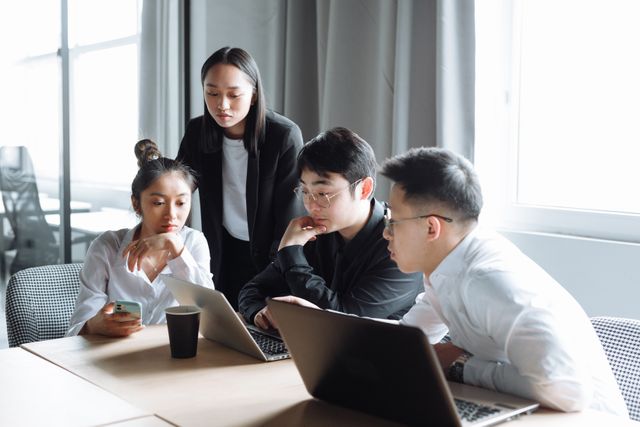
Modern education gives students access to more information than ever before. Online courses, digital classrooms, interactive quizzes, professional certifications, university programs, projects and internships have made it possible for learners to develop knowledge and technical skills without depending entirely on traditional classroom environments. Yet one major challenge continues to exist between education and employment: knowing something is not always the same as knowing how to behave, communicate and make decisions in a professional environment.
A student may complete a course in digital marketing and understand search engine optimisation, advertising and analytics. A computer science graduate may understand programming languages and software development principles. A finance student may know accounting concepts and financial analysis. However, professional environments demand another layer of capability. Employees must communicate with managers, collaborate with colleagues, respond to clients, manage disagreements, explain complex ideas, handle deadlines and make decisions when information is incomplete. These behaviours are difficult to develop through conventional academic content alone.
This is where the concept of the AI Workplace Mentor becomes increasingly relevant. An AI Workplace Mentor could act as a digital professional guide that helps students practise the human and decision-making dimensions of work before they enter an actual organisation. Rather than simply answering questions about careers, such a system could place students inside realistic professional situations, observe how they respond and provide personalised guidance.
For an education ecosystem such as EasyShiksha, which brings together online courses, quizzes, internships, projects, certificates, university programs, games, career guidance and job-oriented learning, the AI Workplace Mentor could become a bridge between learning and professional readiness. It could connect what students learn with how they are expected to behave and perform in real workplaces.
The objective would not be to replace teachers, mentors, managers or real internships. Instead, it would create an additional layer of preparation that allows students to practise professional behaviour repeatedly, receive immediate feedback and enter real workplace environments with greater confidence.
From Academic Knowledge to Workplace Capability
The transition from education to employment is often treated as though it happens automatically after graduation. Students complete their degrees, collect certificates, apply for jobs and begin learning professional behaviour after they are hired. This model places significant pressure on both graduates and employers.
A more connected approach would recognise that professional readiness can be developed progressively during education.
Academic knowledge remains essential, but it represents only one component of career preparation. A student also needs to understand how to use that knowledge in situations involving people, deadlines, uncertainty and organisational expectations. Communication, collaboration, judgement, adaptability and professional decision-making are not simply additional soft skills that can be added at the end of a course. They influence how effectively technical knowledge can be converted into useful work.
The AI Workplace Mentor could address this gap by turning professional behaviour into something students can practise rather than merely read about.
Instead of telling a learner that communication is important, the system could simulate a situation in which the learner must explain a problem to a manager. Instead of providing a lesson about teamwork, it could place the student in a simulated project where different team members disagree about an approach. Instead of describing decision-making, it could present incomplete information and ask the learner to determine what should happen next.
This transforms professional preparation from theoretical instruction into experiential learning.
What Is an AI Workplace Mentor?
An AI Workplace Mentor can be understood as an intelligent digital system designed to help learners develop workplace behaviours, professional judgement and career readiness through personalised guidance and realistic scenarios.
A conventional career chatbot may answer questions such as which skills are required for a particular profession or how to prepare for an interview. An AI Workplace Mentor could go further. It could interact with the student over time, understand their learning history and career goals, create workplace situations, analyse their responses and recommend specific areas for improvement.
The system could function as a combination of mentor, simulator, feedback engine and professional learning assistant.
For example, a student interested in project management might be placed in a simulated work environment where a project is behind schedule. The learner may need to communicate with a team member, update a manager and decide which task should receive priority. The AI mentor could observe the student’s decisions and later explain how different approaches might affect the project.
The experience would not simply determine whether the student was right or wrong. It could help the learner understand why a particular response was effective, where communication could be improved and what professional principle was involved.
This distinction is important because professional situations frequently contain multiple reasonable responses. The purpose of the AI Workplace Mentor would therefore be to develop judgement rather than memorise predetermined answers.
Why Communication Needs More Practice
Communication is one of the most important capabilities in almost every profession, yet it can be difficult to teach through conventional educational methods.
Students may write essays, give presentations and participate in classroom discussions, but workplace communication introduces different expectations. Professional communication often needs to be concise, purposeful, respectful and adapted to the audience.
A developer may need to explain a technical problem to a non-technical manager. A designer may need to defend a creative decision to a client. A finance professional may need to communicate financial information to senior leadership. A customer-support employee may need to respond to an unhappy customer while maintaining professionalism.
The AI Workplace Mentor could simulate these situations repeatedly.
A learner could practise explaining the same problem to different audiences. The system could then provide feedback on clarity, structure, tone and relevance. If a student uses excessive technical language when communicating with a non-technical stakeholder, the AI could explain why the message may not be effective and encourage a clearer approach.
This creates a low-risk environment in which students can experiment with communication styles before facing real professional consequences.
Practising Difficult Conversations
Some of the most valuable workplace communication experiences involve difficult conversations.
Employees may need to tell a manager that a deadline is unrealistic, inform a client about a delay, disagree with a colleague, ask for clarification or admit that they have made a mistake. These situations require more than vocabulary or grammar. They require judgement, empathy and professional awareness.
An AI Workplace Mentor could create controlled scenarios around these situations.
The learner might receive a message from a simulated manager asking why a task is incomplete. The student would need to respond professionally. The AI character could then react to the response. If the student becomes defensive, the scenario could become more challenging. If the student communicates clearly and takes responsibility, the conversation could progress differently.
Through repeated practice, learners could become more comfortable with conversations that initially seem intimidating.
This is particularly valuable for students who have strong academic abilities but limited exposure to professional environments.
Collaboration Beyond Group Projects
Students frequently participate in group assignments, but academic teamwork does not always reproduce professional collaboration.
In a workplace, team members may have different responsibilities, priorities, personalities and levels of experience. Some may agree with an idea while others challenge it. Decisions may need to be made despite disagreement.
The AI Workplace Mentor could create dynamic team environments in which students experience these realities.
A simulated team could include an AI-generated colleague who strongly supports one approach and another who prefers a different solution. The student might need to facilitate discussion, negotiate priorities or find a compromise.
The AI could analyse whether the learner listens to other perspectives, communicates respectfully, focuses on the shared objective and contributes constructively to the decision.
This could help students understand that collaboration is not simply about dividing a project into separate tasks. It involves coordination, communication, accountability and shared problem-solving.
Professional Decision-Making Under Uncertainty
One of the biggest differences between academic questions and workplace decisions is the amount of information available.
Academic questions generally provide enough information to reach an expected answer. Professional decisions are often made under uncertainty.
A marketing professional may need to decide whether to adjust a campaign before complete performance data is available. A software engineer may need to determine how to handle an unexpected technical problem. A project manager may need to choose between meeting a deadline and addressing a quality concern.
An AI Workplace Mentor could deliberately introduce uncertainty into professional simulations.
The student might receive incomplete information and several possible actions. Instead of asking for a single correct answer, the system could ask the learner to explain their reasoning.
The AI could then evaluate the decision in terms of risk, communication, priorities and consequences.
This approach could help students develop a more mature understanding of professional judgement. They would learn that effective decision-making is not always about finding certainty. Sometimes it is about making the best available decision while recognising limitations and potential risks.
The AI Workplace Mentor as a Personalised Professional Coach
Every student enters the workplace with a different combination of strengths and weaknesses.
One learner may be technically strong but struggle with presentations. Another may communicate confidently but have difficulty prioritising tasks. A third may collaborate well but hesitate when making independent decisions.
A standard professional-skills course cannot easily personalise itself around these differences.
An AI Workplace Mentor could.
Because the system could observe repeated interactions, it could identify behavioural patterns across different simulations. If a student repeatedly avoids difficult conversations, the system could create more opportunities to practise them. If another learner consistently communicates effectively but makes rushed decisions, the system could introduce scenarios requiring deeper analysis.
This would create a dynamic professional development journey.
The learner would not simply complete the same workplace-readiness curriculum as everyone else. The system could continuously identify the next capability that deserves attention.
Connecting the AI Workplace Mentor With EasyShiksha Courses
The real potential of the AI Workplace Mentor emerges when it is connected to learning content.
Suppose a student enters a workplace simulation and struggles to analyse a marketing campaign. The platform should not simply report that weakness. It could connect the student to relevant course content, quizzes or practical exercises that address the underlying gap.
After completing the additional learning, the student could return to a similar workplace scenario and apply the new knowledge.
This creates a continuous loop between learning and practice.
EasyShiksha could potentially connect online courses with this type of intelligent professional practice. A student could learn a concept, test understanding through a quiz, apply it in a project and then practise using it inside an AI-generated workplace environment.
The education experience would therefore move beyond the sequence of course completion followed by certification. It would become a continuous process of learning, applying, receiving feedback and improving.
Quizzes as Diagnostic Tools for Workplace Readiness
Quizzes could also play a more strategic role within the AI Workplace Mentor ecosystem.
Before entering a professional simulation, a student could complete a diagnostic assessment designed to determine whether they understand the knowledge required for the scenario. During the simulation, short assessment checkpoints could test whether the student understands the consequences of different decisions.
Afterward, the platform could assess what the learner gained from the experience.
This creates a relationship between conceptual knowledge and professional behaviour.
For example, a student may know the theory of conflict management but still struggle to apply it in a simulated team disagreement. The system could identify the difference between knowledge and application and recommend additional practice.
This would make assessment more meaningful because it would measure not only whether students know something but whether they can use it.
From AI Mentor to Digital Workplace Simulation
The AI Workplace Mentor becomes significantly more powerful when combined with a simulated workplace.
Instead of interacting with an AI system in isolation, students could enter an environment containing virtual colleagues, managers, clients, projects, meetings, deadlines and communication channels.
The mentor would exist within this environment as a guide.
A student could begin a simulated professional day by reviewing tasks and messages. During the day, the learner might encounter a client request, a team disagreement and an unexpected deadline. The AI mentor could remain available for reflection and feedback without simply solving the problem for the student.
This model would combine the ideas of the Digital Workday and the AI Workplace Mentor into a connected experiential learning environment.
The learner experiences work, makes decisions and then receives guidance about those decisions.
Learning Through Professional Mistakes
One of the strongest advantages of AI-based workplace simulation is the ability to make mistakes safely.
Students often hesitate to participate in real professional situations because they fear making the wrong decision. While this fear is understandable, avoiding difficult situations can slow professional development.
Simulation changes the consequences.
A learner could respond poorly to a simulated client and then receive feedback. They could make an ineffective project decision and examine what happened. They could fail to communicate a delay and observe the resulting consequences.
The AI mentor could then help the learner understand the mistake.
The important principle is that failure becomes information.
Instead of treating mistakes solely as negative outcomes, the system can use them to identify learning opportunities. The student can then repeat the scenario with a different strategy.
This kind of deliberate practice could be especially valuable before internships and first jobs.
Preparing Students for Their First Professional Environment
The first few weeks of employment can be overwhelming for graduates.
Even students with strong academic backgrounds may not know how to interpret workplace expectations. They may be uncertain about when to ask questions, how to communicate with managers, how to handle feedback or how to prioritise multiple assignments.
An AI Workplace Mentor could introduce these experiences before graduation.
Students could practise joining meetings, receiving feedback, managing deadlines, writing professional messages and responding to changing priorities.
This preparation would not eliminate the learning curve associated with a first job, but it could make that learning curve less intimidating.
A graduate who has already experienced simulated professional situations may approach the workplace with greater awareness and confidence.
Supporting Internship Readiness
Internships represent one of the most important bridges between education and employment. However, not every student begins an internship with the same level of preparedness.
The AI Workplace Mentor could become an internship-readiness layer.
Before an internship, students could practise scenarios relevant to their intended role. The system could identify gaps in communication, collaboration, technical knowledge or decision-making and suggest additional preparation.
During an internship, the platform could potentially support reflection without replacing the actual workplace mentor. Students could use it to think through professional situations, prepare for conversations or identify areas where they need additional learning.
The real internship would remain the source of authentic experience, while the AI mentor would provide an additional layer of preparation and reflection.
Career Guidance Becomes More Experiential
Career guidance traditionally focuses on information. Students are told which careers exist, which degrees are required and which skills are valuable.
The AI Workplace Mentor could make career guidance more experiential.
Instead of simply reading about a profession, a student could experience a simulated version of the work.
A learner considering digital marketing might interact with clients and analyse campaigns. Someone exploring software development could work through simulated bugs and project decisions. A finance student could experience financial analysis and stakeholder communication.
These experiences could help students make more informed career choices.
A career is easier to understand when students can experience aspects of it rather than only read about it.
Helping Students Discover Their Professional Strengths
The AI Workplace Mentor could also reveal strengths that traditional academic assessment may overlook.
A student who does not achieve the highest academic score might demonstrate excellent collaboration, adaptability and problem-solving during simulations. Another student with strong examination performance might discover that they need additional practice in communication or decision-making.
This does not mean replacing academic achievement with AI-generated behavioural scores. Instead, it means adding another dimension to understanding student capability.
Over time, the platform could build a more comprehensive professional profile that combines academic learning, quiz performance, projects, simulations, internships and career interests.
Such a profile could help students understand themselves more clearly.
Building a Capability Portfolio
The future of employability may increasingly depend on demonstrated capability rather than claims alone.
A resume can state that a student possesses communication or leadership skills. A certificate can confirm completion of a course. A project can demonstrate application. An internship can provide real workplace experience.
AI Workplace Mentor simulations could add another form of evidence: demonstrated performance in realistic professional scenarios.
When combined, these elements could contribute to a capability portfolio.
A student could show not only what they studied but also what they practised and how they responded to professional situations.
This supports the broader EasyShiksha vision of moving from certificate collection toward capability building.
The AI Mentor Should Not Make Every Decision
There is an important distinction between an AI mentor and an AI system that takes control of a student’s career.
The purpose of mentoring should be to strengthen human judgement, not replace it.
If the AI tells students exactly what to say and exactly what decision to make in every situation, students may become dependent on the system. The educational objective should instead be to help learners develop their own reasoning.
The AI could ask reflective questions, explain possible consequences and provide alternative perspectives. It could allow students to make the final decision.
This preserves student agency.
The most useful AI mentor may therefore be the one that gradually becomes less necessary as the student’s professional confidence increases.
Human Mentors Remain Essential
AI can simulate conversations and provide immediate feedback, but human mentors bring experience, context and emotional understanding that technology cannot fully reproduce.
A human career mentor can recognise when a student’s problem is connected to confidence, family expectations, career uncertainty or personal circumstances. A workplace mentor can explain organisational realities that may not be visible in a simulation.
For this reason, the AI Workplace Mentor should complement rather than replace human mentorship.
EasyShiksha could potentially combine AI-driven practice with human guidance, allowing students to receive automated feedback while still having opportunities to learn from teachers, mentors and professionals.
The combination could be more powerful than either approach alone.
Privacy, Trust and Responsible AI
An AI Workplace Mentor would need to handle student information responsibly.
The system could potentially collect detailed information about how learners communicate, make decisions, respond to pressure and perform in simulations. Such data should be used carefully.
Students should understand what information is being recorded and why. They should have meaningful control over their learning profiles. Developmental feedback should not automatically become a permanent judgement about employability.
The platform should also distinguish between simulation performance and real-world capability. Performing poorly in one simulated situation does not mean that a student lacks a particular professional quality permanently.
AI should identify opportunities for development rather than create rigid labels.
Trust will therefore become as important as technical sophistication.
The Future of AI Workplace Mentoring
As artificial intelligence becomes more capable, the AI Workplace Mentor could evolve from a simple conversational assistant into a persistent professional development companion.
It could understand a student’s learning history, career goals, completed courses, quiz performance, project evidence, internship experience and workplace simulation results. It could then help coordinate the next stage of development.
A student interested in a particular career might receive a sequence of increasingly complex workplace experiences. Each simulation could build on the previous one. The AI could identify recurring weaknesses, recommend relevant learning and track improvement over time.
The result would be a professional learning journey that evolves with the student.
Instead of asking students to complete a fixed workplace-readiness course, education platforms could create adaptive professional development environments.
EasyShiksha and the Future of Practice-Based Education
The AI Workplace Mentor aligns closely with the broader transformation taking place across digital education.
EasyShiksha already represents a connected ecosystem involving online courses, quizzes, internships, university programs, games, certificates, degrees, career guidance and job-oriented opportunities. An AI Workplace Mentor could connect these components through professional practice.
A student could discover a career, take relevant courses, assess their knowledge through quizzes, complete projects, enter an AI-supported workplace simulation, identify capability gaps, practise professional communication and then progress toward an internship or job opportunity.
The journey becomes more connected because every experience can contribute to the next.
This model moves education from a collection of disconnected activities toward a continuous learning-to-career system.
Conclusion: Preparing Students for the Human Side of Work
The future of education will not be determined only by how effectively technology can deliver information. It will also depend on how effectively education prepares students to use knowledge in environments involving people, uncertainty, responsibility and decisions.
The AI Workplace Mentor represents one possible answer to this challenge.
By creating realistic professional scenarios, students could practise communication before their first client conversation, collaboration before their first major team project and decision-making before they face real organisational consequences. AI could provide immediate feedback, adapt scenarios to individual needs and identify areas where additional learning is required.
When connected with courses, quizzes, projects, games, internships, certificates and career guidance, this approach could create a more complete pathway from education to employment.
The goal should not be to create students who simply know more. It should be to create students who can apply what they know, communicate effectively, collaborate with others, make thoughtful decisions and continue learning when circumstances change.
That is where the AI Workplace Mentor could become significant.
For EasyShiksha, the opportunity is not simply to add another AI feature. It is to strengthen the connection between learning and professional capability. The platform could help students move through a continuous journey in which they discover careers, learn concepts, practise skills, simulate professional experiences, complete internships, build evidence and prepare for employment.
The workplace of the future will continue to change, and students will need more than static qualifications to navigate it. They will need adaptable capabilities, professional confidence and the ability to learn continuously.