

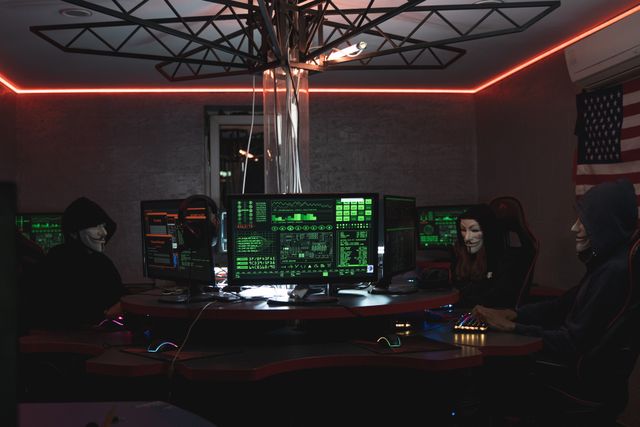
Cybersecurity has become an essential component of the modern digital economy. As organizations increasingly depend on cloud platforms, artificial intelligence, connected devices, digital payments, online services, and distributed networks, the need for skilled cybersecurity professionals continues to expand.
At the same time, cybersecurity education faces an important challenge. Reading about cyber threats is very different from learning how to identify, investigate, contain, and respond to them in a realistic environment.
Students need opportunities to practice.
A Cyber Range for Students can provide such an environment. A cyber range is a controlled digital environment where learners can safely investigate simulated networks, analyze security incidents, identify vulnerabilities, respond to attacks, and practice defensive techniques without affecting real-world systems.
When combined with artificial intelligence, gamification, simulations, adaptive learning, and structured educational pathways, a cyber range can evolve into a virtual cybersecurity university.
For an EdTech platform such as EasyShiksha, this concept can create an immersive environment where students move beyond theoretical cybersecurity lessons and develop practical skills through realistic scenarios.
The objective is to transform cybersecurity education from passive learning into continuous experimentation, problem-solving, teamwork, and practical skill development.
Understanding a Cyber Range
A cyber range is essentially a controlled environment designed for cybersecurity training, experimentation, testing, or research.
It can contain simulated computers, servers, networks, applications, cloud environments, databases, security tools, logs, and simulated users.
Students can interact with these environments without putting real systems at risk.
In an educational setting, the cyber range becomes a digital laboratory.
Instead of merely reading about a security incident, students can investigate one.
Instead of memorizing security terminology, they can apply it.
Instead of watching a demonstration, they can make decisions and observe the consequences in a safe environment.
Why Practical Cybersecurity Education Matters
Cybersecurity is highly practical.
Professionals need to understand how systems behave, how vulnerabilities can emerge, how suspicious activity appears in logs, how incidents are investigated, and how defensive controls work.
A theoretical course can explain these concepts, but practical experience provides another level of understanding.
Students who repeatedly solve realistic problems can develop analytical thinking and familiarity with cybersecurity workflows.
The Vision of an EasyShiksha Cyber Range
EasyShiksha could potentially create a virtual cybersecurity university where learners access courses, laboratories, challenges, simulations, assessments, and projects through one platform.
A beginner might start with cybersecurity fundamentals.
As the learner progresses, the platform could introduce networking, operating systems, web security, cloud security, digital forensics, security operations, incident response, secure coding, and other areas.
The cyber range would provide practical environments alongside theoretical lessons.
This creates a continuous connection between learning and experimentation.
Gamification in Cybersecurity Education
Gamification can make cybersecurity learning more engaging.
Students can receive missions, challenges, achievements, progress indicators, virtual rewards, and scenario-based objectives.
Instead of simply completing a lesson, a learner might be given a simulated security incident that needs to be investigated.
The student could examine evidence, identify the source of the problem, determine the affected systems, and recommend appropriate defensive actions.
The educational objective remains skill development, while the game-like structure provides motivation and engagement.
Mission-Based Learning
A cyber range can organize education around missions.
A beginner mission might involve identifying suspicious login activity.
An intermediate mission could require investigating a simulated malware incident.
An advanced mission might involve responding to a coordinated security event across multiple systems.
Each mission can introduce new concepts while requiring students to apply previously learned skills.
AI-Powered Cybersecurity Tutor
Artificial intelligence can provide continuous educational support within the cyber range.
An AI tutor can explain unfamiliar concepts, answer questions, provide hints, and recommend relevant learning material.
The AI should not simply reveal the answer.
Instead, it can guide students through the reasoning process.
If a student is examining a suspicious log, the AI tutor can ask questions that encourage the learner to identify relevant indicators.
This creates a more interactive learning experience.
Adaptive Cybersecurity Learning
Students enter cybersecurity programs with different backgrounds.
Some may already understand networking.
Others may have programming experience but limited security knowledge.
An AI-powered platform can analyze learning performance and adapt the curriculum accordingly.
Students who struggle with networking fundamentals can receive additional exercises.
Students who demonstrate strong understanding can progress toward more advanced scenarios.
This makes the learning journey more personalized.
AI-Generated Cybersecurity Scenarios
AI can potentially generate variations of simulated security scenarios.
Instead of every student solving exactly the same problem, the platform can create different configurations, logs, system environments, or incident patterns.
This reduces dependence on memorized solutions.
Students must understand the underlying concepts and apply them to new situations.
Such systems should operate within carefully controlled environments and educational boundaries.
Realistic Network Simulations
A cyber range can simulate enterprise networks.
Students might interact with virtual servers, workstations, databases, network devices, applications, and security monitoring systems.
The environment can generate realistic logs and events.
Students can investigate these signals as they would in a professional security operations environment.
Security Operations Center Simulation
A virtual Security Operations Center can become one of the most important components of an EasyShiksha cyber range.
Students can practice monitoring alerts, investigating suspicious activity, analyzing logs, prioritizing incidents, and documenting findings.
The simulated SOC can expose learners to workflows used by cybersecurity teams.
This can help bridge the gap between academic learning and professional practice.
Incident Response Training
Incident response is a critical cybersecurity capability.
A cyber range can simulate security incidents that require investigation and response.
Students can learn how to identify what happened, determine the potential impact, preserve relevant evidence, contain the incident, and document their findings.
The focus should be on defensive and authorized activity within the controlled environment.
Digital Forensics Laboratory
A virtual digital forensics laboratory can help students learn how investigators analyze digital evidence.
Students can examine simulated disk images, system logs, metadata, network records, and other evidence.
The platform can teach them how to build timelines and identify relevant indicators.
Such exercises can develop analytical skills without exposing learners to real people’s private data.
Network Security Laboratory
Network security education can become more practical through simulation.
Students can explore network architecture, segmentation, authentication, monitoring, firewalls, and secure communication concepts.
The cyber range can provide virtual networks where learners can observe how different defensive configurations affect system behaviour.
Web Security Laboratory
Web applications are an important part of modern digital infrastructure.
A controlled laboratory can teach students about common web security concepts using deliberately vulnerable applications.
The goal is to help learners understand how security weaknesses arise and how developers and security teams can prevent them.
Because all activities occur inside an isolated educational environment, students can practice safely.
Secure Coding Education
Cybersecurity is not only about responding to attacks.
Software developers also play a major role in preventing vulnerabilities.
An EasyShiksha cyber range could include secure coding laboratories where students examine intentionally flawed code, understand the underlying weakness, and improve the implementation.
AI could provide explanations about secure development principles.
Cloud Security Simulation
Organizations increasingly use cloud infrastructure.
Cybersecurity education therefore needs to address cloud environments.
A simulated cloud laboratory can allow students to learn about identity management, permissions, network configuration, logging, monitoring, and secure deployment.
Students can practice identifying configuration problems within controlled environments.
Identity and Access Management
Identity is central to modern security.
Students can learn how authentication and authorization systems work.
A simulated enterprise environment can include users, roles, permissions, and access policies.
Learners can investigate how incorrect permissions can create security risks and how access controls can be designed more effectively.
Security Monitoring and SIEM Simulation
Security Information and Event Management platforms are commonly used for collecting and analyzing security events.
A cyber range can provide a simplified simulated SIEM environment.
Students can investigate alerts, correlate events, search logs, and develop incident timelines.
This provides practical experience with security monitoring concepts.
Threat Intelligence Education
Threat intelligence involves collecting and analyzing information about potential cyber threats.
Within a controlled educational environment, students can learn how indicators and contextual information can support defensive analysis.
They can compare simulated indicators and determine how those indicators relate to an incident.
The emphasis should remain on understanding and defense.
AI-Assisted Threat Analysis
AI can help learners analyze large volumes of security information.
A simulated environment could provide thousands of log entries and ask the learner to identify important patterns.
AI can help summarize information and suggest investigative directions.
Students still need to validate the AI’s suggestions.
This teaches an important modern cybersecurity skill: using AI as an analytical assistant without blindly trusting its output.
Human Judgment in Cybersecurity
Cybersecurity professionals often work with incomplete information.
A system may generate an alert without providing a complete explanation.
Students need to learn how to investigate evidence and make reasoned decisions.
A cyber range can present ambiguous scenarios where multiple interpretations are possible.
The student must determine what additional information is needed.
This develops professional judgment.
Cybersecurity Capture-the-Flag Challenges
Capture-the-Flag, commonly called CTF, competitions are widely used in cybersecurity education.
Participants solve challenges and retrieve designated pieces of information within controlled environments.
An EasyShiksha cyber range could offer beginner, intermediate, and advanced CTF experiences.
These challenges can cover areas such as networking, cryptography, secure coding, digital forensics, and web security.
Gamified Progression
A student’s journey through the cyber range can resemble a structured game.
Completing introductory missions can unlock more advanced environments.
Students can build skill badges and complete competency pathways.
The progression should reflect actual learning rather than simply rewarding the amount of time spent on the platform.
Cybersecurity Skill Trees
The platform could visually represent cybersecurity competencies as a skill tree.
Networking fundamentals could lead to network security.
Programming could lead toward secure coding.
Operating-system knowledge could lead toward system security and digital forensics.
Students can see how different skills connect.
This can help learners understand potential career pathways.
AI-Based Skill Gap Analysis
AI can analyze assessment results and identify areas where a student needs additional practice.
For example, a learner may demonstrate strong theoretical knowledge but struggle with incident investigation.
The system can recommend relevant laboratories.
Another student may perform well in network security but need additional programming practice.
Personalized recommendations can make learning more efficient.
Cybersecurity Learning Paths
Different learners can follow different educational pathways.
A student interested in security operations can focus on monitoring and incident response.
Another interested in application security can focus on secure coding and web security.
A learner interested in digital forensics can follow an investigation-oriented pathway.
The platform can offer these paths while maintaining a common foundation.
Cybersecurity for Beginners
The platform should not assume that every learner understands technical concepts.
Beginner courses can explain networking, operating systems, authentication, data protection, and basic security principles.
Interactive simulations can reinforce these concepts.
A beginner can gradually progress from simple activities to more realistic environments.
Cybersecurity for University Students
University students can use the cyber range to supplement academic coursework.
Faculty can assign practical laboratories as part of cybersecurity courses.
Students can complete exercises remotely and submit evidence of their work.
This can strengthen the practical component of academic cybersecurity education.
Cybersecurity for Working Professionals
Professionals can use the platform for skill development and continuous learning.
Short scenario-based exercises can help them practice specific areas without completing a full degree program.
Organizations can potentially use controlled environments for internal training as well.
Virtual Cybersecurity University
The broader vision is a virtual cybersecurity university.
Such a platform would combine theoretical education, practical laboratories, AI tutoring, simulations, projects, assessments, competitions, mentorship, and career preparation.
Students could progress through a structured curriculum without requiring a physical cybersecurity laboratory.
AI Teaching Assistants
Each course could have an AI teaching assistant.
The assistant can explain concepts, provide hints, answer questions, and help learners understand mistakes.
For practical exercises, the assistant can provide contextual guidance without automatically completing the task.
This encourages active learning.
AI-Generated Feedback
After completing a laboratory, students can receive structured feedback.
The system can identify what the learner did correctly, where the reasoning could be improved, and which concepts should be revisited.
Feedback can be generated from the learner’s actions within the simulation.
This is more informative than a simple pass-or-fail result.
Scenario-Based Assessments
Cybersecurity competence is difficult to measure through multiple-choice questions alone.
Scenario-based assessments can provide a more realistic evaluation.
A learner can be given a simulated incident and asked to investigate it, interpret evidence, make decisions, and prepare a response.
The platform can evaluate the process as well as the final result.
Digital Cybersecurity Portfolio
Students can build a portfolio of completed practical exercises.
The portfolio can include projects, assessments, incident reports, defensive configurations, secure coding exercises, and laboratory achievements.
This can provide evidence of practical learning.
Industry-Relevant Projects
A strong cyber range should include projects based on realistic organizational scenarios.
Students could investigate simulated security incidents affecting a healthcare organization, financial service, software company, educational institution, or cloud-based business.
The environments should use fictional data and controlled infrastructure.
Collaboration and Team-Based Exercises
Cybersecurity is often collaborative.
Security analysts, engineers, developers, incident responders, and managers work together.
A cyber range can simulate this through team-based missions.
Students can assume different roles and collaborate to resolve simulated incidents.
This develops communication as well as technical skills.
Cybersecurity Leadership Simulations
Advanced learners can participate in simulations involving decision-making at the organizational level.
They may need to prioritize incidents, communicate with stakeholders, assess business impact, and coordinate technical teams.
This demonstrates that cybersecurity extends beyond technical tools.
Ethical and Responsible Cybersecurity
Cybersecurity education should teach responsibility alongside technical knowledge.
Students need to understand authorization, privacy, responsible disclosure, legal boundaries, and professional ethics.
The cyber range provides a safe environment for experimentation, but students should also learn why real-world security activities require appropriate authorization.
Safe Learning Environments
A central advantage of a cyber range is isolation.
Students can make mistakes without affecting real systems.
They can experiment repeatedly.
The platform can automatically reset environments after each exercise.
This creates a safe space for learning.
Protecting the Platform
The cyber range itself must be designed securely.
Strong isolation is necessary to prevent simulated environments from becoming pathways into external systems.
Access controls, network segmentation, monitoring, and automated environment management are important.
Security education platforms must be designed with security as a foundational requirement.
Preventing Misuse
A cybersecurity education platform must balance practical training with responsible use.
Exercises should remain within controlled environments.
Students should be clearly informed about authorization boundaries.
Advanced capabilities should be introduced alongside appropriate ethical and professional guidance.
The goal is to develop cybersecurity defenders and responsible professionals.
Cloud-Based Cyber Range
Cloud infrastructure can make cyber ranges accessible to learners across geographical boundaries.
Students can launch virtual environments from their browsers.
They do not necessarily need powerful personal computers.
Cloud-based environments can also scale resources according to demand.
Browser-Based Cybersecurity Labs
A browser-based laboratory can simplify access.
Students can watch a lesson, launch a laboratory, complete the exercise, and submit the assessment without installing complicated software.
This is particularly useful for large-scale online education.
Mobile Learning
Some cybersecurity concepts can also be taught through mobile-friendly interfaces.
Students can review theory, analyze simplified scenarios, complete quizzes, and monitor their progress from mobile devices.
Full cyber range environments may still be better suited to computers, but mobile learning can support the broader curriculum.
AI-Generated Learning Content
AI can help create variations of educational scenarios, explanations, quizzes, and practice activities.
Human experts should remain involved in reviewing content.
Cybersecurity changes quickly, and inaccurate training material can create misconceptions.
Keeping the Curriculum Current
Cybersecurity education must evolve continuously.
New technologies, security architectures, vulnerabilities, defensive practices, and regulatory requirements emerge regularly.
An EasyShiksha cyber range should therefore support continuous curriculum updates.
The platform can introduce new scenarios without requiring learners to restart their entire educational journey.
Cybersecurity and Emerging Technologies
The cyber range can also teach security implications associated with emerging technologies.
Students can explore security concepts involving artificial intelligence, Internet of Things devices, cloud infrastructure, blockchain systems, connected vehicles, and other digital environments.
This prepares learners for a changing technological landscape.
IoT Security Simulation
Connected devices create unique security challenges.
A simulated IoT environment can allow students to explore device identity, communication security, firmware management, network segmentation, and monitoring.
Learners can investigate how connected devices interact within a controlled network.
AI Security Education
As organizations increasingly use AI systems, cybersecurity professionals need to understand AI-related security considerations.
An educational environment can simulate AI-enabled applications and allow students to study issues such as access control, data protection, model security, and secure deployment.
The curriculum should focus on defensive understanding and responsible system design.
Cybersecurity and Career Intelligence
The platform can connect learning outcomes with career information.
If a student demonstrates interest and capability in security operations, the platform can explain relevant roles and competencies.
If another learner prefers secure software development, the platform can suggest corresponding skills and projects.
The objective is to provide information that helps learners make informed career decisions.
Industry Certifications and Practical Learning
Professional certifications can play a role in cybersecurity career development.
An EasyShiksha cyber range could provide preparation resources and practical exercises aligned with relevant competency areas.
However, platform-issued learning achievements should not be presented as equivalent to independent professional certifications unless they actually meet the relevant requirements.
Cybersecurity Mentorship
Mentorship can provide valuable guidance.
Experienced cybersecurity professionals can conduct workshops, review projects, and discuss real-world career experiences.
AI can support routine questions while mentors provide professional context.
Cybersecurity Competitions
Online competitions can motivate students to practice.
EasyShiksha could potentially organize cybersecurity challenges where students work individually or in teams.
Competitions can help learners apply concepts under time constraints and develop problem-solving skills.
The educational purpose should remain central.
Measuring Practical Competence
A sophisticated cyber range can track more than completion.
It can evaluate how students approach problems, whether they investigate evidence carefully, how they prioritize incidents, and whether they can explain their decisions.
This can provide richer evidence of competency.
Building a Skill-Based Cybersecurity Profile
Students can gradually develop a cybersecurity skill profile based on completed learning activities.
The profile can represent areas such as network security, incident response, digital forensics, secure coding, cloud security, and security monitoring.
Verified practical achievements can complement academic credentials.
EasyShiksha Cybersecurity Skill Passport
A future EasyShiksha platform could provide a cybersecurity skill passport.
The passport could contain course achievements, laboratory completions, project work, assessments, and practical competencies.
Students could use the portfolio to demonstrate their needs isolated infrastructure, realistic simulations, reliable monitoring, automated resets, secure access controls, scalable provide foundational knowledge, but students also need opportunities to investigate realistic situations, analyze evidence, make decisions, and practice defensive techniques. EasyShiksha, the concept can extend far beyond a collection of cybersecurity courses. It can become a complete virtual cybersecurity education ecosystem combining AI tutoring, adaptive learning, realistic simulations, gamified missions, virtual laboratories, security operations center exercises, digital forensics, cloud can analyze learner progress, generate variations of practice scenarios, provide contextual hints, identify skill gaps, and recommend additional learning activities. At the same time, human instructors and cybersecurity professionals can make difficult subjects more engaging, but the underlying objective should remain skill development. Students should progress because they understand concepts and and employment. Students can build practical portfolios that demonstrate what they have actually done inside controlled environments. This can complement must understand authorization, privacy, ethical conduct, and professional responsibilities. Practical skills should always be developed within controlled environments and appropriate boundaries an environment could help make advanced cybersecurity education more accessible to students who may not, adaptive technology, and continuous learning. A gamified AI-powered cyber range can bring these elements together and, the goal is not simply to teach students about cybersecurity. It is to give them a safe environment learning journey.
This can complement conventional resumes and certificates.
Challenges in Building a Cyber Range
Developing a large-scale cyber range is technically demanding.
The platform needs isolated infrastructure, realistic simulations, reliable monitoring, automated resets, secure access controls, scalable cloud architecture, and continuously updated content.
The educational design is equally important.
A technically impressive environment will not automatically produce effective learning.
Cost and Infrastructure
Running realistic virtual environments can require substantial computing resources.
The platform needs to balance realism with affordability.
Cloud-based infrastructure can provide scalability, but operational costs need to be managed carefully.
Efficient simulation architectures can help reduce unnecessary resource consumption.
Complexity for Beginners
Realistic cybersecurity environments can overwhelm new learners.
The platform should therefore provide progressive complexity.
Beginners can work with simplified environments.
As they develop skills, additional systems, alerts, and challenges can be introduced.
Maintaining Educational Quality
AI-generated content can accelerate course development, but human review remains important.
Cybersecurity education requires technical accuracy.
Scenarios must behave consistently.
Assessment criteria should be meaningful.
Learning objectives should remain clear.
The Future of AI-Powered Cybersecurity Education
AI is likely to become increasingly integrated into cybersecurity education.
It can personalize courses, generate practice scenarios, provide feedback, analyze learner behaviour, and support instructors.
At the same time, cybersecurity students must learn how to critically evaluate AI-generated information.
This creates a dual learning objective: understanding cybersecurity and learning how to use AI responsibly within cybersecurity workflows.
The Future of Immersive Cybersecurity Training
Extended reality could eventually add another dimension to cyber range education.
Students could enter virtual security operations centers, investigate simulated incidents through spatial interfaces, and collaborate with other learners in immersive environments.
This could make complex cybersecurity infrastructure easier to visualize.
However, immersive technology should be introduced when it provides genuine educational value rather than simply adding visual complexity.
The Long-Term Vision for EasyShiksha
The long-term vision for EasyShiksha could be a digital cybersecurity university where learning is continuously connected to practical experience.
A learner could start with basic cybersecurity concepts and gradually progress through interactive laboratories, AI-assisted missions, team exercises, projects, assessments, and career-oriented pathways.
The platform could combine theoretical knowledge with simulated professional environments.
Students would not simply learn what a security analyst does.
They would practice the kinds of reasoning and workflows associated with that role within a controlled environment.
Creating a Continuous Cybersecurity Learning Journey
Cybersecurity is not a subject that can be mastered through a single course.
Technologies change.
Threats evolve.
Defensive techniques improve.
Professionals therefore need continuous learning.
An EasyShiksha cyber range can support this by continually introducing new challenges and learning modules.
Students can return to the platform as their skills develop.
Conclusion
A Cyber Range for Students: Gamified AI-Powered Cybersecurity University represents a powerful model for practical cybersecurity education.
Traditional cybersecurity courses can provide foundational knowledge, but students also need opportunities to investigate realistic situations, analyze evidence, make decisions, and practice defensive techniques. A controlled cyber range can provide this experience without exposing real systems to unnecessary risk.
For EasyShiksha, the concept can extend far beyond a collection of cybersecurity courses. It can become a complete virtual cybersecurity education ecosystem combining AI tutoring, adaptive learning, realistic simulations, gamified missions, virtual laboratories, security operations center exercises, digital forensics, cloud security, secure coding, scenario-based assessments, projects, mentorship, and career-oriented learning.
Artificial intelligence can make the experience more personalized. It can analyze learner progress, generate variations of practice scenarios, provide contextual hints, identify skill gaps, and recommend additional learning activities. At the same time, human instructors and cybersecurity professionals can provide expert guidance and ensure that educational content remains technically accurate.
Gamification can make difficult subjects more engaging, but the underlying objective should remain skill development. Students should progress because they understand concepts and can demonstrate practical competence, not simply because they have accumulated points.
The cyber range can also help bridge the gap between education and employment. Students can build practical portfolios that demonstrate what they have actually done inside controlled environments. This can complement academic qualifications and provide a clearer representation of hands-on experience.
Responsible cybersecurity education is equally important. Learners must understand authorization, privacy, ethical conduct, and professional responsibilities. Practical skills should always be developed within controlled environments and appropriate boundaries.
The broader vision is a cybersecurity learning ecosystem in which students can learn, experiment, investigate, solve, collaborate, and demonstrate their skills within one connected platform.
For EasyShiksha, such an environment could help make advanced cybersecurity education more accessible to students who may not have access to expensive physical laboratories or specialized training infrastructure.
The future of cybersecurity education will increasingly depend on practical experience, adaptive technology, and continuous learning. A gamified AI-powered cyber range can bring these elements together and create a more interactive pathway from foundational knowledge to professional capability.
Ultimately, the goal is not simply to teach students about cybersecurity. It is to give them a safe environment in which they can develop the knowledge, analytical thinking, practical skills, ethical awareness, and confidence required to participate responsibly in the digital security ecosystem.