

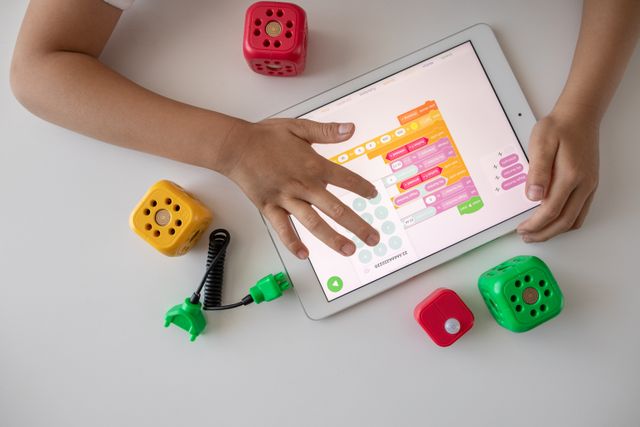
Education is undergoing a significant transformation as artificial intelligence, adaptive learning, gamification, and digital technologies become increasingly integrated into learning environments. Traditional educational systems generally follow predefined curricula, fixed lesson structures, standard assessments, and common learning materials. While these approaches can provide structure and consistency, they may not always accommodate the different interests, abilities, learning speeds, and knowledge levels of individual students.
Artificial intelligence is creating new possibilities for personalized education by allowing digital learning environments to respond to individual learners. One particularly innovative concept is the development of AI-generated infinite learning games, where artificial intelligence continuously creates, modifies, and adapts educational games according to the learner’s progress.
Instead of providing students with a fixed collection of educational games, an AI-powered platform can potentially generate new challenges whenever they are needed. Questions, puzzles, scenarios, characters, environments, difficulty levels, and learning objectives can be dynamically adjusted according to the learner’s performance.
This concept can transform gamification from a collection of predefined activities into an evolving learning experience.
For an EdTech platform such as EasyShiksha, AI-generated learning games can create new opportunities to make digital education more interactive, personalized, and engaging. Students could learn concepts through challenges designed specifically around their current level of understanding, while the system continuously adapts as they improve.
The objective is not simply to make education entertaining. The deeper purpose is to use game mechanics and artificial intelligence to create meaningful learning experiences that encourage practice, experimentation, problem-solving, and persistence.
Understanding AI-Generated Infinite Learning Games
AI-generated infinite learning games are educational games in which artificial intelligence dynamically creates or modifies learning content instead of relying entirely on a fixed set of per-designed activities.
A conventional educational game may contain a predetermined number of questions, levels, challenges, and scenarios. Once students complete the available content, the experience largely remains the same.
An AI-generated learning game can work differently.
The system can analyze a learner’s performance and generate a new challenge based on what the learner needs to practice. If a student repeatedly makes mistakes with fractions, the system can generate additional fraction-based challenges. If the student becomes proficient, the system can increase complexity and introduce more advanced problems.
This creates the possibility of an effectively continuous learning environment.
The term “infinite” does not necessarily mean that the system produces literally unlimited content. Rather, it describes an educational environment capable of generating a very large and continuously changing variety of learning experiences.
The Evolution of Educational Games
Educational games have existed in many forms for decades. Teachers have used puzzles, quizzes, competitions, simulations, board games, role-playing activities, and classroom challenges to make learning more interactive.
Digital technology expanded these possibilities by allowing educational games to provide immediate feedback, track progress, and introduce interactive environments.
AI takes this development further by enabling games to become adaptive.
Instead of every student experiencing exactly the same challenge, an AI system can potentially create different experiences based on individual needs.
This shift from static gamification to dynamic learning environments is one of the most important possibilities offered by generative AI in education.
Why Personalisation Matters in Education
Students do not learn at exactly the same speed.
Some learners may understand a concept after one explanation, while others may need additional examples and practice. Some students may find visual explanations useful, while others may prefer problem-solving or practical activities.
A fixed educational experience can make it difficult to accommodate these differences.
Personalized learning attempts to provide learners with educational experiences that better match their individual needs.
AI-generated games can support this objective by adapting the difficulty, content, pacing, and type of challenge presented to each student.
AI as a Learning Game Designer
Artificial intelligence can potentially act as a dynamic game designer.
Instead of requiring educators to manually create hundreds or thousands of variations of an activity, AI can generate variations based on defined learning objectives.
For example, a mathematics game may teach percentages. The AI can create different real-world scenarios involving discounts, taxes, savings, business calculations, or data interpretation.
The underlying educational objective remains consistent while the context changes.
This can reduce repetition and give learners opportunities to apply the same concept in different situations.
Infinite Variation in Learning Content
Repetition is important for learning, but repetitive questions can become predictable.
If a student knows that every question follows the same structure, they may learn how to respond to the pattern rather than understand the underlying concept.
AI-generated content can introduce variation.
The system can change numbers, contexts, characters, scenarios, problem structures, and difficulty levels while preserving the learning objective.
This can encourage genuine understanding.
For example, a student learning multiplication may encounter problems involving shopping, sports scores, travel distances, resource management, or game-based challenges.
The mathematical skill remains the same, but the context continues to change.
Adaptive Difficulty
One of the most important capabilities of AI-generated learning games is adaptive difficulty.
If a learner consistently answers questions correctly, the system can gradually increase complexity.
If the learner struggles, the game can provide simpler challenges or additional explanations.
This can help create a learning experience in which students remain challenged without being overwhelmed.
The objective is to find an appropriate level of difficulty for each learner at a particular stage of development.
Learning Through Failure
Games can provide a useful environment for learning through mistakes. In traditional assessment environments, an incorrect answer may simply reduce a student’s score.
In a well-designed learning game, an incorrect answer can become part of the learning process. The system can explain why the answer was incorrect, provide a hint, change the challenge, and allow the student to try again.
This can encourage students to view mistakes as opportunities for learning rather than as permanent indicators of ability.
AI-Powered Feedback
Immediate feedback is one of the strengths of digital learning games. AI can make feedback more contextual.
Instead of simply saying that an answer is incorrect, the system can explain the relevant concept and identify the type of mistake.
For example, if a learner solves a mathematical problem using an incorrect method, the system could explain where the reasoning changed direction. The feedback can be adjusted according to the learner’s level.
Personalized Learning Paths
AI-generated games can become part of larger personalized learning paths.
A student might begin with a foundational challenge, progress to an intermediate scenario, and eventually enter an advanced problem-solving environment. The system can adjust the path according to performance.
This means that two students studying the same subject may experience different sequences of activities while still working toward the same learning objectives.
The Role of EasyShiksha
EasyShiksha can potentially use AI-generated learning games to complement its digital learning ecosystem. Courses can be connected with interactive game-based practice environments.
After completing a lesson, students could enter an AI-generated challenge related to the concepts they have studied. The system could then use performance data to recommend additional practice.
This can create a learning cycle in which students study, practice, receive feedback, and return to targeted learning activities. The game becomes an extension of the course rather than a separate entertainment product.
AI-Generated Games for Different Subjects
The concept can be applied across many academic and professional subjects. Mathematics games can involve calculations, logic, geometry, probability, and problem-solving. Science games can involve experiments, simulations, scientific reasoning, and hypothesis testing.
Language-learning games can generate conversations, vocabulary challenges, grammar activities, and contextual exercises. Programming games can create debugging challenges, algorithmic puzzles, and coding missions.
Business education can use simulations involving management, marketing, finance, entrepreneurship, and decision-making. This flexibility allows the same AI-powered learning framework to support different areas of education.
Mathematics Through AI-Generated Games
Mathematics is particularly suitable for adaptive learning games. The AI can analyze which concepts a student understands and which areas require additional practice.
A learner struggling with algebra can receive more algebraic challenges while continuing to progress in other areas. The system can also vary the context and difficulty.
Instead of repeatedly solving similar equations, students can encounter mathematical problems embedded in realistic scenarios. This can help connect abstract concepts with practical applications.
Science and Discovery-Based Games
Science learning can benefit from games that encourage experimentation.
Students could enter virtual environments in which they manipulate variables and observe outcomes.
An AI system can generate new scenarios based on the learner’s understanding.
For example, a physics game might ask students to adjust forces and predict motion. A biology game could present an ecosystem and ask learners to identify how changes affect different organisms.
The emphasis can shift from memorization toward exploration and reasoning.
Programming and Coding Games
AI-generated games can also support programming education.
Students can solve coding challenges, debug programs, identify logical errors, and develop algorithms within interactive environments.
If a learner struggles with loops, the system can generate additional challenges focused on loops.
If the student demonstrates proficiency, it can introduce nested structures or more complex programming tasks.
This can provide continuous practice without requiring educators to manually create every variation.
Language Learning Games
Language education is another strong application.
AI can generate conversations based on a student’s vocabulary and proficiency.
A learner might interact with a virtual character in different scenarios such as shopping, travelling, attending an interview, or participating in a professional meeting.
The AI can adjust vocabulary, grammar, sentence complexity, and conversational speed.
This can create a more flexible environment for language practice.
Career and Professional Skills Games
AI-generated learning games do not have to focus only on academic subjects.
They can also support professional skills.
Students can participate in simulated interviews, workplace scenarios, customer interactions, project-management challenges, negotiation exercises, or business decision-making environments.
The AI can adapt scenarios according to the learner’s performance.
This creates opportunities for practical skill development before entering a real workplace.
AI-Generated Interview Simulations
An AI-powered game can simulate a job interview.
The system can generate different questions based on the student’s target role and experience level.
The learner responds, and the system can provide structured feedback on aspects such as relevance, clarity, organization, and communication.
Different rounds can introduce new scenarios.
For an employability-focused platform such as EasyShiksha, this type of game could complement courses and career preparation activities.
Learning Through Storytelling
Stories can make educational games more engaging.
AI can generate characters, environments, conflicts, and scenarios around educational objectives.
A history learner could enter a story-driven environment where decisions require understanding historical context.
A business student could manage a virtual company through a sequence of decisions.
A science student could solve problems within an exploratory narrative.
The educational objective remains central while the story provides motivation and context.
Dynamic Game Worlds
AI can potentially generate game worlds that change according to the learner’s progress.
A beginner may encounter a simple environment with clear instructions.
An advanced learner may encounter a more complex environment with multiple variables and fewer hints.
This creates a sense of progression.
The world itself becomes part of the learning experience.
AI-Generated Characters
Virtual characters can provide another layer of interaction.
Students can interact with AI-generated mentors, teammates, customers, patients, managers, or fictional characters depending on the educational context.
These characters can respond dynamically.
For example, in a business simulation, a virtual customer may react differently depending on how the student communicates.
This creates opportunities to practice interpersonal and decision-making skills.
Collaborative AI Learning Games
Personalisation does not have to mean learning alone.
AI-generated games can support groups of students.
Learners can participate in shared challenges where each student has a different role.
The AI can generate scenarios that require communication and teamwork.
This can help develop collaboration alongside academic knowledge.
Multiplayer Educational Environments
Future learning platforms may allow students from different locations to participate in the same AI-generated educational environment.
Students could compete, collaborate, solve problems, or work on shared projects.
AI can manage the environment and adapt challenges according to the group’s progress.
This can create a sense of community around online learning.
Learning Analytics
AI-generated games naturally generate large amounts of learning data.
The platform can observe which challenges students complete, where they struggle, how long they spend on activities, and how their performance changes over time.
These signals can support learning analytics.
Teachers can use this information to identify concepts that require additional instruction.
Students can use it to understand their own learning progress.
Predictive Learning Support
Learning data can also support early identification of difficulties.
If a student repeatedly struggles with a particular concept, the system can recommend additional practice before the difficulty affects later learning.
This is especially useful in subjects where concepts build on one another.
However, predictive systems should be used carefully.
A learner’s current performance should not be treated as a permanent prediction of their future ability.
The purpose of analytics should be to provide support and opportunities for improvement.
AI-Generated Assessments
AI can generate assessment activities that reflect the skills students are expected to develop.
Instead of repeatedly taking identical quizzes, students can encounter different versions of problems that assess the same learning objective.
This can reduce over reliance on memorization.
It can also allow platforms to create a larger range of practice assessments.
Human educators should remain involved in validating important assessments, particularly where accuracy and fairness are critical.
Avoiding Poorly Designed Gamification
Not every game is automatically educational.
A learning game should have clear educational objectives.
If rewards, points, animations, and competition become more important than learning, students may focus on maximizing game performance rather than understanding the subject.
AI-generated games therefore require strong instructional design.
The technology should serve pedagogy.
The Importance of Educational Quality
Generative AI can produce large amounts of content quickly, but quantity does not guarantee quality.
AI-generated educational content needs validation.
Questions should be accurate. Explanations should be appropriate. Scenarios should align with curriculum objectives.
For EasyShiksha, maintaining educational quality would be essential when incorporating AI-generated learning experiences.
Human educators and subject experts can play an important role in defining learning objectives, reviewing content, and establishing quality standards.
Preventing AI Hallucinations
Generative AI systems can sometimes produce incorrect information.
This creates a particular concern in education.
AI-generated games should therefore use appropriate content controls, validated knowledge sources, and expert review where necessary.
The system should avoid confidently presenting uncertain information as fact.
Students need reliable educational content.
Student Privacy
Personalized learning requires data.
AI systems may collect information about performance, learning patterns, preferences, interactions, and progress.
Educational platforms need responsible data practices.
Students should understand how their information is being used.
Data should be protected appropriately and should not be collected beyond what is reasonably necessary for the learning experience.
Ethical Use of AI
AI should support student development rather than manipulate learners.
Game mechanics should encourage meaningful learning instead of excessive engagement.
The system should avoid creating unhealthy pressure through constant competition.
Students should also understand when they are interacting with AI.
Transparency can help learners develop appropriate expectations about AI-supported education.
Accessibility and Inclusion
AI-generated games should be designed for diverse learners.
Students may have different physical abilities, learning needs, language backgrounds, and technological access.
Games should support appropriate accessibility features.
Where possible, learners should be able to interact through different interfaces.
Audio, text, visual, and alternative interaction methods can help make learning experiences more inclusive.
The Digital Divide
Advanced AI learning games may require modern devices and reliable internet connections.
This can create barriers for students who have limited technological resources.
For platforms such as EasyShiksha, scalable design can help address this challenge.
A basic version of a learning game can be available through ordinary web or mobile interfaces, while advanced immersive features can provide additional experiences for learners with compatible hardware.
AI-Generated Games and Teachers
AI-generated learning games should not eliminate the role of teachers.
Teachers remain important for mentorship, motivation, discussion, evaluation, and contextual guidance.
AI can reduce some repetitive content-generation tasks and provide additional practice opportunities.
This can allow educators to spend more time on higher-value interactions.
The teacher can become the designer and facilitator of learning rather than simply the distributor of educational content.
Teacher-Controlled AI Games
An effective platform can give educators control over AI-generated learning activities.
Teachers could define learning objectives, difficulty ranges, topics, and assessment criteria.
The AI can then generate appropriate variations.
This provides the scalability of AI while maintaining human oversight.
Teachers can also review generated content and make corrections where necessary.
AI Games for Self-Paced Learning
One of the advantages of AI-generated educational games is that students can practice at their own pace.
Learners can return to difficult concepts without waiting for the next classroom session.
Students who want additional challenges can request advanced activities.
This supports flexible learning schedules.
For online education platforms, self-paced practice can complement structured courses.
Microlearning Through Games
AI-generated games can also support microlearning.
Instead of requiring students to complete a long lesson, the platform can provide short learning challenges.
A student might spend ten minutes practicing vocabulary, solving mathematics problems, debugging code, or reviewing a concept.
Repeated short activities can help students maintain engagement with learning over time.
Building a Continuous Learning Ecosystem
AI-generated games can become part of a larger educational ecosystem.
A learner may watch a course lesson, complete a practical exercise, enter a game-based challenge, receive AI feedback, and then return to the course for additional instruction.
The platform can connect these activities.
This creates a continuous learning cycle.
For EasyShiksha, such integration could strengthen the relationship between courses, skill development, assessments, and career preparation.
Gamified Career Development
AI-generated games can extend into career intelligence.
Students can explore different professions through interactive scenarios.
A learner interested in digital marketing might manage a simulated campaign.
A student exploring software development might solve coding problems.
Someone interested in business management could operate a virtual company.
These experiences can provide exposure to professional tasks before students enter the workplace.
Building Skill Evidence
Game performance can potentially contribute to a student’s skill portfolio.
Instead of simply recording that a student completed an activity, the system can record the types of problems solved and competencies demonstrated.
This information can contribute to a broader digital learning profile.
For career-oriented education, practical evidence can complement certificates.
AI-Generated Learning Games and the Future of EdTech
The future of EdTech is likely to involve increasingly adaptive learning experiences.
Instead of a course being a fixed sequence of content, it may become a dynamic environment that responds to the learner.
AI-generated games can be an important part of this transformation.
They can provide continuous practice, personalized challenges, simulations, and opportunities to apply knowledge.
The result is a shift from content delivery toward interactive learning experiences.
The Future of Infinite Learning
The idea of infinite learning games represents a broader change in how educational content can be created.
Traditionally, educational content is produced in advance.
In an AI-driven environment, content can be generated when needed.
A learner’s current understanding becomes one of the inputs used to determine what should happen next.
This creates a potentially continuous learning environment.
However, the objective should not be endless engagement.
The purpose of infinite learning is to ensure that learners have access to appropriate opportunities for practice and development whenever they need them.
The Role of EasyShiksha in the Future
EasyShiksha can potentially build upon its digital learning environment by incorporating intelligent game-based practice alongside courses and skill development.
A future EasyShiksha learning journey could begin with structured educational content and gradually become more interactive.
Students could receive AI-generated challenges based on their course progress, participate in simulations, practice professional skills, and develop digital portfolios.
The platform could use learning analytics to identify areas that require attention while allowing students to control the pace and direction of their learning.
Such an approach can make online education more personalized without losing the structure and credibility of formal learning.
Challenges in Implementing AI-Generated Learning Games
Despite their potential, AI-generated learning games present several challenges.
Developing reliable AI systems requires significant technical infrastructure.
Educational content must be accurate and aligned with learning objectives.
Game mechanics need to be carefully designed so that entertainment does not overshadow education.
Privacy and security need to be addressed because personalized systems depend on learner data.
Accessibility must also remain a priority.
There is also the challenge of ensuring that generated experiences remain educationally meaningful rather than becoming endless variations of shallow activities.
Balancing AI Generation With Human Expertise
Human expertise remains essential.
Teachers and subject specialists can define what students should learn, how learning should be assessed, and which types of activities are educationally valuable.
AI can then help generate variations and personalize the experience.
This division of responsibility can create a practical balance.
AI provides scale and adaptability, while educators provide educational judgment.
Conclusion
AI-generated infinite learning games represent an emerging approach to personalized education in which artificial intelligence continuously creates and adapts educational challenges according to individual learners.
Unlike traditional educational games that rely on a fixed set of levels and questions, AI-generated games can potentially produce large numbers of variations, adjust difficulty, change contexts, provide personalized feedback, and respond to the learner’s progress.
The technology can be applied across mathematics, science, programming, languages, business, professional skills, career preparation, and many other areas.
For EasyShiksha, AI-generated learning games can complement online courses by providing students with continuous opportunities to practice and apply what they learn. A student can move from a lesson to an interactive challenge, receive AI-supported feedback, complete additional practice, and gradually build evidence of their skills.
The most important consideration is that the objective should remain learning. Artificial intelligence should not simply create endless entertainment or maximize screen time. It should create meaningful educational experiences that help students understand concepts, solve problems, practice skills, and develop confidence.
Human educators will continue to play an important role in defining learning objectives, validating educational content, mentoring students, and ensuring that AI-generated experiences maintain appropriate academic quality.
As artificial intelligence becomes increasingly capable of generating text, images, scenarios, simulations, and interactive experiences, educational platforms can move toward learning environments that are more responsive to individual needs.
The future may therefore be less about asking every student to complete exactly the same digital lesson and more about creating personalized learning journeys in which every learner receives the right challenge, at the right level, at the right time.
For EasyShiksha, this vision can contribute to a broader transformation of online education from static content delivery toward intelligent, adaptive, interactive, and skill-oriented learning. AI-generated infinite learning games can become one component of that transformation, helping make education more engaging while keeping Personalisation, accessibility, educational quality, and meaningful learning at the center.