

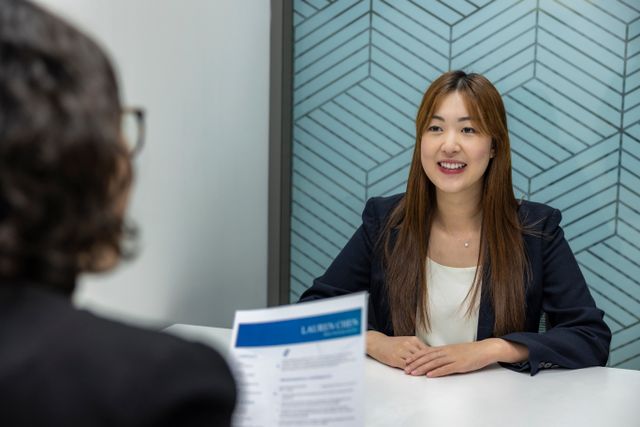
For decades, the resume or curriculum vitae has been one of the most important documents in a student’s transition from education to employment. It provides a compact summary of academic qualifications, skills, internships, certifications, projects and achievements. A student completes a degree, gathers relevant experiences and then attempts to compress years of learning into one or two pages that an employer can quickly understand.
The internet changed how resumes are created, shared and discovered, but it did not fundamentally change their structure. Students moved from printed CVs to PDF resumes, online job portals, professional networking profiles and digital portfolios. Yet the underlying idea remained almost the same: the student creates a document describing what they have done, and another person reads that document to evaluate their background.
The next transformation may be more significant.
As education becomes increasingly digital, a student’s learning and professional identity can exist across courses, quizzes, projects, internships, certificates, portfolios, university records, online assessments and practical experiences. These activities generate information that a traditional resume cannot fully represent.
This creates the possibility of a post-resume internet, where a student’s professional identity is no longer defined primarily by a static document but by a connected and continuously developing digital learning profile.
For a platform such as EasyShiksha, this idea has particular relevance. EasyShiksha brings together online courses, online degrees, internships, quizzes, certificates, career guidance, educational discovery and other digital learning experiences. These experiences can potentially contribute to a more complete representation of a student’s journey.
The question is no longer simply what should replace the resume. The more important question is what kind of digital identity can provide richer context than a document ever could.
Why the Traditional Student CV Has Limitations
The resume is useful because it is simple. A recruiter can scan it quickly and understand a student’s degree, experience, skills and achievements. Its limitations arise from the same characteristic that makes it convenient: compression.
A two-page resume cannot capture the complete story of how a student learned a skill, how frequently they practised it, what projects they created, what mistakes they encountered, how their interests changed or how different learning experiences connect with one another.
Consider a student who has completed a computer science degree, taken several online courses, built applications, participated in coding challenges, completed an internship and worked on an independent project. A traditional resume may list these experiences in separate sections.
The document might say that the student knows Python, databases, JavaScript and machine learning. However, it may not clearly show how those skills developed or how they were applied together.
A digital learning profile could provide more context.
Instead of simply saying that the student knows Python, it could connect Python learning to a course, assessment results, a project and internship experience. Instead of listing a certificate as an isolated achievement, it could connect the certificate to the learning experience behind it.
The difference is between claiming a capability and providing context around that capability.
From Static Documents to Living Profiles
A resume is usually created at a particular moment. Students update it when applying for internships, jobs, scholarships or educational programs. Between updates, their professional identity continues to evolve. A living digital profile works differently.
Every meaningful learning activity can potentially contribute to the profile over time. Completing a course can update the learning history. Finishing a project can add evidence of application. Completing an internship can add practical experience. A new certificate can verify a learning achievement. A career exploration activity can reveal emerging interests. The profile therefore develops alongside the student.
This is particularly useful for students who are still exploring their career direction. A first-year student may be interested in several fields. During college, they may discover an interest in technology, finance, design, healthcare, marketing or entrepreneurship. A static resume may simply record the final collection of experiences. A living profile can show the journey.
That journey matters because learning is rarely a perfectly planned process. Students experiment, change interests, discover strengths and sometimes move in completely different directions from where they started.
The post-resume internet can represent this evolution more naturally than a fixed document.
The Student Profile as a Digital Learning Identity
The emerging digital student identity can be understood as a combination of education, skills, evidence and experience.
A student’s degree provides formal academic context. Online courses provide additional structured learning. Quizzes and assessments can demonstrate knowledge checks. Projects can demonstrate application. Internships can provide practical exposure. Certificates can document completion. Career guidance can help connect learning with possible future directions.
When these elements are connected, they form something more useful than a simple list of qualifications. They create a learning identity.
This identity can remain active throughout the student’s education and potentially continue into professional life. It can become a record of how the student developed rather than merely a summary of where the student has been.
EasyShiksha can fit naturally into this model because its different services already represent different parts of the educational journey. The opportunity lies in making those experiences more connected and understandable within a student’s broader profile.
What Comes After the Skills Section?
The skills section of a resume is one of the most familiar parts of a student CV. It may contain terms such as Python, Java, Excel, SEO, digital marketing, communication, data analysis or project management.
However, skill lists have a fundamental limitation. They are assertions.
A student can write “Python” on a resume, but the word itself does not explain the depth of that knowledge. Has the student only completed an introductory course? Have they built projects? Have they used Python during an internship? Have they worked with data? Have they applied it to machine learning? The post-resume internet could shift the emphasis from skill claims to skill evidence.
Instead of displaying only “Python,” a digital profile could connect the skill to relevant learning experiences and practical work. A viewer could potentially understand the context behind the claim.
This does not mean that every employer needs access to every detail. Students should control what they share. The principle is that evidence can exist behind the skill rather than leaving the skill as an unsupported statement. The result is a more contextual professional identity.
Courses Become Evidence, Not Just Certificates
Online courses have become an important part of modern student learning. However, the traditional way of representing online learning is often certificate-oriented. A student completes a course and receives a certificate. The certificate is then added to a resume or professional profile.
The post-resume model can move beyond this approach. A course can become a connected learning experience. The profile can indicate what the student studied, what assessments they completed and whether they applied the concepts in a project or internship. This is particularly relevant for EasyShiksha because courses can be connected with quizzes, internships and career development experiences.
A course in digital marketing, for example, could be followed by a quiz that tests foundational concepts, a practical project involving content or SEO and an internship where those concepts are used in a real working environment. The resulting profile tells a more complete story than the certificate alone. The certificate still has value as evidence of completion, but the learning experience becomes the larger unit of professional identity.
Projects Could Become the New Portfolio Layer
Projects already play an important role in student resumes, particularly in technical and creative fields. However, many resumes list projects using only a title and a short description. The post-resume internet can turn projects into deeper evidence. A project can contain information about the problem being solved, the tools used, the student’s contribution, the skills involved and the learning experiences that supported the work.
Imagine a student building a mobile application after completing courses in programming, databases and user-interface design. Instead of listing the project as a single resume line, a connected profile could show the relationship between the courses and the final application. This creates a learning-to-application pathway.
Projects can also demonstrate progression. A student’s early project may be simple, while later projects become more complex. A digital profile can make that development visible. For students without formal employment experience, this can be particularly meaningful because projects provide a way to demonstrate practical engagement with a field.
Internships Become Connected Experiences
Internships are often treated as a separate section of a resume. A student writes the organization name, role, duration and responsibilities. A connected digital profile can provide greater context. An internship can be linked to the skills used during the experience and the projects completed before or during the internship. This makes it easier to understand what the student actually practised.
For example, a student may complete an online data-analysis course, take quizzes related to statistics and then join a data internship. During the internship, they may work with spreadsheets, visualization tools and basic programming. The internship therefore becomes a bridge between learning and professional application.
EasyShiksha’s internship ecosystem can play an important role in this type of journey. When learning and internship experiences are connected rather than treated as separate transactions, students can build a stronger narrative around career preparation.
The Rise of Verifiable Digital Credentials
The post-resume internet also creates greater importance for digital credentials. A traditional resume depends heavily on trust. The student provides information, and the recipient decides how much verification is necessary.
Digital credentials can potentially make parts of that process more structured. A course certificate can contain verification information. A completed assessment can be associated with a learning record. A project can be linked to evidence. An internship can be represented through a verified experience. The objective is not to turn education into a collection of digital badges. Instead, it is to make meaningful achievements easier to verify.
For students, this can reduce the gap between “I learned this” and “Here is evidence that I learned and applied this.” For education platforms, it creates an opportunity to provide credentials that are connected to actual learning experiences rather than isolated documents.
The Resume Could Become an Interface, Not the Identity
The resume may not disappear completely. A more realistic future is that the resume becomes an interface into a much larger digital learning identity. A student may still generate a concise CV for a particular job application. However, the CV could point toward a richer profile containing verified learning experiences, projects, credentials and professional evidence.
This creates a two-layer model. The resume remains useful for quick communication, while the digital profile provides depth. This approach solves an important problem. Recruiters often need concise information, but students also need opportunities to demonstrate more than can fit on a page.
A short resume can communicate relevance. A connected profile can provide context. In this model, the resume becomes the summary rather than the entire professional identity.
AI and the Post-Resume Student Profile
Artificial intelligence can play an important role in making large learning profiles understandable. As students accumulate courses, projects, assessments and experiences, their digital profiles could become increasingly complex. AI can help organize and interpret these records.
For example, an AI system could identify relationships between multiple learning experiences and explain how they contribute to a particular skill area. It could help students identify recurring interests across their educational history. AI could also help students create different views of the same learning profile.
A student applying for a marketing internship may want to highlight marketing courses, content projects and relevant internship experience. The same student applying for an analytics role may want to highlight statistics, Excel, Python and data projects. The underlying learning identity remains the same, but the presentation can adapt to the context.
However, AI should not invent achievements or exaggerate capabilities. A trustworthy post-resume profile should distinguish between verified information, student-provided information and AI-generated summaries. Transparency becomes essential when technology begins interpreting educational records.
The End of the One-Size-Fits-All Resume
Traditional resumes encourage students to follow familiar structures. Education comes first, followed by experience, skills, projects and certificates. But students do not develop in identical ways. A student interested in entrepreneurship may have several independent projects and limited formal internship experience. Another may have a strong academic record and multiple internships. A third may have developed skills through online courses and freelance work.
A connected learning profile can represent these differences without forcing everyone into exactly the same format. This is particularly valuable for students at the beginning of their careers.
Instead of asking whether a student has a conventional work history, a post-resume system can help present the different forms of learning and experience they have accumulated. The focus shifts from fitting students into a template to representing their actual journeys.
From Job Applications to Learning Applications
The post-resume internet can also change how students approach applications. Today, students often create a resume when they begin looking for an internship or job. Their learning record is treated as something they prepare after the fact.
A connected learning profile changes that relationship. Students can begin building professional evidence much earlier. A first-year student can document projects, courses and skills. A second-year student can add internships and more advanced learning. A final-year student can present a much richer profile than someone who starts preparing a resume only before graduation.
This creates a gradual transition from student identity to professional identity. The process of career preparation therefore begins during learning rather than after learning. EasyShiksha can support this philosophy by connecting education, quizzes, internships, certificates and career guidance within a broader student journey.
The Career Graph Behind the Profile
A post-resume digital identity can also become connected to career exploration. Students frequently ask what they should learn next. The answer depends on where they are starting from and where they want to go. A connected profile can make the starting point clearer.
If a student has completed certain courses, developed particular skills and worked on specific projects, career guidance can use that information to provide more contextual suggestions. The goal should not be to automatically determine a student’s career. Career decisions remain personal and depend on interests, circumstances and goals.
Technology can instead make the available information easier to understand. A career graph can show how existing skills relate to possible areas of further learning. It can identify where additional practice or experience may be useful. This makes career exploration more continuous.
Education Discovery Can Become More Personalized
The post-resume internet is not limited to employment. It can also affect how students discover schools, colleges and universities. Today, education discovery often begins with searches for institutions, courses, locations, fees or general reputation. A connected learning profile could eventually add another dimension.
Students could explore educational opportunities based on their existing learning journey. A student interested in cybersecurity, for example, might already have completed introductory security courses and projects. The next educational opportunity could be explored based on that foundation.
Similarly, a student interested in business analytics could discover degree programs or specialized learning pathways that complement existing skills. This makes education discovery more connected to the individual rather than being based only on generic searches.
A Digital Profile Should Not Become a Digital Score
One of the greatest risks of the post-resume internet is that a richer profile could be transformed into another simplistic scoring system. If every course, project and activity is converted into points, education can become a competition for digital numbers rather than meaningful learning.
The purpose of a connected student profile should therefore be context, not a universal ranking. Students learn differently and follow different pathways. A project completed independently may represent substantial learning even if it does not fit neatly into a standardized credential structure.
A healthy digital education ecosystem should preserve this diversity. EasyShiksha’s role in such an environment can be centered on enabling learning and evidence rather than reducing students to a single score. The profile should help explain a student’s journey, not assign a permanent numerical value to it.
Student Ownership and Privacy in the Post-Resume Internet
The more detailed a digital student profile becomes, the more important privacy becomes. A student’s educational history contains sensitive personal information. Learning interests, assessment results, projects and career activities should not automatically become public simply because they exist digitally.
Students should have meaningful control over their information. They should be able to decide which parts of their profile they want to share with employers, universities, internship providers or other audiences.
This creates a model based on selective visibility. A student could maintain a comprehensive private learning record while sharing a smaller professional profile when applying for a particular opportunity.
This approach can provide both depth and control. Security, consent and transparency should therefore be fundamental design principles for any post-resume learning platform.
What the Post-Resume Internet Could Mean for Students
For students, the biggest change may be that professional identity begins much earlier. The student no longer needs to wait until graduation to create a professional profile. Learning activities can gradually become part of a developing identity.
A first course can be the beginning. A quiz can provide an assessment checkpoint. A project can become evidence. An internship can add practical experience. A certificate can document completion. Career guidance can help interpret the journey.
By graduation, the student can have more than a resume. They can have a history of learning and application.
This does not guarantee employment, nor does it eliminate the need for communication, interviews, practical ability or professional judgment. But it can give students a richer way to present what they have learned and how they have applied it.
What the Post-Resume Internet Could Mean for Employers
Employers may also benefit from richer student profiles, particularly when evaluating candidates with limited professional experience. A traditional resume can tell an employer that a student completed a course or worked on a project. A connected profile could potentially provide additional evidence and context. This may help employers distinguish between different levels of engagement with a skill.
However, employers would need to use such information responsibly. More data does not automatically mean better hiring decisions. Profiles should not become mechanisms for unfair filtering or unnecessary surveillance.
The value of the post-resume model depends on how thoughtfully the information is used.
EasyShiksha and the Future of Student Identity
EasyShiksha’s broader ecosystem creates a natural foundation for exploring what comes after the traditional student CV.
Online courses can provide structured learning. Quizzes can support assessment. Certificates can document achievements. Internships can provide practical exposure. Career counselling can help students interpret their direction. Online degrees can provide formal academic pathways. Educational discovery can connect students with schools, colleges and universities.
When these components are viewed separately, they are individual services.When they are connected, they can become components of a student identity system. The future opportunity lies in allowing students to move naturally between them.
A student might discover a career area, explore a course, test their knowledge through a quiz, apply it through a project, gain practical experience through an internship and then continue toward a degree or advanced learning pathway. The profile becomes a record of this journey. That is much closer to how modern students actually learn.
The Resume May Survive by Becoming Smaller
The phrase “post-resume internet” does not necessarily mean the death of the resume. Instead, the resume may become more focused. Rather than trying to contain every educational achievement, the future resume could highlight the most relevant experiences and provide access to deeper evidence.
A recruiter could see a concise overview and then explore verified projects, credentials or learning experiences when necessary. This could make resumes more useful rather than less useful.
The document remains the communication layer, while the digital learning profile becomes the evidence layer. Together, they can provide both simplicity and depth.
Conclusion: From Resume to Learning Identity
The traditional student CV was designed to summarize a person’s education and experience. It remains useful, but the digital transformation of education is creating more information than a traditional resume can comfortably contain.
Students now learn across universities, online courses, internships, quizzes, projects, digital communities and independent practice. Their professional development is increasingly continuous and multidimensional. The post-resume internet offers a different model.
Instead of treating a student’s identity as a document, it can treat identity as a living learning record. Courses can connect to skills. Quizzes can connect to knowledge. Projects can connect to application. Internships can connect learning with practical experience. Certificates can provide verification. Degrees can provide academic foundations. Career guidance can help students understand possible directions.
For EasyShiksha, this vision aligns naturally with an ecosystem that brings multiple aspects of education together online.
The future student may still have a resume. They may still need a CV for a job application. But behind that document could exist something much richer: a continuously developing digital learning identity that shows not only what the student claims to know, but how they learned it, where they applied it and how their experiences connect.