

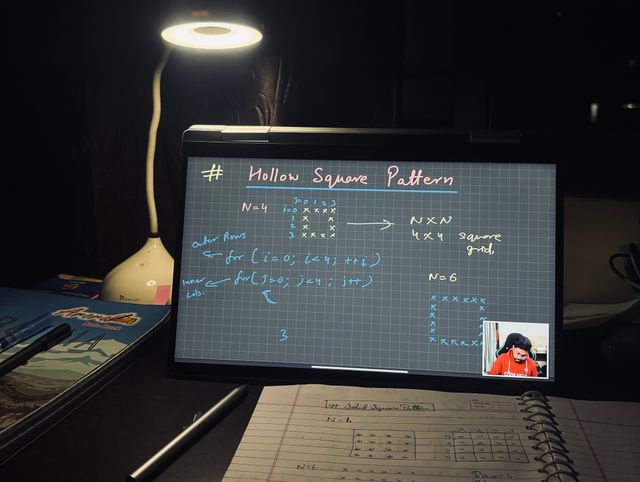
Riya had always considered herself a serious learner. Her phone and laptop were filled with coding resources. She had saved Python tutorials, bookmarked JavaScript courses, downloaded programming PDF, joined coding communities, subscribed to technology channels and created playlists for almost every programming topic she wanted to learn. By the time she entered the final phase of college, she had more than 500 saved tutorials.
At first, Riya believed that having access to so much educational content would automatically help her become a better programmer. Whenever she found an interesting video, article or course, she saved it for later. If someone recommended a useful coding channel, she added it to her collection. When she saw a promising project tutorial on social media, she bookmarked it immediately. Her collection kept growing, and every new tutorial gave her the feeling that she was making progress.
But there was a problem. Riya could not confidently build a simple coding project without following a tutorial step by step.
She knew programming concepts. She had watched videos about variables, loops, functions, arrays, objects, APIs and databases. She could recognise many programming terms during interviews and classroom discussions. Yet when she opened a blank code editor and was asked to create something independently, she often did not know where to begin.
Her problem was not a lack of information. It was a lack of structure.
Riya’s experience reflects a challenge faced by many modern students. Digital platforms have made learning resources more accessible than ever, but accessibility does not automatically create learning. Students can collect hundreds of tutorials without developing the ability to apply what those tutorials teach. The difference lies between consuming educational content and following a structured learning journey.
This is where the idea of structured digital learning becomes important. Platforms such as EasyShiksha can help students move beyond simply collecting resources by connecting learning with quizzes, practice, projects, internships and certificates. The goal is not to give students more content to save. It is to help them turn learning into measurable progress.
The Tutorial Collection That Felt Like Progress
Riya’s collection had started innocently. During her first year of college, she became interested in coding because she wanted to build websites and applications. She searched for beginner-friendly programming tutorials and discovered an enormous amount of free content online.
One evening, she watched a video about Python. The next day, she found a playlist explaining Python from beginner to advanced level. A few days later, she discovered another creator who taught programming through projects. Soon, she had multiple playlists covering the same concepts from different perspectives.
Whenever she watched a tutorial, she felt productive. She learned something new, wrote a few lines of code and moved on to another topic. However, she rarely returned to practise the concepts independently.
Her saved list eventually became a digital library of possibilities.
There were tutorials she genuinely wanted to watch, tutorials she had started but never completed, tutorials she had watched without practising, and tutorials she had completely forgotten about. The larger the collection became, the more difficult it became to decide what she should actually learn next.
Riya had access to learning, but she did not have a learning path.
This distinction is increasingly important in online education. The internet can answer almost any academic or technical question, but students still need to know which question to ask first, what to learn next, how to practise a concept and how to determine whether they have actually understood it.
The Difference Between Content and Learning
Educational content is valuable, but content itself is not learning.
A tutorial can explain a programming concept clearly. A video can demonstrate how to build an application. An article can explain a framework. A course can introduce an entire subject. But the student’s ability develops when that knowledge is processed, tested and applied.
Riya had spent many hours watching experienced developers write code. She could understand their explanations while following along. The difficulty appeared when she had to make decisions herself.
A tutorial tells a learner what to do. Real problem-solving requires the learner to decide what to do.
That difference can be surprisingly large.
When following a tutorial, Riya knew which programming language to use, which file to open, which function to write and what output to expect. When working independently, she had to determine the problem, divide it into smaller tasks, choose an approach, write the code, identify errors and improve the solution.
She had been practising recognition more than independent application.
This is why simply increasing the quantity of educational material may not solve a student’s learning problem. A student can watch ten explanations of the same topic and still struggle to use it if there is insufficient practice between those explanations.
Structured learning approaches the problem differently. Instead of asking only, “What should I watch next?” they encourage students to ask, “What should I understand, how will I test it, and where will I apply it?”
When Riya Realized She Could Not Build Without a Tutorial
The turning point came when Riya decided to build a small project for her college portfolio.
She chose something that appeared simple: a basic task-management web application.
She had watched several tutorials involving JavaScript, databases and web development. She had even saved multiple project videos that looked similar to what she wanted to create.
But when she opened a blank project folder, she stared at the screen.
She knew she needed an interface. She knew she needed to store tasks. She knew JavaScript would be involved. She had an idea about how the application should work.
What she did not know was how to convert the idea into a sequence of development decisions.
After several attempts, she opened a tutorial and began copying the instructor’s approach. The application eventually worked, but Riya knew that she had not really built it herself.
The experience forced her to confront an uncomfortable question: if she had watched hundreds of tutorials, why could she not build a small application independently?
The answer became clearer as she examined her learning habits.
She had been collecting information instead of building capability.
The Problem With Random Learning
Random learning is not necessarily useless. Exploring different subjects can help students discover interests and expose themselves to new ideas. The problem begins when exploration becomes the entire learning strategy.
Riya’s learning journey had no clear sequence. She moved between Python, JavaScript, HTML, CSS, databases, artificial intelligence and cybersecurity depending on whatever content appeared interesting that day.
She was constantly starting but rarely progressing deeply.
A structured approach does not mean that students must follow an inflexible academic path. Instead, it provides direction. Students can understand where they are starting, what they are trying to achieve and which skills they need to develop along the way.
For example, a student who wants to become a web developer may begin with basic programming concepts, move into front end development, practise through small exercises, build projects, learn how applications communicate with back end systems and eventually gain practical exposure through an internship.
The exact sequence can change according to the student’s goals, but the important factor is connection.
Each stage should support the next.
Without that connection, students may accumulate unrelated knowledge without developing a usable skill set.
Structured Learning Gives Students a Destination
One of the biggest differences between collecting tutorials and following structured learning is the presence of a destination.
Riya had originally approached learning with vague goals such as “learn coding” or “learn Python.” These goals were too broad to guide her daily decisions.
When she began thinking in terms of outcomes, her approach changed.
Instead of saying that she wanted to learn programming, she started thinking about what she wanted to be able to do. She wanted to create websites, build small applications, understand APIs, work with databases and eventually qualify for internships.
This changed the question from “How many tutorials should I watch?” to “What skills do I need to demonstrate?”
That shift is important for students because career-oriented learning is increasingly connected to demonstrable skills. A student does not necessarily need to know everything about a subject before beginning practical work. What matters is developing enough understanding to start applying knowledge and then learning from the process.
Structured learning makes that progression easier to see.
Quizzes Turn Passive Learning Into Active Thinking
One of the simplest ways to identify whether learning has actually taken place is to test it.
Riya initially avoided quizzes because she thought they were mainly useful for examinations. Later, she discovered that short quizzes could reveal gaps in her understanding much faster than repeatedly watching the same tutorial.
A quiz question about a programming concept forced her to recall the answer rather than simply recognise it while watching a video.
This difference matters.
When students watch a tutorial, they may feel that they understand a concept because the explanation seems familiar. When they attempt to answer a question without looking at the material, they discover whether that knowledge is actually available to them.
For a platform such as EasyShiksha, quizzes can become part of a broader learning experience. A student can learn a topic, test understanding, identify weak areas and return to practice instead of moving forward with false confidence.
The quiz is not the destination. It is a feedback mechanism.
Practice Is Where Knowledge Starts Becoming Skill
After recognising the importance of testing, Riya changed another part of her routine: she began practising immediately after learning.
Instead of watching an entire playlist before writing code, she started creating small exercises after each concept.
If she learned loops, she wrote simple programs involving loops. If she studied functions, she created small functions without copying them from a tutorial. If she learned arrays, she solved basic problems using arrays.
These exercises were not impressive portfolio projects. They were learning exercises.
That distinction helped her.
Students sometimes believe that practice only counts when they create something large. In reality, small applications of knowledge can be extremely useful because they reduce the gap between understanding an explanation and using the concept independently.
Practice also exposes confusion.
When Riya encountered an error while writing her own code, she could no longer hide behind the tutorial. She had to understand what went wrong. Searching for the solution became more meaningful because she was solving a real problem rather than simply following instructions.
From Practice to Projects
Once Riya became more comfortable practising individual concepts, she started combining them into small projects.
Her first independent project was intentionally simple. She created a basic application that allowed users to add and remove tasks.
It was not technically sophisticated, but it represented an important milestone.
For the first time, she could explain why she had chosen a particular approach. She could describe the logic behind the application. She could identify areas that needed improvement. Most importantly, she had experienced the process of turning an idea into something functional.
Projects create a different kind of learning pressure.
A tutorial usually provides the solution path. A project creates the problem and leaves the learner responsible for discovering the solution.
That experience develops planning, troubleshooting, decision-making and persistence alongside technical knowledge.
This is one reason practical projects are valuable within a structured learning ecosystem. They provide students with opportunities to convert theoretical understanding into evidence of application.
Why Certificates Alone Cannot Replace Practice
Riya had collected certificates too. Some came from completing online courses, while others were associated with short learning programme.
Initially, she thought certificates would prove that she knew programming.
Eventually, she understood that a certificate and a practical demonstration serve different purposes.
A certificate can indicate that a learner completed a course or programme. A project can demonstrate that the learner applied concepts to create something. An internship can provide evidence of exposure to a real working environment.
These elements can complement each other.
A structured learning journey therefore does not need to choose between certificates and practical experience. Instead, certificates can represent milestones while projects and internships provide opportunities to demonstrate and strengthen skills.
For students preparing for employment, this distinction can be particularly useful. The objective should not simply be to collect as many certificates as possible. It should be to build a credible learning journey in which knowledge, practice and experience reinforce one another.
The Role of Internships in Completing the Learning Journey
Riya’s next major step was an internship.
Until that point, she had mainly worked on self-directed projects. The internship introduced a different environment. She had to understand requirements, communicate with others, work within deadlines and modify her approach based on feedback.
She quickly discovered that professional work involved more than writing code.
There were discussions, documentation, testing, debugging, collaboration and problem-solving. Sometimes the task was unclear. Sometimes her first solution was not suitable. Sometimes she had to learn a new tool because the project required it.
This was different from tutorial-based learning.
Tutorials had given her knowledge. Practice had given her confidence. Projects had given her application experience. The internship added real-world context.
This progression demonstrates why the idea of “Learn + Practice + Intern” can be valuable for students. Learning does not have to end when a course is completed. It can continue through practice, projects and workplace exposure.
EasyShiksha and the Move From Content Collection to Learning Progress
Riya’s story represents the kind of challenge that structured digital education can address.
EasyShiksha’s broader learning model can be viewed through the connection between courses, quizzes, practice, projects, internships and certificates. Rather than treating each component as an isolated activity, students can use them as connected stages in their development.
An online course can introduce a subject and establish foundational knowledge. A quiz can help students check their understanding. Practice can strengthen concepts through repetition and application. Projects can turn knowledge into tangible work. Internships can introduce practical experience. Certificates can provide formal recognition of completed learning.
The value comes from the connection between these experiences.
For a student like Riya, the objective is not to replace every tutorial on the internet. It is to reduce the confusion created by unlimited choices and create a more intentional path through learning.
The internet can remain a powerful resource. Structured platforms simply give students a framework for using that resource more effectively.
Learning Profiles Can Make Progress Visible
Another important part of a structured learning journey is visibility.
When Riya looked at her old collection of 500 tutorials, she could not easily explain what she had actually learned. The number of saved resources did not tell her which skills she had developed.
A learning profile can provide a different picture.
Instead of measuring progress through saved content, students can build a record around courses completed, quizzes attempted, skills developed, projects created, internships undertaken and certificates earned.
This creates a more meaningful representation of learning activity.
A learning profile can also help students reflect on their interests. Perhaps a student begins with coding but discovers an interest in data analysis through a project. Another may start with digital marketing and discover a stronger interest in analytics. Someone else may explore artificial intelligence and realise that cybersecurity is more appealing.
Structured learning does not have to force students into one career path. It can help them gather enough evidence to make more informed decisions about what they want to explore next.
AI Can Make Structured Learning More Personal
Modern digital learning can also benefit from artificial intelligence.
AI-enabled learning systems can potentially help students identify areas where they need more practice, discover related learning resources and receive personalised guidance. Instead of presenting exactly the same journey to every learner, technology can increasingly support different learning needs and levels.
For Riya, personalisation could have reduced the amount of time she spent repeatedly exploring beginner tutorials after she had already understood basic concepts.
The more useful question becomes not simply, “What content is available?” but “What content is relevant to this learner at this stage?”
This approach can make learning more focused.
However, AI should support learning rather than replace the learner’s effort. A recommendation can suggest what to study, but the student still needs to understand, practise, build and reflect.
Technology can guide the journey, but meaningful progress still depends on active participation.
Structured Learning Does Not Mean Learning Less
Some students may misunderstand structured learning as limiting their freedom.
Riya initially thought that following a structured path meant she would have fewer opportunities to explore. In reality, structure helped her explore more effectively.
Once she had a clear foundation in programming, she could explore web development, artificial intelligence and data-related technologies with greater confidence. She could understand how different technologies connected to one another.
Structure created a foundation for exploration rather than preventing it.
This is an important principle for modern education. Students need both direction and curiosity. A good learning environment should allow them to follow a pathway while still giving them opportunities to discover new interests.
The goal is not to control every learning decision. It is to make those decisions easier and more meaningful.
The Psychology of Saving Versus Doing
Riya also recognise something about her own behaviour.
- Saving a tutorial was easy.
- Watching a tutorial was relatively easy.
- Writing code independently was harder.
- Building a project was harder still.
The easier activities had given her an immediate feeling of progress, while the difficult activities were where genuine skill development occurred.
This pattern can appear in many areas of learning. Students can download notes, bookmark articles, save videos and register for courses without completing the difficult part: applying knowledge.
Structured learning creates opportunities to move students from consumption toward action.
The transition may feel uncomfortable because active learning exposes mistakes. But mistakes are useful signals. They show students what they do not yet understand.
Riya eventually stopped viewing mistakes as evidence that she was bad at coding. Instead, she started treating them as information about what she needed to learn next.
From Tutorial Dependency to Independent Problem-Solving
The biggest change in Riya’s journey was not the number of courses she completed. It was her changing relationship with tutorials.
She still used tutorials.
The difference was that she no longer depended on them for every step.
When she encountered a problem, she first tried to understand it herself. She broke it into smaller parts, searched documentation, tested different approaches and used tutorials only when necessary.
This is an important stage in skill development.
A tutorial is most useful when it helps a learner understand something they can later apply independently. If the learner cannot function without continuously copying the tutorial, the learning process remains incomplete.
Independence does not mean never asking for help. It means becoming increasingly capable of finding, evaluating and applying help.
What Students Can Learn From Riya’s Experience
Riya’s story is ultimately not about the number 500.
It is about the difference between collecting resources and building capability.
Students today have access to an extraordinary amount of educational content. They can learn programming, design, finance, marketing, artificial intelligence, cybersecurity, communication and countless other skills from digital platforms.
But abundance creates a new challenge.
When everything is available, deciding what matters becomes difficult.
A structured learning approach can help students establish priorities, practise consistently, measure understanding and apply their knowledge through projects and practical experiences.
This does not mean that students should stop exploring the internet. Instead, exploration should become part of a larger learning strategy.
The question is no longer how many resources a student has saved.
The better question is what the student can actually do because of what they have learned.
Building a More Meaningful Digital Learning Journey
A modern learning journey can begin with curiosity. A student may discover a subject through a video, social media post, conversation or online course.
That curiosity can then become structured learning.
Structured learning can lead to quizzes and practice. Practice can lead to projects. Projects can create confidence and evidence of skills. Internships can add workplace exposure. Certificates can document milestones. A learning profile can bring these experiences together.
This creates a connected journey rather than a collection of disconnected activities.
EasyShiksha fits naturally into this broader approach by bringing learning experiences together around courses, quizzes, practical development, internships and certificates. For students, the benefit of such a model is not simply having another place to access educational content. It is having an environment where different parts of learning can support one another.
The larger objective is to help students move from knowing about a skill to actually developing it.
The Future of Learning Is About What Students Can Do
Riya eventually deleted many of her old bookmarks.
Not because tutorials were useless, but because she realise that she no longer needed to measure her commitment to learning by the size of her saved-content library.
Her new digital collection looked different.
It contained project ideas, useful documentation, references for specific technologies and resources connected to the skills she was actively developing.
The difference was intentionality.
She had moved from asking, “What should I save?” to asking, “What should I build?”
That shift represents a broader change in the way students can approach digital education.
The future of learning is unlikely to be defined only by how much content students can access. It will increasingly involve how effectively they can transform information into understanding, understanding into practice and practice into meaningful outcomes.
For students preparing for careers, this distinction is particularly important. Employers and professional environments require people who can apply knowledge, solve problems, communicate ideas, learn new tools and adapt to unfamiliar situations.
Those abilities cannot be developed simply by watching more tutorials.
They require action.
Conclusion: From 500 Saved Tutorials to One Structured Learning Journey
Riya started with more than 500 saved tutorials and very little confidence in her ability to code independently. Her transformation began when she stopped measuring learning through the amount of content she had collected and started measuring it through what she could understand, practise, build and experience.
Her story highlights a problem that many students can recognise. Digital education has made information easier to access, but unlimited information can also create confusion. Without structure, students may spend years jumping between tutorials without developing a clear progression of skills.
Structured learning offers another possibility.
A student can begin with an online course, test understanding through quizzes, strengthen knowledge through practice, create projects, gain practical exposure through internships and document milestones through certificates and learning profiles. Each stage can contribute to the next.
This is the principle behind a connected learning model such as EasyShiksha’s Learn + Practice + Intern approach. The objective is not to prevent students from exploring. It is to help them turn exploration into progress.