

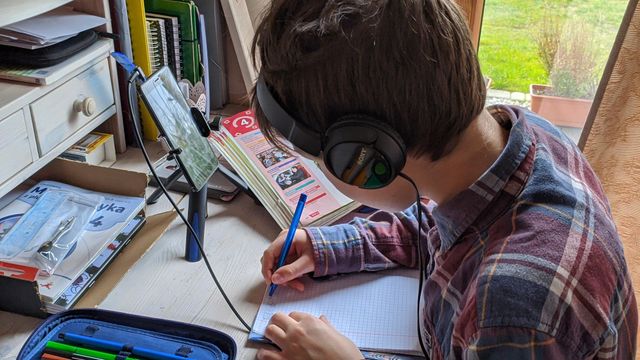
A student sitting in front of a laptop or smartphone today has access to more educational content than any previous generation. Online courses, tutorials, quizzes, videos, certifications, internships, career guides, learning applications and professional communities are available within a few clicks. Yet, despite this abundance, one question continues to trouble many students: “What should I learn?”
The problem is no longer simply a lack of access to education. The bigger challenge is knowing where to begin, what to choose, how to understand personal strengths and interests, and how to turn scattered learning activities into meaningful progress. A student may complete a programming course one month, explore digital marketing the next, watch artificial intelligence tutorials later and eventually wonder whether any of these activities are helping build a clear career direction.
This is where the idea of a personal learning profile becomes increasingly important. Instead of treating every course, quiz, project or internship as an isolated activity, a digital learning profile can bring these experiences together and create a more complete picture of a student’s development. It can show what a student has explored, what skills they are developing, where they are performing well, what areas require more practice and which learning opportunities may be relevant to their future goals.
Platforms such as EasyShiksha can contribute to this approach by connecting learning with quizzes, practical activities, projects, certificates, internships and career-oriented development. The goal is not simply to help students complete more courses. It is to help them understand their learning journey and gradually turn uncertainty into direction.
The “I Don’t Know What to Learn” Problem
Choosing what to learn sounds simple until students face the enormous number of possibilities available to them. A student interested in technology may find courses in coding, artificial intelligence, machine learning, cybersecurity, cloud computing, data science, web development, app development and dozens of related areas. A student interested in business may encounter digital marketing, finance, accounting, entrepreneurship, communication, management and analytics.
The abundance of options can create decision fatigue. Instead of feeling empowered by choice, students can become uncertain about which option deserves their time. They may select a course because it is popular, because a friend recommended it or because it appears frequently on social media. However, popularity does not automatically mean that a particular subject is suitable for every learner.
This uncertainty can also lead to inconsistent learning. Students may begin several courses but complete very few. They may collect certificates without developing corresponding practical skills. They may watch educational videos without testing their understanding or applying what they have learned. Over time, their learning history becomes large, but their understanding of their own abilities remains unclear.
A personal learning profile changes the question. Instead of asking only, “What course should I take next?”, students can begin asking, “What have I already learned, what can I demonstrate, what interests me, and what should I develop next?”
That is a much more useful question for long-term growth.
From Random Learning to Structured Exploration
Not every student needs to know their final career destination at the beginning of their education. Career development is often an exploratory process. A student may discover an interest in technology after taking an introductory coding course. Another may discover an interest in design after experimenting with creative tools. Someone else may realise that communication and management are strengths only after participating in a project or internship.
Therefore, the early stage of learning should not necessarily be about making one permanent career decision. It should be about structured exploration.
Online learning platforms can support this exploration by making it easier for students to experience different subjects without immediately committing to a long academic programme. Short courses, introductory lessons and quizzes can provide an initial understanding of different domains. Once students discover areas that genuinely interest them, they can move toward deeper learning and practical application.
EasyShiksha’s learning ecosystem can fit naturally into this journey by connecting courses and learning activities with practice, assessments, projects and internships. This creates an environment where exploration can gradually become more structured rather than remaining a collection of disconnected online activities.
What Is a Personal Learning Profile?
A personal learning profile is a digital representation of a student’s learning journey. It can contain information about the subjects a student has explored, courses completed, skills developed, quiz performance, projects attempted, certificates earned and practical experiences gained through internships or other activities.
The value of such a profile goes beyond storing achievements. Its real purpose is to provide context.
For example, a student may have completed three courses related to digital marketing. On their own, those certificates show course completion. But when combined with quiz results, practical assignments, projects and internship experience, they provide a much clearer picture of the student’s development.
A learning profile can therefore become a bridge between education and career preparation. It can help students see how individual learning activities contribute to broader skill development.
It also creates a record of progress that can evolve over time. A student who begins with basic knowledge can gradually add intermediate courses, practical projects, certifications and internship experiences. The profile becomes a living representation of development rather than a static academic record.
The First Stage: Discovering Interests
The journey toward a personal learning profile often begins with curiosity. Students may not know exactly what career they want, but they usually have subjects, activities or problems that attract their attention.
Digital learning can make it easier to explore these interests. A student can experiment with coding, data, artificial intelligence, finance, communication, design or other areas and observe which subjects hold their attention.
However, interest should not be measured only by whether a student enjoys watching lessons. Genuine interest becomes clearer when students are asked to think, solve problems, complete quizzes or create something using what they have learned.
This is why interactive learning can be valuable during career exploration. A student may initially think they enjoy programming because they have watched coding videos. After attempting practical exercises, they may discover that they enjoy solving programming problems. Another student may discover that they prefer the creative and communication aspects of technology rather than programming itself.
These distinctions matter because career paths are built around skills and activities, not just subject names.
Quizzes Can Help Students Understand What They Know
Quizzes are often viewed simply as assessment tools, but they can play a broader role in personal learning. They can help students identify what they understand, what they have forgotten and where additional practice is needed.
Suppose a student completes an introductory course in cybersecurity. Completing the course provides exposure to concepts, but a quiz can reveal whether those concepts have actually been understood. If the student performs well in certain areas and struggles in others, that information can guide the next stage of learning.
Repeated assessment can also make progress visible. A student who initially struggles with a concept may improve after revision and practice. That improvement becomes evidence of development.
When quiz performance is connected to a broader learning profile, students can begin to see patterns in their learning. They may notice that they perform strongly in analytical topics, require more practice with technical concepts or consistently enjoy particular types of challenges.
This makes assessment more useful than a simple pass-or-fail event.
Practice Turns Learning Into Evidence
Knowing something and being able to use it are not always the same thing. This distinction is particularly important when students are preparing for careers.
A student can complete a digital marketing course and understand concepts such as search engine optimisation, content marketing and social media strategy. However, practical application provides a different level of evidence. Creating a campaign concept, analysing keywords, developing content or working on a real-world project can demonstrate how that knowledge is used.
Practice therefore gives learning a visible dimension.
A personal learning profile becomes more meaningful when it captures not only what a student studied but also what they attempted to do with that knowledge. Courses demonstrate learning exposure. Quizzes demonstrate understanding. Projects demonstrate application. Internships demonstrate experience in a practical environment.
Together, these elements create a more complete picture.
From Projects to Practical Confidence
Projects can be a turning point in a student’s digital learning journey because they require multiple skills to work together. A project may involve research, planning, technical knowledge, creativity, problem-solving, communication and presentation.
This is different from studying a single chapter or completing an individual quiz. Projects require students to make decisions.
A student building a simple website, analysing a dataset, developing a marketing plan or creating a digital design must think beyond memorising information. They must determine how to apply their knowledge to a specific objective.
This experience can also reveal gaps in understanding. A student may discover that they understand the theory behind a subject but need additional practice before applying it independently. Instead of viewing this as failure, the learning profile can treat it as useful feedback.
The profile then becomes a tool for identifying the next learning requirement.
Internships Add the Real-World Dimension
Internships can connect digital learning with workplace expectations. They expose students to practical tasks, deadlines, communication, teamwork and professional responsibilities.
For a student who has previously learned through courses and projects, an internship can provide a different kind of learning environment. Real assignments may not have perfectly defined answers. Students may need to ask questions, adapt to feedback and work within practical constraints.
This experience can influence what students choose to learn next.
For example, a student may discover during an internship that technical knowledge is important but communication skills are equally valuable. Another student may realise that data analysis is interesting but requires stronger spreadsheet or statistical skills. Someone working on content may discover a need to improve research, writing or SEO knowledge.
In this way, internships do not represent the end of learning. They can become another source of information about what should be learned next.
The Learning Profile as a Career Mirror
A well-developed learning profile can function like a mirror for students. It reflects the areas they have explored, the skills they have developed and the experiences they have accumulated.
This can be particularly useful because students often underestimate their progress. They may think, “I have only completed a few courses,” while their actual learning journey includes several courses, quizzes, projects and practical experiences.
Seeing everything in one place can make development more visible.
At the same time, a learning profile can reveal areas that require attention. A student may have numerous technical courses but very little project experience. Another may have several certificates but limited internship exposure. Someone else may have completed many learning activities but rarely practised communication or presentation skills.
These gaps become easier to recognise when learning is viewed as a connected journey.
Why Certificates Alone Are Not Enough
Certificates can provide evidence that a student completed a learning programme, but they do not necessarily explain how deeply the student understands or applies the subject.
Modern career preparation increasingly requires students to demonstrate capability rather than simply list course names. This does not make certificates irrelevant. Instead, certificates become more valuable when they are supported by evidence of learning and application.
A personal learning profile can connect a certificate with the journey behind it. The course can show what was studied. Quiz performance can demonstrate understanding. A project can demonstrate application. An internship can provide practical exposure.
This creates a richer story than a certificate by itself.
For students, the shift is important because it encourages them to focus on learning outcomes rather than certificate collection.
Personalisation Can Reduce Learning Confusion
Every student begins with a different combination of interests, abilities, experiences and goals. A standard learning path may therefore not work equally well for everyone.
Digital platforms can support more personalised learning by using information about previous activities to help students identify relevant next steps. A student’s course history, quiz performance and completed projects can provide signals about areas that may deserve additional attention.
Personalisation does not mean that technology should decide a student’s career. Instead, it can help organise information so students can make better-informed choices themselves.
A student who has explored coding and performed well in programming quizzes may choose to explore a more advanced programming course. Another student may discover through projects that they prefer data analysis. Someone else may decide that communication and management are more suitable areas.
The profile provides information. The student remains responsible for deciding where to go next.
The Role of AI in the Digital Learning Journey
Artificial intelligence can add another layer to personalised education by helping organise large amounts of learning information. AI-powered systems can potentially identify patterns in performance, recommend related resources, generate practice questions and provide feedback.
For students, this can make large digital learning environments easier to navigate.
However, AI recommendations should be treated as guidance rather than absolute decisions. A recommendation system may identify a relationship between two subjects, but personal interest, career goals, academic requirements and real-world opportunities also matter.
The most useful role for AI is therefore to reduce information overload and support reflection. It can help students ask better questions about their learning journey rather than simply telling them what career they should pursue.
EasyShiksha and the Connected Learning Experience
The concept of a personal learning profile fits naturally with EasyShiksha’s broader approach to digital education. Instead of treating learning as the completion of individual online courses, the platform can be understood as part of a connected journey involving learning, assessment, practice, projects, certificates and internships.
The “Learn + Practice + Intern” approach reflects an important principle: education becomes more valuable when knowledge can move from the classroom or online lesson into practical experience.
Courses provide the foundation. Quizzes encourage active recall and help students test understanding. Practice allows learners to work with concepts. Projects give them opportunities to apply skills. Internships provide exposure to professional environments. Certificates document completed learning experiences.
When these activities are connected through a learning profile, students can see the relationship between them.
This can make digital learning feel less like a collection of separate tasks and more like a personal development journey.
A Learning Profile Can Encourage Continuous Learning
One of the biggest advantages of a digital learning profile is that it does not have to end with graduation. Traditional academic records often focus heavily on formal qualifications earned during a particular period of education. A digital learning profile can continue evolving as a person develops new skills.
A graduate may add a new technology course after entering the workforce. A professional may learn a new tool to change roles. A student may explore an emerging field because technology has created new career opportunities.
Continuous learning becomes easier to understand when progress is visible.
The profile can therefore represent not only what a student has achieved but also their attitude toward development. It communicates that learning is not a one-time stage before employment. It is an ongoing process.
From Course Collection to Skill Development
The digital education environment has made it easy to collect courses. The more important challenge is turning those courses into meaningful capabilities.
A student can complete ten courses without developing confidence if there is no practice. Conversely, a smaller number of carefully chosen courses combined with quizzes, projects and practical experiences may create stronger learning outcomes.
This is why students should think about depth as well as quantity.
A personal learning profile can encourage this shift because it makes different dimensions of learning visible. Instead of seeing only the number of courses completed, students can consider what skills they developed, what projects they created, what assessments they passed and what practical experiences they gained.
The question changes from “How many courses have I completed?” to “What can I do now that I could not do before?”
That is a much stronger measure of growth.
The Journey From Uncertainty to Direction
The student who begins by saying, “I don’t know what to learn,” does not necessarily need an immediate answer. What they need is a structured way to explore.
The first step may be a simple introductory course. The next step could be a quiz that tests understanding. Practice can reveal whether the subject is genuinely interesting. A project can show whether the student enjoys applying the knowledge. An internship can provide real-world exposure.
At every stage, the student learns something not only about the subject but also about themselves.
Over time, these experiences create patterns. Certain subjects become more interesting. Certain skills become stronger. Certain activities feel more natural. Other areas may become less relevant.
The learning profile captures this evolution.
Eventually, the student may move from “I don’t know what to learn” to “I know what interests me, what I can do and what I need to develop next.”
That transition is one of the most valuable outcomes of a connected digital learning journey.
Learning Profiles Can Improve Career Conversations
A learning profile can also make conversations with teachers, mentors, parents and career advisors more productive. Instead of discussing career choices only through marks or general interests, students can bring evidence of their actual learning experiences.
A mentor can see which courses the student has explored, which projects they have completed and which skills they have practised. This creates a stronger foundation for discussing possible next steps.
Parents can also gain a broader understanding of student development. Academic marks remain important, but they represent only one part of a student’s educational journey.
For educators, a learning profile can help provide more contextual guidance. Understanding what a student has attempted and where they have struggled can make mentoring more targeted.
The profile therefore has value beyond the student. It can become a shared language for discussing learning and development.
Building a Digital Identity Before Graduation
Students are increasingly expected to demonstrate their abilities through digital platforms. A personal learning profile can become an early form of professional digital identity.
This does not mean that students need to create an exaggerated personal brand. Instead, they can gradually build a credible record of genuine learning and practical development.
A student who has completed relevant courses, performed well in assessments, created projects and gained internship exposure has more material to discuss during interviews, applications and professional conversations.
The profile can also help students identify which experiences deserve deeper development before graduation.
Career readiness is therefore not something that needs to begin only during the final semester. It can develop gradually through everyday learning activities.
The Importance of Reflection
Technology can collect learning data, but students still need to interpret it.
Reflection is an important part of a personal learning profile. Students should periodically consider what they enjoyed, what challenged them, what they improved and what they want to explore next.
This prevents the profile from becoming merely a digital storage space.
A student might discover that they consistently enjoy analytical projects even though they originally planned to pursue a different area. Another may realise that they enjoy working with people more than working independently on technical tasks. Such discoveries can influence future learning choices.
Reflection transforms data into understanding.
The Future of Student Learning Is More Connected
The future of digital education is unlikely to be defined only by larger libraries of online courses. The more important development may be the ability to connect different parts of learning.
Courses, quizzes, practice activities, projects, internships, certificates and career exploration can become interconnected experiences rather than separate products.
This approach can make education more personalised and practical. Students can explore before specialising, test knowledge before moving forward, practise before entering professional environments and use experience to determine what they should learn next.
Technology can provide the infrastructure for this journey, but the student remains at its centre.
The most effective digital learning environment should not simply tell students what to consume. It should help them understand their progress and make informed choices about their next steps.
Conclusion: From “What Should I Learn?” to “What Should I Learn Next?”
The journey from uncertainty to a personal learning profile does not happen through one course or one career test. It develops through repeated exploration, learning, assessment, practice and experience.
A student may begin without knowing which subject to choose. By exploring different courses, they discover interests. Through quizzes, they test their understanding. Through practice and projects, they discover what they can actually do. Through internships, they experience professional expectations. Through reflection, they understand their strengths and gaps.
Over time, these experiences create a personal learning profile that tells a much richer story than a list of marks or certificates.
EasyShiksha’s connected approach to courses, quizzes, practical learning, certificates and internships fits into this broader vision of student development. The purpose is not simply to make students consume more educational content. It is to help them learn with direction, practise with purpose and gain experiences that contribute to their future goals.
The student who once asked, “I don’t know what to learn,” can gradually reach a more meaningful question: “Based on what I have learned, practised and experienced, what should I learn next?”
That question represents a major shift in how students can approach education. It moves learning from passive consumption toward active development and turns a digital education platform into a space where students can continuously discover, build and demonstrate their capabilities.