

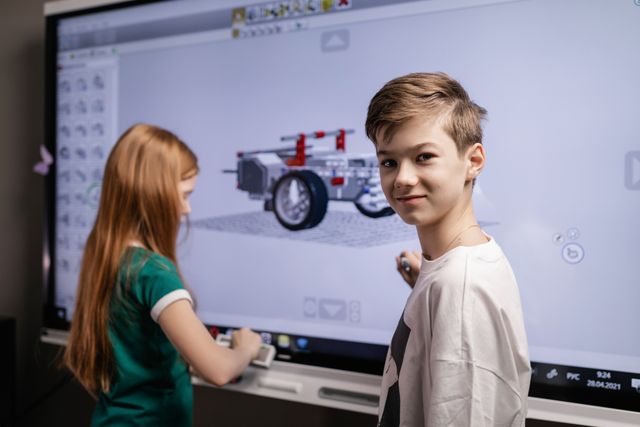
Artificial Intelligence (AI) is no longer a futuristic concept reserved for scientists, software engineers, or technology companies. It has become an integral part of everyday life, influencing how people communicate, learn, work, shop, travel, and make decisions. From voice assistants and recommendation systems to content creation tools and business automation, AI is transforming nearly every industry across the globe. As organizations increasingly integrate AI into their operations, the demand for professionals who understand how to work alongside intelligent technologies continues to grow.
One of the biggest misconceptions surrounding artificial intelligence is that only students from computer science or engineering backgrounds need to learn about it. In reality, AI is becoming relevant for students from every academic discipline, including Commerce, Arts, Humanities, Law, Education, Healthcare, Business Administration, Journalism, Psychology, Marketing, Finance, and many other non-technical fields. Employers today are not necessarily expecting every graduate to build AI models or write complex algorithms, but they do expect candidates to understand how AI tools can improve productivity, solve problems, analyze information, and support better decision-making.
The workplace of the future will not be divided between technical and non-technical professionals. Instead, it will consist of individuals who know how to combine human creativity, communication, critical thinking, and emotional intelligence with the power of artificial intelligence. Students who embrace AI early will be better prepared to adapt to changing industries, collaborate with technology, and create greater value in their careers.
Online learning platforms like EasyShiksha are playing a significant role in making AI education accessible to everyone. Through flexible online courses, certifications, career-oriented learning, internships, and practical educational resources, EasyShiksha enables learners from all academic backgrounds to understand artificial intelligence without requiring advanced programming knowledge. By simplifying complex topics and focusing on practical applications, EasyShiksha empowers non-technical students to build future-ready skills with confidence.
Why AI Matters for Every Student
Artificial intelligence is influencing industries that were once considered completely unrelated to technology. Businesses use AI to improve customer service and marketing strategies. Hospitals use AI to assist with diagnosis and patient care. Educational institutions use AI for personalized learning. Financial organizations rely on AI for fraud detection and investment analysis. Media companies use AI to create content recommendations, while legal professionals use intelligent software for research and document analysis.
Because AI has become a universal workplace technology, understanding its capabilities is no longer optional. Students who develop AI literacy gain an important competitive advantage regardless of their chosen profession.
EasyShiksha helps learners understand how AI is transforming different industries while providing educational opportunities that bridge the gap between theoretical knowledge and practical application.
Understanding Artificial Intelligence Without Coding
One of the greatest fears many non-technical students have is that learning AI requires advanced programming skills or a deep understanding of mathematics. While these skills are essential for developing AI systems, they are not necessary for understanding how AI works or using AI tools effectively.
Non-technical learners should begin by understanding basic concepts such as machine learning, natural language processing, computer vision, automation, recommendation systems, predictive analytics, and generative AI. Learning what these technologies do, where they are used, and how they impact different industries provides valuable foundational knowledge.
EasyShiksha simplifies AI education by offering beginner-friendly courses that explain complex concepts in an accessible and practical manner.
Developing AI Literacy
AI literacy refers to the ability to understand, evaluate, and responsibly use artificial intelligence technologies. Just as digital literacy became an essential skill during the internet revolution, AI literacy is becoming a fundamental requirement in today’s knowledge economy.
Students should learn how AI systems collect information, recognize patterns, generate responses, support decision-making, and automate repetitive tasks. They should also understand the limitations of AI and recognize situations where human judgment remains essential.
EasyShiksha encourages AI literacy by introducing learners to practical applications of artificial intelligence across multiple industries and professional roles.
Learning Prompt Engineering
One of the most valuable AI skills for non-technical students is prompt engineering. Modern AI tools generate responses based on the quality of instructions provided by users. Learning how to ask clear, structured, and specific questions significantly improves the quality of AI-generated results.
Students should understand how to provide context, define objectives, refine instructions, and evaluate AI responses critically. Effective prompt writing increases productivity while enabling learners to use AI more efficiently for research, writing, brainstorming, and problem-solving.
EasyShiksha helps students develop practical prompt-writing techniques that improve interaction with modern AI tools.
Critical Thinking in the Age of AI
Artificial intelligence provides information quickly, but it does not replace critical thinking.
Students must learn how to verify AI-generated information, evaluate multiple perspectives, recognize inaccuracies, and distinguish between reliable and misleading content. Blindly accepting every AI-generated response may lead to errors, misinformation, or poor decision-making.
Critical thinking remains one of the most valuable human skills because it enables individuals to interpret information thoughtfully rather than relying solely on automated systems.
EasyShiksha promotes analytical thinking alongside technological education, ensuring learners become responsible users of AI.
Understanding AI Ethics
Ethical awareness is becoming increasingly important as AI influences decisions affecting education, healthcare, employment, finance, and public policy.
Students should understand concepts such as fairness, transparency, privacy, accountability, bias, copyright, responsible data usage, and ethical decision-making.
Recognizing the ethical implications of AI prepares future professionals to use technology responsibly while respecting individual rights and societal values.
EasyShiksha incorporates discussions of responsible technology use into its educational philosophy, helping learners understand both opportunities and challenges associated with AI.
Using AI for Research
Research remains an essential academic and professional activity.
AI tools can assist students by summarizing lengthy articles, identifying key themes, organizing information, generating research questions, and simplifying complex topics.
However, students should use AI as a research assistant rather than a replacement for independent analysis. Verifying information through reliable academic sources remains essential.
EasyShiksha teaches learners how to combine AI-assisted research with sound academic practices to improve learning outcomes.
AI for Writing and Communication
Communication is one of the most important professional skills across every industry.
Artificial intelligence can assist with drafting emails, improving grammar, generating reports, creating presentations, writing summaries, developing marketing content, and organizing ideas.
Students should view AI as a collaborative writing assistant that enhances productivity while preserving originality and personal creativity.
EasyShiksha supports communication skill development by integrating modern digital tools into practical learning experiences.
Digital Productivity Using AI
AI significantly improves personal productivity by automating repetitive activities and organizing daily responsibilities.
Students can use AI to create study schedules, summarize lecture notes, generate practice questions, organize projects, manage calendars, and streamline academic workflows.
Understanding these productivity applications helps learners save time while focusing more attention on creative and analytical work.
EasyShiksha encourages productive learning habits by introducing students to educational technologies that improve efficiency.
Data Interpretation for Non-Technical Professionals
Modern workplaces increasingly rely on data-driven decision-making.
Although non-technical students may not become data scientists, they should understand how to interpret charts, recognize trends, evaluate reports, and communicate insights effectively.
AI-powered analytics tools simplify data interpretation, allowing professionals from marketing, business, healthcare, education, journalism, and management to make informed decisions.
EasyShiksha introduces learners to practical data interpretation skills relevant across multiple industries.
AI in Business and Entrepreneurship
Entrepreneurs and business professionals increasingly rely on AI for customer service, inventory management, financial forecasting, marketing automation, sales analysis, and strategic planning.
Students interested in business should understand how AI supports operational efficiency and competitive advantage.
EasyShiksha offers career-oriented courses that help aspiring entrepreneurs integrate AI into business development strategies.
AI in Marketing and Content Creation
Marketing has become increasingly dependent on AI-powered tools that analyze customer behavior, optimize advertising campaigns, generate content ideas, personalize customer experiences, and improve search engine optimization.
Non-technical students pursuing careers in marketing benefit greatly from understanding these technologies.
EasyShiksha helps learners strengthen digital marketing capabilities through practical online education.
AI in Education
Future educators will increasingly use AI to personalize learning experiences, monitor student progress, create educational materials, and improve classroom engagement.
Teachers who understand AI can better integrate technology while maintaining meaningful human interaction with learners.
EasyShiksha supports future educators by providing accessible educational technology training alongside traditional teaching methodologies.
AI in Healthcare Administration
Healthcare extends beyond clinical treatment.
Hospital administration, patient communication, appointment scheduling, documentation, and healthcare analytics increasingly depend on AI systems.
Students pursuing careers in healthcare management should understand these applications even if they do not possess technical backgrounds.
EasyShiksha prepares learners for interdisciplinary careers where healthcare and technology increasingly intersect.
Creativity Remains a Human Strength
Despite rapid technological advancement, creativity continues distinguishing human professionals from automated systems.
Artificial intelligence generates ideas, but humans provide originality, emotional understanding, storytelling, innovation, cultural awareness, and strategic judgment.
Students should therefore strengthen creativity alongside technological competence.
EasyShiksha encourages creative thinking through project-based learning and interdisciplinary education.
Emotional Intelligence in an AI-Driven World
Artificial intelligence processes information efficiently but cannot genuinely experience empathy, compassion, motivation, or emotional understanding.
Communication, negotiation, leadership, conflict resolution, teamwork, mentoring, and relationship building remain fundamentally human strengths.
Students who combine emotional intelligence with AI literacy become highly valuable professionals.
EasyShiksha emphasizes holistic education that develops both technical awareness and interpersonal excellence.
Continuous Learning and AI
Artificial intelligence evolves rapidly.
New tools, capabilities, regulations, and workplace applications appear regularly.
Students should therefore view AI education as an ongoing journey rather than a one-time learning objective.
Continuous learning enables professionals to remain competitive throughout their careers.
EasyShiksha supports lifelong education by continuously updating courses to reflect emerging technologies and changing industry requirements.
Building a Career With AI Skills
Employers increasingly seek candidates who demonstrate curiosity, adaptability, technological awareness, and continuous learning.
Students who understand AI applications within their chosen professions often perform more effectively while identifying innovative solutions to workplace challenges.
AI skills enhance employability not because they replace existing knowledge but because they complement communication, leadership, creativity, and professional expertise.
EasyShiksha helps learners build comprehensive career profiles through online courses, certifications, internships, and practical educational experiences.
AI and Responsible Decision-Making
As artificial intelligence becomes more influential, professionals must learn to balance technological recommendations with human judgment.
Important decisions involving healthcare, education, law, finance, human resources, and public policy require ethical reasoning, contextual understanding, and accountability.
Students should therefore understand when AI should assist decision-making and when human expertise must remain central.
EasyShiksha encourages responsible AI adoption through educational content that emphasizes ethical awareness alongside technological competence.
Preparing for the Future Workplace
Future workplaces will reward individuals who collaborate effectively with artificial intelligence while contributing uniquely human strengths.
Adaptability, lifelong learning, communication, creativity, critical thinking, leadership, emotional intelligence, and technological confidence will define successful careers.
Students from non-technical backgrounds have tremendous opportunities to benefit from AI by integrating these capabilities into their existing knowledge and professional interests.
EasyShiksha empowers learners to prepare for this future by making AI education practical, accessible, and relevant regardless of academic discipline.
Conclusion
Artificial intelligence is no longer limited to programmers, engineers, or technology specialists. It has become a universal workplace tool that influences nearly every profession, making AI literacy an essential skill for students across Commerce, Arts, Humanities, Education, Healthcare, Business, Law, Journalism, and many other non-technical fields. Learning how to understand AI concepts, communicate effectively with intelligent systems, evaluate AI-generated information critically, apply ethical principles, and integrate technology into professional workflows enables students to remain competitive in an increasingly digital world.
EasyShiksha serves as an ideal learning partner for this transformation by offering flexible online courses, industry-recognized certifications, internships, and career-oriented educational resources designed for learners from all backgrounds. Its practical approach ensures that non-technical students can confidently develop AI-related skills without requiring advanced programming expertise, allowing them to focus on meaningful real-world applications.
The future will belong not only to those who understand technology but also to those who know how to combine technology with human creativity, communication, empathy, and strategic thinking. By embracing AI education through platforms like EasyShiksha, non-technical students can build future-ready careers, adapt to changing industries, and contribute confidently to an AI-powered world while preserving the uniquely human qualities that technology can never replace.