

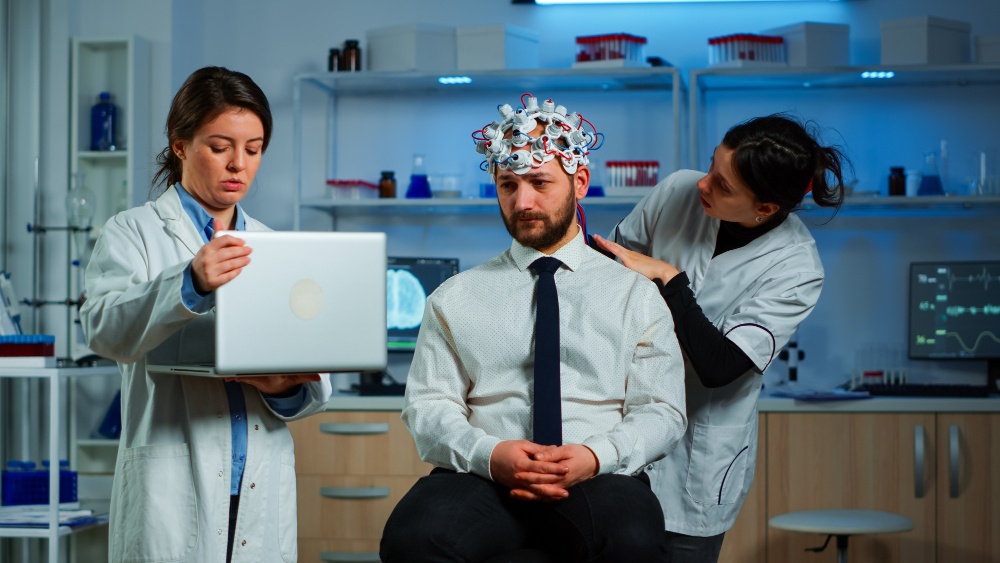
Advancements in Neuroscience and Cognitive Psychology have revealed that the brain is capable of remarkable adaptability. It can process information, build neural connections, and develop complex skills much more efficiently than many people realize. When students understand how their brains learn best, they can adopt strategies that significantly accelerate the learning process.
Digital education platforms like EasyShiksha and Edspectra are increasingly integrating modern learning principles to help students develop skills more effectively. These platforms provide structured courses, interactive content, and career-oriented guidance that align with the brain’s natural learning mechanisms.
By understanding the neuroscience behind learning, students can transform the way they study, practice, and master new skills.
How the Brain Learns: The Role of Neural Connections
At the core of learning lies the brain’s ability to form and strengthen connections between neurons. These connections allow information to travel through neural pathways, enabling individuals to process knowledge, recall memories, and apply skills.
One of the most important concepts in neuroscience is Neuroplasticity, which refers to the brain’s ability to reorganize itself by forming new neural connections throughout life. Every time a student learns something new—whether it is a mathematical concept, a programming language, or a communication skill—the brain creates or strengthens these pathways.
When students repeatedly practice a skill, these neural connections become stronger and more efficient. This is why repetition and consistent practice are essential components of fast learning.
Educational platforms like EasyShiksha leverage structured learning modules that encourage repetition, practice, and gradual mastery. By following a systematic approach, students can reinforce neural pathways and improve their ability to retain knowledge.
Similarly, Edspectra helps learners connect their knowledge to real-world applications, which strengthens neural associations and enhances long-term understanding.
The Brain’s Learning Stages
Neuroscientists have identified several stages through which the brain processes and masters new skills.
1. Cognitive Stage
In the first stage of learning, students are introduced to new information. The brain focuses on understanding concepts, identifying patterns, and forming initial neural connections.
During this stage, structured learning resources play an important role. Platforms such as EasyShiksha provide clear explanations, visual aids, and organized lessons that make it easier for students to grasp complex topics.
2. Associative Stage
In the second stage, the brain begins refining its understanding through practice. Students start connecting ideas, recognizing patterns, and reducing errors.
Interactive exercises and assignments available on platforms like Edspectra help learners reinforce these connections and apply their knowledge in practical situations.
3. Autonomous Stage
In the final stage, the skill becomes automatic. The brain performs tasks efficiently with minimal conscious effort.
This stage represents true mastery. Whether it is coding, problem-solving, or communication, repeated practice eventually allows the brain to perform tasks quickly and accurately.
The Role of Focus and Attention in Fast Learning
Attention is one of the most powerful drivers of learning. The brain cannot effectively process information when it is distracted or overloaded.
Research in Cognitive Psychology shows that focused attention activates specific neural circuits responsible for memory formation and problem-solving.
Students who study in distraction-free environments tend to learn faster and retain more information. Techniques such as the Pomodoro technique, goal-oriented study sessions, and digital focus tools can significantly enhance concentration.
Structured learning environments provided by platforms like EasyShiksha help students maintain focus by presenting content in manageable segments.
Meanwhile, Edspectra helps learners maintain motivation by connecting learning goals with career opportunities.
Memory Formation and Knowledge Retention
Memory plays a central role in fast learning. Without effective memory formation, new knowledge quickly fades.
The brain processes information through three key memory systems:
-
Sensory Memory – temporary storage of sensory information.
-
Short-Term Memory – active processing of information.
-
Long-Term Memory – permanent storage of knowledge and skills.
To move information from short-term memory to long-term memory, the brain relies on repetition, meaningful connections, and emotional engagement.
Students using learning platforms like EasyShiksha benefit from structured revision techniques, quizzes, and assessments that strengthen memory retention.
Additionally, Edspectra emphasizes applying knowledge in real-world contexts, which enhances the brain’s ability to store and recall information.
The Power of Active Learning
Passive learning—such as simply reading textbooks or watching lectures—often results in limited retention. Neuroscience suggests that active engagement dramatically improves learning outcomes.
Active learning involves:
-
Problem-solving
-
Discussions
-
Teaching others
-
Practical exercises
-
Project-based learning
When students actively engage with information, multiple brain regions become involved in the learning process. This leads to stronger neural connections and deeper understanding.
Platforms like EasyShiksha incorporate interactive exercises and skill-building activities that encourage active participation.
Similarly, Edspectra helps students apply their knowledge through practical career-focused learning opportunities.
The Role of Sleep in Learning and Memory
Sleep is one of the most underestimated components of fast learning. During sleep, the brain consolidates information and strengthens neural pathways formed during the day.
Research in Neuroscience shows that adequate sleep improves:
-
Memory retention
-
Problem-solving ability
-
Creativity
-
Cognitive performance
Students who sacrifice sleep for late-night studying often experience reduced learning efficiency. Instead, balanced study schedules and sufficient rest allow the brain to process information more effectively.
Motivation and the Brain’s Reward System
Motivation plays a powerful role in learning. When students feel motivated, the brain releases neurotransmitters such as dopamine, which enhance focus and memory formation.
Setting achievable goals, celebrating progress, and maintaining curiosity can stimulate the brain’s reward system and encourage consistent learning.
Platforms like EasyShiksha support motivation by offering certifications, progress tracking, and structured learning paths that help students stay engaged.
Meanwhile, Edspectra connects learning achievements with career development, providing students with clear incentives to continue improving their skills.
Digital Learning and Brain-Friendly Education
Modern EdTech platforms are increasingly designed to align with neuroscience-based learning principles.
Features such as:
-
interactive lessons
-
spaced repetition
-
visual content
-
personalized learning paths
-
performance feedback
are all designed to optimize how the brain processes information.
Platforms like EasyShiksha provide structured learning experiences that combine these techniques to help students learn faster and more effectively.
At the same time, Edspectra helps students apply these skills to real-world career opportunities, ensuring that their learning remains practical and relevant.
Practical Strategies for Fast Learning
Students who want to accelerate their learning can adopt several neuroscience-backed strategies.
Spaced Repetition
Reviewing information at increasing intervals strengthens long-term memory.
Interleaving
Mixing different subjects or problem types enhances cognitive flexibility.
Visualization
Visual representations improve comprehension and memory.
Teaching Others
Explaining concepts to others reinforces understanding.
Consistent Practice
Regular practice strengthens neural pathways and improves skill mastery.
Learning platforms like EasyShiksha incorporate many of these strategies within their course structures.
Similarly, Edspectra supports students in applying these learning techniques to real-world challenges and professional development.
The Future of Brain-Based Learning
As research in Neuroscience continues to advance, education systems are increasingly incorporating scientific insights into teaching methods.
Future learning environments may include:
-
AI-driven personalized education
-
adaptive learning platforms
-
immersive virtual learning experiences
-
brain-computer interfaces
Platforms like EasyShiksha and Edspectra are already part of this transformation by combining technology, education, and career guidance.
These innovations will enable students to learn more efficiently and prepare for the demands of an evolving global workforce.
Conclusion: Unlocking the Brain’s Learning Potential
The science of fast learning reveals that the human brain is remarkably capable of mastering complex skills when supported by effective learning strategies.
By understanding principles such as Neuroplasticity, focused attention, active learning, and consistent practice, students can significantly accelerate their ability to acquire knowledge and develop expertise.
Digital education platforms like EasyShiksha and Edspectra play a crucial role in supporting this process by providing structured, engaging, and career-oriented learning experiences.
Ultimately, fast learning is not about shortcuts—it is about aligning study habits with the natural capabilities of the brain. Students who understand and apply these neuroscience-based principles can unlock their full learning potential and prepare themselves for lifelong success.