

Database Management Systems: Essential Guide for Beginners
Every modern application—from social media platforms to banking systems, e-commerce sites to healthcare records—relies on databases to store, organize, and retrieve information efficiently. Understanding database management systems (DBMS) represents a fundamental skill for anyone pursuing technology careers, whether as developers, data analysts, system administrators, or business intelligence professionals. This essential technology transforms chaotic data into structured, accessible information.
What Are Database Management Systems?
Database management systems provide software frameworks for creating, maintaining, and interacting with databases. Rather than storing information in scattered files or spreadsheets, DBMS platforms organize data into structured tables with defined relationships, ensuring consistency, preventing duplication, and enabling complex queries that extract meaningful insights from vast information repositories.
Relational databases dominate the landscape, organizing data into tables (relations) connected through common fields. This relational model, introduced in the 1970s, remains the foundation of most business applications today due to its logical structure, data integrity features, and powerful query capabilities.
Understanding Database Architecture
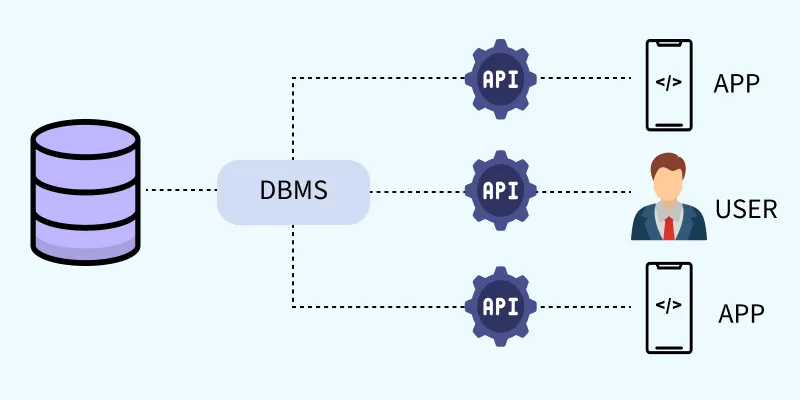
Database management system part three through part five cover architectural concepts comprehensively. Databases consist of multiple layers—physical storage on disk drives, logical organization into tables and relationships, and user-facing interfaces for queries and administration.
Schema design defines database structure—which tables exist, what columns each contains, data types for each field, and constraints ensuring data validity. Well-designed schemas balance normalization (reducing redundancy) with practical query performance, creating efficient structures supporting application requirements.
SQL: The Language of Databases
Structured Query Language (SQL) provides standardized syntax for interacting with relational databases. SQL enables data definition (creating tables and relationships), data manipulation (inserting, updating, deleting records), and data querying (retrieving specific information matching criteria).
Learning SQL means understanding SELECT statements that retrieve data, JOIN operations combining information from multiple tables, WHERE clauses filtering results, and aggregate functions calculating sums, averages, counts, and statistical measures. SQL coding challenge top from basic to advance provides practical exercises building proficiency through hands-on problem solving.
Database Design and Relationships
Effective database design starts with requirements analysis—understanding what information needs storage and how data elements relate. Entity-relationship diagrams visualize these connections before implementation.
Normalization techniques eliminate data redundancy. First normal form ensures atomic values, second normal form removes partial dependencies, and third normal form eliminates transitive dependencies. Balanced approaches prevent over-normalization that complicates queries.
Primary keys uniquely identify each record—customer IDs, product codes, or order numbers. Foreign keys create relationships by referencing primary keys in other tables, enabling complex queries joining data across multiple sources.
Practical Database Operations
INSERT statements add new records, UPDATE statements modify existing data, and DELETE statements remove records. Transaction management ensures data consistency when multiple operations must succeed or fail together—critical for financial transactions and other operations requiring atomicity.
Microsoft SQL Server bootcamp go from zero to hero and Oracle SQL course beginner to expert teach specific platforms widely used in enterprises. MySQL and PostgreSQL represent powerful open-source alternatives.
Performance Optimization
Database performance depends on efficient queries and proper indexing. Indexes create fast lookup structures enabling databases to locate records quickly rather than scanning entire tables. Strategic index placement on frequently queried columns dramatically improves performance, though excessive indexing slows insert and update operations.
Query optimization involves writing efficient SQL, avoiding unnecessary joins, limiting returned columns to only needed fields, and understanding execution plans showing how databases process queries. Performance tuning becomes critical as databases grow to millions or billions of records.
Data Integrity and Constraints
Constraints enforce business rules at the database level, preventing invalid data entry. NOT NULL constraints require values in specific columns, UNIQUE constraints prevent duplicate values, CHECK constraints validate data against specified conditions, and referential integrity constraints ensure foreign keys reference valid primary key values.
These database-enforced rules prevent application bugs from corrupting data, maintaining consistency even when multiple applications access the same database or when data entry occurs through various interfaces.
Backup and Recovery
Databases contain critical information requiring protection against hardware failures, software bugs, or human errors. Regular backups create copies enabling restoration if problems occur. Full backups copy entire databases, while incremental backups capture only changes since the last backup, reducing storage requirements and backup windows.
Point-in-time recovery capabilities restore databases to specific moments, critical when corruption occurs but immediate detection proves impossible. Disaster recovery planning ensures business continuity even if primary database servers fail completely.
The Path Forward
Database management combines technical skills with logical thinking about information organization and relationships. Starting with fundamental concepts—tables, relationships, SQL syntax—builds foundations for advanced topics like stored procedures, replication, sharding, and distributed databases.
Whether you’re building web applications, analyzing business data, administering enterprise systems, or pursuing data science careers, database skills remain essential. The structured thinking database design requires—breaking complex problems into logical components and relationships—proves valuable far beyond database administration, representing fundamental analytical capabilities applicable across technology and business domains.